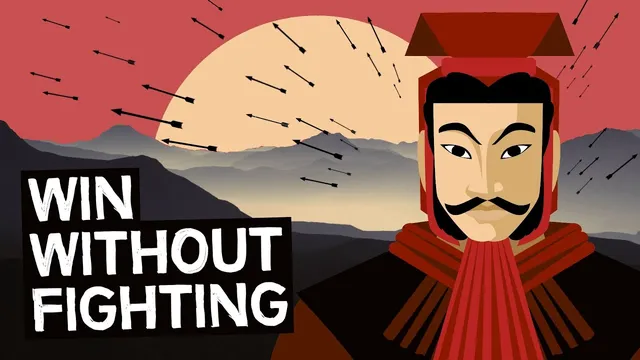
Sun Tzu | The Art of War
Based on Einzelgänger's video on YouTube. If you like this content, support the original creators by watching, liking and subscribing to their content.
Sun Tzu treats victory as a product of preparation, measurement, and calculation done before combat begins.
Briefing
Sun Tzu’s “The Art of War” frames victory as something decided long before swords clash: success comes from preparation, intelligence, and disciplined decision-making rather than brute force. The core prescription—“If you know neither the enemy nor yourself, you will succumb in every battle”—turns conflict into a problem of measurement and calculation. That emphasis matters because it applies far beyond battlefield tactics, extending into work, sports, business competition, and even online conflict, where the “enemy” may be an opponent’s strategy, one’s own impulses, or misinformation.
The text argues that the highest form of warfare is defeating an opponent without fighting at all. When direct confrontation is unavoidable, leaders should choose battles carefully, conserving limited resources such as manpower, equipment, fuel, and morale. Lengthy wars drain a country; quick, efficient strikes preserve strength. Sun Tzu also pushes a counterintuitive restraint: better to take states and armies intact than destroy them, and avoid needless killing when captured forces can be absorbed. This approach reflects a Taoist-leaning view of war as intelligent management of power—leaving an enemy’s capacity available to be converted into one’s own advantage.
Preparation is inseparable from information. Sun Tzu stresses knowing both sides’ strengths and weaknesses through research and, when necessary, spies. An army’s effectiveness depends on leadership understanding its soldiers—different troops require different treatment—and on self-awareness that clarifies which conflicts are winnable and which should be avoided. The logic is pragmatic: if victory is clear, fight; if defeat is certain, don’t. Even when fighting, tactics should match conditions. When outnumbered, concealment and guerrilla-style pressure can outperform head-on attacks; when outnumbered, hiding and waiting for openings becomes the safer path.
Deception and adaptability sit at the center of Sun Tzu’s tactical toolkit. Feigning weakness, appearing farther than reality, and masking troop intent are meant to disrupt an opponent’s expectations. The transcript links this to real-world propaganda attempts, including Mohammed Saeed al-Sahhaf’s efforts to maintain appearances during the Iraq conflict—an example of how deception can fail when credibility collapses. Meanwhile, war is treated as fluid: like water, it has no fixed form. The enemy changes with terrain, season, and morale, so victory comes from staying “formless,” observing patterns, and striking at vulnerability rather than exposing oneself.
The work also lays out how terrain shapes action, including nine categories of battlegrounds such as “strategic ground” and “death ground,” where survival may require fighting. It offers concrete rules—fight downhill, don’t confront an enemy midstream, let part of an advancing force cross before striking—alongside broader principles like attacking strategy first, then alliances, then armies, with siege warfare as a last resort.
Finally, “The Art of War” treats inner discipline as a military asset. Recklessness, cowardice, hot temper, excessive concern for honor, and over-focusing on soldiers are framed as pitfalls that can derail command. The transcript extends this to everyday life, warning that constant online provocation can create exhausting, meaningless “battles.” In the end, war becomes an “art” when leaders combine measurement, restraint, deception, compassion, and adaptability—aiming to reduce suffering while maintaining control.
Cornell Notes
Sun Tzu’s “The Art of War” argues that victory depends on preparation, intelligence, and disciplined decision-making more than raw force. Knowing the enemy and oneself—through research, calculations, and sometimes spies—lets commanders estimate outcomes before committing troops. The highest goal is defeating an opponent without fighting, while careful battle selection and resource conservation prevent destructive, prolonged conflict. Tactics should match conditions: deception, adaptability, and terrain-based strategy determine when to attack, hide, or exploit openings. The text also warns that leadership failures—especially hot temper and recklessness—can turn avoidable conflicts into costly losses.
Why does Sun Tzu treat “knowing” as the decisive factor in conflict?
What does “defeat without fighting” mean in practical terms?
How do deception and propaganda fit into Sun Tzu’s strategy?
Why does adaptability matter as much as tactics?
How does terrain determine what a commander should do?
What leadership “pitfalls” does Sun Tzu warn against, and why are they strategic?
Review Questions
- Which forms of “warfare” does Sun Tzu rank highest, and how does that ranking change what a leader should prioritize first?
- How do self-awareness and intelligence gathering work together to determine whether to fight or avoid a battle?
- Give two examples of how terrain or conditions change the recommended tactic in Sun Tzu’s framework.
Key Points
- 1
Sun Tzu treats victory as a product of preparation, measurement, and calculation done before combat begins.
- 2
Knowing the enemy and oneself—through research and sometimes spies—reduces uncertainty and prevents fighting unwinnable battles.
- 3
The highest goal is defeating an opponent without fighting, achieved by targeting strategy and alliances and using deception.
- 4
Resource limits make efficiency essential; prolonged wars exhaust states and armies, so quick, minimal-use actions are favored.
- 5
Tactics must match conditions: deception, concealment, and terrain-specific rules determine whether to attack, hide, or strike at openings.
- 6
Adaptability is central because the enemy and environment shift; leaders should stay “formless” and exploit vulnerability.
- 7
Leadership discipline matters as much as tactics; recklessness, hot temper, and over-concern can trigger costly, avoidable conflict.