Supertasks
Based on Vsauce's video on YouTube. If you like this content, support the original creators by watching, liking and subscribing to their content.
Gabriel’s cake keeps finite volume while driving surface area to infinity through infinitely many halvings and stacking.
Briefing
Gabriel’s cake and other “supertasks” expose a sharp mismatch between what infinite step-by-step procedures can accomplish in a finite time and what their “end states” can actually be determined to mean. The core setup is deceptively simple: start with a solid cake, repeatedly cut it in half, and stack the resulting thinner and thinner slices. The total volume stays finite—equal to the original cake—yet the surface area grows without bound, creating a dessert that is “eatable but not frostable” because covering it uniformly would require infinite frosting.
That same logic runs into a practical impossibility: completing the construction requires infinitely many distinct cutting steps, and by ordinary definitions an infinite sequence has no last action. The transcript then introduces the key twist that makes the paradoxes bite: accelerate the process so each successive step takes half the time of the previous one. Under this rule, infinitely many cuts can occur within a finite total duration (for instance, “two minutes” for an infinite halving schedule). The strange consequence is that no matter how many steps have already been completed, there are still infinitely many steps left—yet at the end of the allotted time, the procedure is treated as finished.
This is where Zeno’s dichotomy enters as a familiar cousin. Achilles can “finish” a race even though the journey is described as infinitely many subdivisions with no final midpoint. The transcript pushes the puzzle further with a flag-color variant: if Achilles must hold a blue flag on even steps and a red flag on odd steps, then which color is he holding at the finish? The dilemma suggests that some questions about an “after” state become ill-posed when the process never has a final step that settles the outcome.
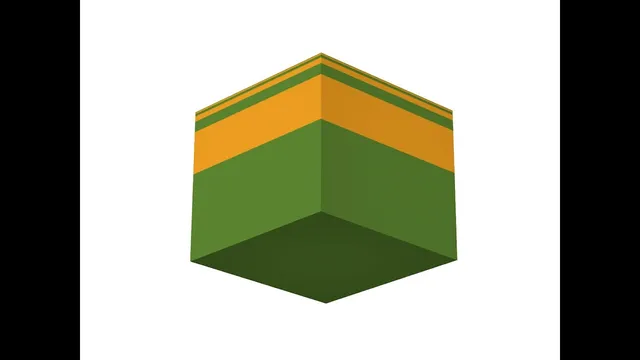
Several classic supertask examples illustrate different failure modes. Thomson’s lamp flips on and off faster and faster; after the finite time elapses, the lamp is neither simply on nor off because every “on” moment is immediately followed by an “off,” and vice versa. A cube built from infinitely many alternating colored layers similarly resists a definite visible color: every candidate color is blocked by the opposite color above it. Even a more concrete-sounding task—displaying digits of π one by one—still leaves the “last digit” undefined, because the procedure has no final digit to point to.
Paul Benacerraf’s response is that such questions are incomplete: the supertask description doesn’t specify enough about what counts as the state “at the end.” Add extra physical assumptions and the ambiguity can disappear. For instance, if the switch is constrained to behave like a bouncing ball that settles after infinitely many diminishing bounces, the lamp can end up on; other switch models can yield different outcomes.
The transcript then escalates to the Ross–Littlewood paradox, where an urn receives infinitely many balls while removing one ball per step. Two “nearly identical” methods produce radically different end results—zero balls in one case and infinitely many balls in another—showing that limits can be discontinuous and that small changes in the rule can flip the final answer.
The closing argument shifts from math to motivation: supertasks may be impossible in the real world, but they function as intellectual stress tests. The discussion ties the obsession with hard problems to human history and exploration—Neanderthals and Homo sapiens, the drive to cross oceans and attempt Mars—suggesting that even if infinity is unreachable, the willingness to chase difficult questions is what moves science forward.
Cornell Notes
Supertasks are procedures that perform infinitely many distinct steps in a finite amount of time by shrinking the time per step (e.g., halving each interval). Using Gabriel’s cake, the transcript highlights a key tension: finite volume can coexist with infinite surface area, but “completion” becomes conceptually unstable because there is no last step. Zeno-style puzzles (like the flag-color Achilles) and classic thought experiments (Thomson’s lamp, alternating-color cube, and a π digit display) show that asking for an “end state” can be ill-posed when the process never has a final action. Benacerraf’s response is that such questions may be incomplete; adding physical assumptions about how the system behaves at the limit can make outcomes determinate. The Ross–Littlewood paradox further demonstrates that tiny rule changes can produce discontinuous, wildly different results at the end.
Why does Gabriel’s cake end up with infinite surface area but finite volume?
What turns an impossible “infinite sequence of tasks” into a supertask that finishes in finite time?
Why are Thomson’s lamp and the alternating-color cube “unsolvable” as stated?
How can adding physical assumptions make a supertask outcome determinate?
What does the Ross–Littlewood paradox demonstrate about limits?
What is the transcript’s broader takeaway about supertasks?
Review Questions
- In Gabriel’s cake, which quantity stays constant through the repeated halving, and which quantity diverges? Explain why.
- What does Benacerraf’s “incomplete questions” idea imply for determining the final state of Thomson’s lamp?
- How does the Ross–Littlewood paradox show that two supertasks can agree on all finite stages yet disagree at the limit?
Key Points
- 1
Gabriel’s cake keeps finite volume while driving surface area to infinity through infinitely many halvings and stacking.
- 2
A supertask is defined by accelerating step times so an infinite sequence can occur within a finite total duration (e.g., halving the waiting time each step).
- 3
Zeno-style puzzles reveal that “finish-line” questions can become ill-posed when the process has no last step that settles the outcome.
- 4
Thomson’s lamp and the alternating-color cube resist definite answers unless the model specifies how the system behaves at the limit.
- 5
Benacerraf’s framework treats some supertask end-state questions as incomplete; adding physical assumptions can make outcomes determinate.
- 6
The Ross–Littlewood paradox shows discontinuity at infinity: tiny changes in the rule can flip the final result even when all finite stages match.
- 7
Supertasks are framed as intellectual stress tests—useful for clarifying what can and can’t be concluded from infinite procedures—even if real-world physics likely prevents literal infinities.