Talking With Attenborough
Based on Vsauce's video on YouTube. If you like this content, support the original creators by watching, liking and subscribing to their content.
The transcript uses an extinct bird’s recorded song to argue that documentation can preserve meaning after a species disappears.
Briefing
A recorded song from an extinct bird became a lesson in what humans can preserve—and what that preservation obliges them to do. The transcript opens with the “song of an endling,” the final individual of a species, whose call for a mate will never be answered. Even after the species disappears, the recording keeps the sound in circulation, turning loss into a kind of memory. That idea expands into a broader claim: “record” comes from a root meaning “heart,” and modern documentation functions like nature’s own memory—except humans can hold onto moments far longer than biology can.
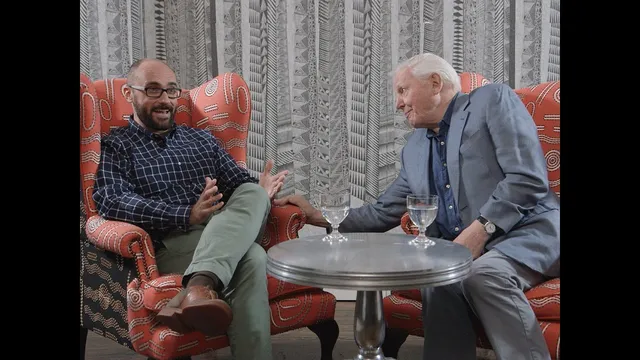
From there, the conversation with Sir David Attenborough (via Vsauce host Michael) frames Planet Earth 2 as both storytelling and a moral archive. Attenborough compares the series to a night at the movies, except the characters are animals and the plot isn’t scripted. He argues that life runs on enduring patterns—birth, mating, aggression, and death—and that ignoring those “eternal stories” is risky because they carry fundamental truth. For younger science communicators, he offers a caution rather than a checklist: advice quickly becomes outdated, and progress depends on using tomorrow’s tools in ways that the technology itself enables.
The discussion then pivots to responsibility. Planet Earth 2 benefits from advances like smaller, quieter drones and improved methods for finding and studying animal behavior, allowing footage of events that earlier researchers couldn’t even imagine capturing. Attenborough calls that capability a “time capsule” and insists it comes with duty: species are disappearing, and footage made today may be all that remains in decades. He illustrates the stakes with examples like the dodo—known from partial remains and reconstructed skeletons, not complete bodies—showing how documentation can preserve form even when living individuals are gone.
The transcript also tackles the ethical boundary between recording and intervening. When asked whether humans should help animals in distress—such as assisting a hunted prey animal—Attenborough warns that interference can backfire. He describes a scenario where startling a young antelope would likely cause it to flee in terror, ruin the predator’s hunt, and leave the original prey’s survival odds worse, with knock-on effects for the predator and the ecosystem.
Finally, the conversation widens beyond animals to humans, arguing that natural history can’t be filmed “as if” people were ordinary wildlife without confronting sexuality, courtship, and the social realities that make human observation uniquely sensitive. Attenborough also reflects on what defines life, admitting that the boundary between living and dead resists simple definitions, and on how humans classify the world—building categories that later reveal themselves as matters of degree rather than strict separations.
The closing takeaway is blunt: humans are the planet’s “autobiographers,” able to record, measure, and narrate what would otherwise be forgotten. That power matters because damaging other species ultimately harms humans too. The series, in this telling, isn’t just entertainment—it’s a record meant to shape perspective for the future, not merely a snapshot of the past.
Cornell Notes
The transcript uses the recorded song of an extinct “endling” to argue that documentation can preserve what biology cannot. Sir David Attenborough frames Planet Earth 2 as a moral archive: improved tools (like quieter drones) let filmmakers capture behaviors and events that earlier generations couldn’t, but that capability carries responsibility as species decline. He cautions against well-meaning intervention in the wild, explaining how disrupting a predator-prey moment can worsen outcomes for multiple animals. The conversation also challenges easy definitions—of life, and even of categories like “cat” or “dog”—and emphasizes that classification often reflects human needs more than nature’s hard boundaries. Ultimately, humans function as Earth’s autobiographers, and recording nature helps protect both the planet and human futures.
Why does the transcript begin with an extinct bird’s recorded song, and what does it symbolize?
What does Attenborough mean by storytelling as an “eternal” pattern rather than a scripted plot?
How does Planet Earth 2’s technology change what can be documented?
Where does Attenborough draw the line between recording wildlife and intervening to help it?
Why does Attenborough say natural history about Homo sapiens is uniquely difficult?
What do the transcript’s discussions of classification and life suggest about how humans understand nature?
Review Questions
- How does the transcript connect the idea of “recording” to memory, and why does that matter when species go extinct?
- What ethical reasoning does Attenborough use to argue against intervening in a predator-prey situation?
- Why does Attenborough claim that human natural history can’t be filmed like other animals without confronting sexuality and courtship?
Key Points
- 1
The transcript uses an extinct bird’s recorded song to argue that documentation can preserve meaning after a species disappears.
- 2
Attenborough frames nature storytelling as a reflection of recurring life patterns—birth, mating, aggression, and death—rather than manufactured plots.
- 3
Planet Earth 2’s advances (including smaller, quieter drones) expand what can be observed, turning the series into a time capsule as species decline.
- 4
Intervening in wildlife distress can backfire by disrupting predator-prey dynamics and triggering downstream harm.
- 5
Humans are difficult to portray as “just another animal” because sexuality and courtship are inseparable from how people would be filmed.
- 6
Classification is portrayed as a human tool for handling complexity, even when nature’s categories blur into degrees.
- 7
Recording nature is presented as a moral responsibility: damaging other species ultimately damages human futures too.