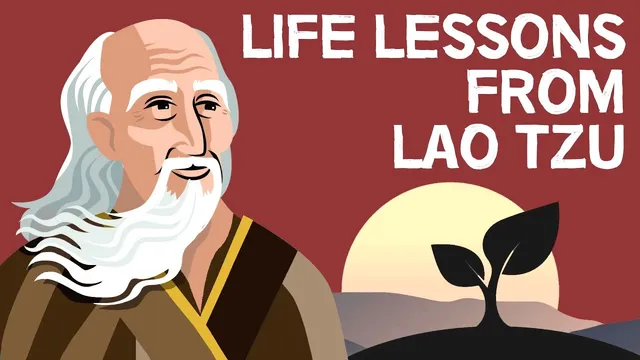
TAOISM | 5 Life Lessons From Lao Tzu
Based on Einzelgänger's video on YouTube. If you like this content, support the original creators by watching, liking and subscribing to their content.
Non-forcing works by aligning with natural limits and the timing of circumstances rather than pushing against them until exhaustion sets in.
Briefing
Taoist wisdom attributed to Lao Tzu frames a life strategy built around non-forcing: stop fighting reality, and life becomes easier, steadier, and more enjoyable. The core message is that effort and control can backfire when they violate nature’s rhythms—so the better path is to align with how things naturally unfold, conserving energy instead of burning it on resistance. That shift matters because it targets everyday sources of stress: overwork, micromanagement, constant striving for “more,” and the anxiety that comes from clinging to identity and outcomes.
The first lesson—“Don’t force anything”—treats nature as the model for action. Nature has its own order: some things grow slowly, others quickly; some last, others vanish. Humans, too, follow constraints they can’t override. Forcing is presented as swimming against the stream: it may work briefly, but it’s exhausting and eventually collapses under natural limits. The practical alternative is “working smart” by setting sails correctly—using diligence without brute pressure—so the “wind” of circumstances can carry progress.
The second lesson—“Don’t overburden yourself”—extends the same logic to personal capacity. Pushing too far, Lao Tzu’s teachings suggest, creates fragility rather than strength. The transcript uses strength training as an analogy: muscles need overload, but they also need rest to recover and grow. Without recovery, people become weaker over time, with chronic exhaustion linked to immune decline and higher risk of depression. The same pattern appears in financial life: taking on a mortgage that’s barely affordable can lock someone into stressful work, because any reduction in income threatens the payment obligation. The result is a “hamster wheel” driven by fear and status, not necessity.
The third lesson—“Stop controlling the world”—argues that control often worsens problems. Circumstances change, and intervention can create new complications. Workplace micromanagement is offered as a familiar example: teams become stressed and divided under excessive control, but operations may run smoothly when the controller is absent. A “good leader” is described as operating from the background—delegating and intervening sparingly—because imposing force tends to disrupt the natural flow.
The fourth lesson—“Enough is enough”—targets accumulation. Needs have natural limits, and excess becomes harmful. The transcript contrasts the mouse that drinks only what it needs with humans who gather more than necessary, driven by fear: fear of losing status (“I am more”), and fear that the future will be unsafe. Contentment is framed as peace, while possessions are treated as unstable—none are fully controllable, and “the things you own end up owning you.” Moderation is presented as the workable middle ground: having resources is fine if they don’t become chains.
The fifth lesson—“Don’t cling to life”—draws a line between celebrating life and clinging to it. Fear of death is described as fear of losing what one clings to: beauty, reputation, wealth, and especially the self-image that makes those things meaningful. Change is presented as inevitable, and resisting it turns into anxiety. Flexibility—accepting what shifts and letting go of rigid identity—is portrayed as the path to being a “disciple of life,” able to move through a chaotic universe without being ruled by fear.
Cornell Notes
Lao Tzu’s Taoist lessons emphasize non-forcing as a practical way to live with less stress and more stability. “Don’t force anything” argues that pushing against nature’s limits exhausts people and often fails; aligning with circumstances (“working smart”) is more effective. “Don’t overburden yourself” warns that growth requires balance—especially rest—otherwise effort turns into chronic weakness. “Stop controlling the world” says intervention and micromanagement frequently create more problems than they solve, while good leadership delegates and steps in sparingly. “Enough is enough” and “Don’t cling to life” connect fear—of scarcity and of losing identity—to overaccumulation and anxiety, recommending moderation and flexible acceptance of change.
Why does “don’t force anything” treat nature as the standard for human action?
How does the “don’t overburden yourself” lesson use strength training to make its point?
What’s the difference between delegating and controlling in the leadership example?
Why does “enough is enough” connect overaccumulation to fear?
What does “don’t cling to life” say people actually fear losing?
Review Questions
- Which natural constraints does the transcript use to justify “don’t force anything,” and what practical alternative does it recommend?
- How does the rest/recovery argument in strength training support the broader claim about overburdening in daily life?
- In what ways does the transcript connect control, fear, and identity to stress and anxiety?
Key Points
- 1
Non-forcing works by aligning with natural limits and the timing of circumstances rather than pushing against them until exhaustion sets in.
- 2
Rest is not optional: growth and resilience require recovery, and ignoring it turns effort into long-term weakness.
- 3
Micromanagement often creates stress and dysfunction; effective leadership delegates and intervenes sparingly.
- 4
“Enough” is a stabilizer: needs have natural limits, and accumulation driven by fear eventually becomes a burden.
- 5
Clinging to identity—beauty, reputation, wealth, and self-image—amplifies fear; flexibility and acceptance reduce anxiety.
- 6
Celebrating life differs from clinging to it: the former is open and responsive, while the latter is rigid and fear-driven.