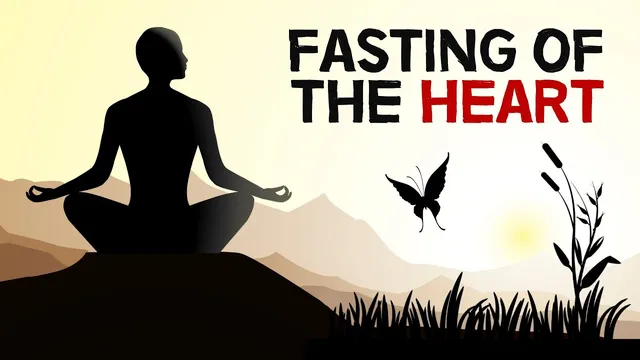
TAOISM | The Fasting of the Heart
Based on Einzelgänger's video on YouTube. If you like this content, support the original creators by watching, liking and subscribing to their content.
“Fasting of the heart” is a Taoist practice aimed at quieting the mind and senses, not just abstaining from particular pleasures like wine or flesh.
Briefing
“Fasting of the heart” in Taoist thought is a disciplined withdrawal from both mental chatter and sensory indulgence—aimed at “cultivating unity,” not merely achieving a temporary mood reset. The practice reframes detox culture by arguing that the real source of inner turbulence isn’t pleasure itself, but the mind’s constant intervention: its habit of making distinctions, clinging to beliefs, and turning the world into opposing categories that generate friction, fear, and compulsive behavior. By quieting the senses and the intellect, practitioners create the conditions for a direct, wordless alignment with Tao—the boundless, ever-present force that can’t be grasped through thinking or perceived through the five senses.
The concept is anchored in a story from the Zhuangzi. Confucius advises Yen Hui, a would-be reformer who wants to travel to the kingdom of Wei and use his knowledge to bring change, to “start fasting.” Yen Hui points out that his family has already gone without wine and flesh for months. Confucius distinguishes that kind of abstinence—fasting of religious observance—from “fasting of the heart.” In this context, “heart” translates from the Chinese Xin (心), closer to “mind,” because ancient Chinese thought located cognition at the heart. The “fasting” therefore means curbing the mind’s operations and the senses that feed them, so unity can be cultivated rather than ego-driven reform imposed.
Tao is described as all-encompassing and incomprehensible: eternal, everywhere, endless, and inaccessible to both senses and language. The only route toward it is subtractive—stopping what disturbs connection. The practice is portrayed as an “ultimate detox” of everything that disrupts one’s being, offering inner peace as a deeper alternative to the relief people often chase through sensual pleasure. The senses are treated as gateways between the world and cognition; when they constantly deliver inputs, the mind responds with judgments and distinctions. In the Taoist worldview, opposites—good and bad, beautiful and ugly, healthy and unhealthy—aren’t separable realities but interdependent modulations. Treating them as rigidly divided creates friction: fear, hatred, and “us vs. them” thinking, including a perceived separation between humans and nature.
Mind is also acknowledged as useful for survival—planning, learning, communication, and protection. The problem arises when it becomes tyrannical, using intervention to control both the external world and the self. Attachment to beliefs hardens into hostility; desire intensifies pain when unmet; mental chatter drains body and mind. “Cultivating unity” is presented as liberation from the clash of opposites and an experience of interconnectedness achieved through stillness.
The transcript closes by linking the practice to non-interference: when the heart fasts, one becomes passive and receptive, like clear water after mud settles. Letting events take their course is framed as a way to avoid making things worse—whether in personal life or in governance—echoing the Taoist ideal of “not-doing,” where everything falls into place.
Cornell Notes
“Fasting of the heart” is a Taoist practice of temporarily abstaining from both intellectual activity and sensual engagement to quiet the mind and senses. In the Zhuangzi story, Confucius distinguishes fasting from religious observance (abstaining from wine and flesh) from fasting of the heart, where “heart” (Xin, 心) functions as “mind.” The goal is “cultivating unity,” a state of interconnectedness achieved through stillness, because Tao can’t be grasped by senses or explained in words. The transcript argues that inner turmoil and compulsive behavior stem from the mind’s intervention—its habit of making rigid distinctions and clinging to beliefs—so the remedy is subtractive: letting go rather than adding more pleasure or control.
What does “fasting of the heart” mean in the Zhuangzi story, and how is it different from ordinary abstinence?
Why does the transcript connect fasting to Tao, and what is Tao’s relationship to thought and the senses?
How does “cultivating unity” relate to the mind’s habit of making distinctions?
What role do senses play, according to the transcript, and why does quieting them matter?
How does the transcript explain why pleasure-based detoxes (like dopamine fasting) may not be enough?
What does “not-doing” mean in practice, and how is it illustrated?
Review Questions
- How does the transcript redefine “heart” (Xin, 心) and what change does that imply for what “fasting” targets?
- According to Taoist logic in the transcript, why does seeing the world in opposites create friction?
- What internal mechanism is blamed for addictions and compulsive pleasure-seeking, and how does “fasting of the heart” address it?
Key Points
- 1
“Fasting of the heart” is a Taoist practice aimed at quieting the mind and senses, not just abstaining from particular pleasures like wine or flesh.
- 2
In the Zhuangzi account, “heart” (Xin, 心) functions as “mind,” so the practice targets cognition and perception rather than only bodily intake.
- 3
Tao is described as beyond senses and language; getting closer requires subtracting mental and sensory disturbance rather than adding new knowledge or experiences.
- 4
The mind’s habit of rigid distinctions (good/bad, beautiful/ugly) is linked to fear, hatred, and “us vs. them” thinking, including separation from nature.
- 5
Inner peace is framed as “cultivating unity,” achieved through stillness and receptivity like clear water after sediment settles.
- 6
The transcript critiques pleasure-based detox as potentially superficial if the underlying issue is the mind’s intervention and attachment to beliefs.
- 7
“Not-doing” emphasizes non-interference—letting events unfold—because ego-driven control can make situations worse.