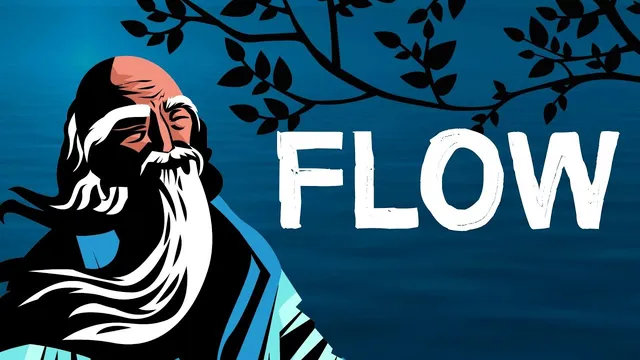
TAOISM | The Philosophy Of Flow
Based on Einzelgänger's video on YouTube. If you like this content, support the original creators by watching, liking and subscribing to their content.
Wu wei is portrayed as effortless, precise action that arises when striving and resistance drop away.
Briefing
Taoism’s core practical insight is that “non-action” (wu wei) isn’t passivity—it’s a disciplined way of acting that minimizes resistance, letting tasks unfold with less friction. In everyday terms, it resembles the athlete’s “zone”: attention stays razor-sharp, effort feels effortless, and worries about outcomes fade while performance runs on natural momentum. The payoff is psychological as well as practical—less striving, fewer mental loops, and a closer fit between what a person does and the flow of circumstances.
The foundation for this idea comes from the Tao Te Ching, traditionally attributed to Lao Tzu, whose historical existence is debated but whose influence is widely acknowledged. The text treats the Tao (the Way) as something that can’t be fully described or sensed—“the Tao that can be described is not the eternal Tao.” That framing matters because it shifts the goal from mastering reality to aligning with it. Since the true Tao is beyond comprehension, Taoist guidance points less toward a single technique and more toward a mindset: stillness of mind, curbing the senses, humility, and the cessation of striving so a person can open to how the universe works.
Stories in Taoist literature make the concept concrete. In Zhuangzi, a cook named Ting carves oxen with such ease that his perception changes over time: at first he sees only the ox, then he stops seeing the whole, and finally he “goes at it by spirit” rather than relying on sight. The result is precision without force—he follows natural openings and avoids even the smallest ligaments or tendons. The knife becomes a symbol of this gentleness: good cooks replace knives yearly, mediocre ones replace them monthly, but Ting uses the same knife for nineteen years because his method is subtle rather than brutal.
That gentleness connects to wu wei as a “golden path” between anxiety and boredom. Taoism challenges a Western habit of equating results with energy spent. Instead, outcomes often arise from a chain of actions that can become natural once the mind stops micromanaging. Life is compared to a river: trying to control the current is futile, while navigating with it—swimming along rather than fighting—lets processes unfold. The river’s companion symbol is water: soft, humble, and uncompetitive, yet able to wear down rock through persistence without force.
When flow happens, the thinking mind’s obsession with results disappears. The transcript links this to Stoic amor fati—embracing whatever comes and focusing on the present. In that state, whether in sports, writing, gaming, or dancing, a person forgets future pressure and past failures. The mechanism is letting go: stopping the urge to swim against the current, releasing attachment to past and future, and fully inhabiting the moment. In Taoist terms, the most effective action is often the one that involves the least resistance.
Cornell Notes
Taoism frames “non-action” (wu wei) as effortless, precise action that happens when resistance and outcome-fixation drop away. The Tao Te Ching presents the Tao as ultimately indescribable and beyond the senses, so the practical goal becomes alignment with the Way rather than control of it. Taoist stories, like Zhuangzi’s cook Ting, show how skill can become “spirit”-guided: perception shifts, force is replaced by following natural openings, and even tools last far longer. This mindset resembles the athlete’s “zone,” where attention stays present and results matter less. Letting go—releasing the urge to fight the current—is portrayed as the route to flow and psychological relief.
What does wu wei (“non-action”) mean in practice, and why is it not laziness?
Why does Taoism insist the Tao can’t be defined, and how does that affect behavior?
How does the story of Cook Ting illustrate flow and non-resistance?
What does the river metaphor add to the idea of wu wei?
How does water function as a symbol for Taoist virtue?
What changes in the mind during flow, and what practice is offered to reach it?
Review Questions
- How does the transcript distinguish wu wei from passivity, and what mental shift makes flow possible?
- In the Zhuangzi story, what changes in Cook Ting’s perception over time, and how does that relate to the knife lasting nineteen years?
- Why does the river metaphor claim that control is futile, and what does “navigation” mean instead?
Key Points
- 1
Wu wei is portrayed as effortless, precise action that arises when striving and resistance drop away.
- 2
The Tao is treated as ultimately indescribable; alignment with the Way matters more than defining it.
- 3
Taoist stories use changing perception (from seeing the whole to acting by “spirit”) to show how force becomes unnecessary.
- 4
Gentleness is framed as a “golden path” between anxiety and boredom, replacing outcome-fixation with present focus.
- 5
Life is compared to a river: fighting the current is futile, while navigating with it allows natural processes to unfold.
- 6
Water symbolizes Taoist virtue—softness and humility that still overcome hardness through persistence without competition.
- 7
Flow is linked to letting go: releasing attachment to past and future so attention stays on the task at hand.