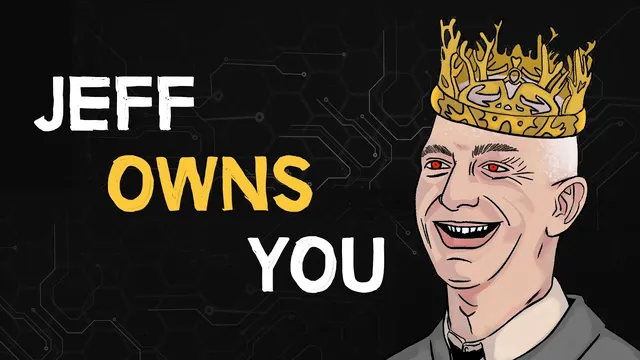
Technofeudalism Is Here—And You’re Already Trapped Inside It
Based on Einzelgänger's video on YouTube. If you like this content, support the original creators by watching, liking and subscribing to their content.
Technofeudalism describes a shift from land-based feudal control to platform-based control of “cloud space,” where access is privately governed.
Briefing
Technofeudalism reframes today’s Big Tech economy as a modern version of feudal power: platform owners control the “cloud space” where people must work, sell, and even think, extracting value through fees, algorithmic management, and data-driven advertising. The core claim is that capitalism hasn’t simply evolved—it has been replaced, in practice, by a system where a small elite (“cloudalists”) governs access to digital life, while millions of users (“cloud proles”) depend on rules they don’t write.
The comparison starts with feudal land. In medieval Europe, land was inherited and controlled by nobles, leaving peasants with little choice but to labor for survival. Varoufakis’ argument draws a parallel to platforms that don’t own physical goods but dominate digital access. YouTube, for instance, is presented as a marketplace for user labor: creators produce nearly all content, while the platform takes a cut of ad revenue—described here as 45% to YouTube and 55% to creators in the partnership program. The arrangement can look like freedom—set your hours, build an audience, potentially earn full-time income—yet it still functions like “cloud rent,” because creators rely on a space they do not own and can lose access to through policy enforcement.
Amazon and other marketplaces extend the same logic. The platform mediates between sellers and customers, collects fees, and can effectively decide who is visible. Kindle e-books are cited as a dominance example (83% of U.S. sales and 68% worldwide), with independent publishers dependent on Amazon’s distribution. The power imbalance is emphasized through account suspension and algorithmic ranking: sellers have no meaningful say in policy or visibility, and losing access can sharply reduce income. The broader metaphor is “enclosures” again—Big Tech enclosing the early internet’s many independent spaces into centralized, privately controlled ecosystems.
For workers, the shift is described as algorithmic control rather than human supervision. Uber is used as the clearest example: drivers use their own cars, but earnings are mediated by a platform that takes a share and manages outcomes via algorithms. The transcript highlights instability—pay and job availability can fluctuate—and the lack of recourse when accounts are suspended. Because platform access can be revoked without labor-law protections, losing a ban can mean losing the livelihood itself, especially in markets where a few platforms dominate.
For consumers, the “catch” is privacy and manipulation. Platforms are portrayed as trading access for data, using devices like Amazon Alexa to collect voice recordings and interactions for targeted advertising. Social media and search are framed as “free” because users become the product: profiles and behavior generate valuable marketing intelligence, while advertising is tailored to identities and vulnerabilities. This targeting is described as influencing not just purchases but information diets—amplifying rage-bait, feeding echo chambers, and potentially shaping political outcomes. The transcript warns that controlling information supply at scale gives a tiny elite influence far beyond what traditional advertising could achieve.
The closing prescription is political and personal. Varoufakis’ proposed solution is democratizing cloud ownership and governance, but the transcript acknowledges that powerful “cloudalists” already hold political leverage. In the meantime, it argues for preserving agency through refusal, privacy protection, and reducing dependence—using minimalism, frugality, and awareness to avoid becoming deeply entangled in systems that rely on user participation.
Cornell Notes
Technofeudalism is presented as a modern replacement for capitalism in which a small elite controls “cloud space” rather than land. Platforms like YouTube, Amazon, and Uber are described as extracting value through revenue cuts (“cloud rent”), algorithmic management, and the ability to suspend access without meaningful appeal. Workers and sellers become dependent on private rules and visibility systems they don’t govern, while consumers trade privacy for convenience and are targeted with advertising that can shape beliefs and behavior. The stakes extend beyond work and shopping to autonomy, dignity, and democratic life. The transcript ends by urging both collective change (democratized cloud ownership) and individual resistance through privacy, refusal, and reducing reliance on platform ecosystems.
How does “cloud rent” work, and why is it likened to feudal tribute?
Why does algorithmic management matter more than the absence of a human boss?
What does “enclosures” mean in the technofeudal context?
How do targeted ads and data collection connect to political influence?
What practical steps does the transcript suggest for resisting technofeudal dependence?
Review Questions
- Which platform examples are used to illustrate “cloud rent,” and what specific mechanism extracts value from users?
- How does account suspension change the risk profile for platform workers compared with traditional employment?
- What chain of effects links targeted advertising to echo chambers and potential political manipulation?
Key Points
- 1
Technofeudalism describes a shift from land-based feudal control to platform-based control of “cloud space,” where access is privately governed.
- 2
Platforms can extract value through revenue cuts and fees while users provide the labor and content that create most of the product.
- 3
Algorithmic management can replace human supervision without reducing power; it can still destabilize earnings and remove recourse via account suspension.
- 4
Marketplace dominance (e.g., Amazon’s Kindle share) can make independent sellers effectively dependent on a single gatekeeper for visibility and sales.
- 5
Consumer “free” services are framed as data-driven businesses where users become the product and privacy is traded for convenience.
- 6
Targeted advertising and personalized feeds are portrayed as shaping desires, information exposure, and potentially political outcomes through echo chambers and rage-bait.
- 7
Resistance is framed as both collective (democratized cloud governance) and personal (privacy protection, refusal, and reducing reliance).