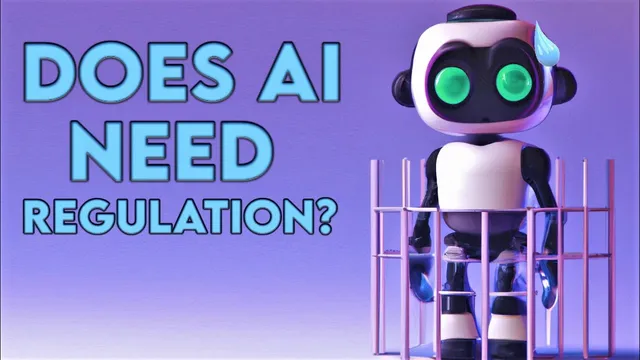
Text to Image AI BACKLASH - Should AI be Regulated? - Stable Diffusion’s Open Source Power
Based on MattVidPro's video on YouTube. If you like this content, support the original creators by watching, liking and subscribing to their content.
Stable Diffusion’s planned open-source release would let users download weights and run the model locally, reducing platform-level control over outputs.
Briefing
Stable Diffusion’s planned public release is set to bring a powerful text-to-image model into the open-source world—meaning the weights will be downloadable and usable on private hardware—while sparking a debate over whether AI image generation should be regulated or “censored” to prevent misuse. The flashpoint isn’t the model’s capability; it’s the lack of barriers once it’s in users’ hands, including the ability to generate explicit nudity on a local machine. That prospect has triggered backlash from parts of the AI community and raised questions about how much responsibility developers should take when harmful outputs can be produced without platform oversight.
On one side of the argument sits OpenAI’s approach with DALL·E 2, which enforces a strict “G-rated” content policy: no weapons, hate symbols, harassment, self-harm, sexual content/nudity, or realistic depictions of illegal or harmful acts. It also restricts realistic face uploads to reduce deepfake risk, requires disclosure that images are AI-generated, and blocks certain political or health-related content. Critics say these rules go too far—especially the prohibition on generating images of people and the way prompts can be altered by pre- and post-processing filters (for example, adding or shifting attributes like ethnicity). Some users also report difficulties getting support after bans, fueling skepticism about how consistently the rules are applied.
Stability AI, by contrast, is preparing a more permissive environment—at least for the open-source release—while still experimenting with safety measures. A classifier is being tested alongside the model, with beta testers and licensing work underway, and a Discord-based bot is described as “PG13,” disallowing nudity and discriminatory content in that specific community setting. The key tension: those filters may not carry over into the fully open-source weights, where users could potentially remove or bypass safeguards. That possibility has already fueled internal community conflict, with some arguing that censorship is necessary and others arguing that open access is inevitable and that restricting models turns developers into “arbiters” of creativity.
Prominent voices reflect the split. Bax T Future raised concerns about releasing uncensored weights and worried about real-world harms—like celebrities being depicted in degrading or NSFW contexts—while also engaging directly with Stability AI leadership. Stability AI CEO Emad (as quoted through an interview) frames the issue as utilitarian: humanity will use the technology badly sometimes, but the majority of people will use it creatively, and restricting access makes the company the gatekeeper. He also argues that these models are already spreading through legitimate and beneficial uses, from mental health settings to use by people across age groups.
The broader prediction is that the “genie is out of the bottle.” Even if open-source release were delayed, similar models would likely appear elsewhere, and harmful outputs could still emerge—potentially leading to lawsuits tied to celebrity harm or deepfake-like scenarios. The debate ultimately lands on a philosophical question: whether safety efforts should limit capability at the source, or whether mitigation should focus on downstream harm while accepting that open models will be harder to control.
Cornell Notes
Stable Diffusion’s upcoming public release is designed to be fully open source, with downloadable weights that can run on consumer GPUs and be used locally. That openness is driving backlash because it could enable explicit nudity and other harmful imagery without meaningful platform-level barriers. OpenAI’s DALL·E 2 takes a stricter “G-rated” stance—blocking nudity, weapons, hate, and realistic face generation to reduce deepfake risk—while Stability AI is testing classifiers and enforcing limits mainly in its Discord environment. Stability AI leadership argues that restricting access makes the developer a gatekeeper, while critics worry that uncensored weights will predictably be used to harm people, including celebrities. The dispute centers on whether mitigation should cap model capability or accept open access and focus on managing misuse.
What makes Stable Diffusion’s release different from closed text-to-image services like DALL·E 2?
How does OpenAI’s DALL·E 2 content policy limit what users can generate?
What safety measures is Stability AI testing, and where do they appear to apply?
Why do some community members oppose releasing uncensored open-source weights?
How does Emad’s view justify open access despite the risk of harmful outputs?
What does the transcript predict about regulation, enforcement, and lawsuits?
Review Questions
- What specific restrictions does DALL·E 2 impose to reduce deepfakes and sexual or violent content, and how do those differ from an open-source model running locally?
- Why does Emad argue that restricting access makes the developer a gatekeeper, and how does that contrast with Bax T Future’s concerns about predictable misuse?
- If safety filters are mainly enforced in a Discord bot rather than in the open-source weights, what practical limits does that create for preventing harmful outputs?
Key Points
- 1
Stable Diffusion’s planned open-source release would let users download weights and run the model locally, reducing platform-level control over outputs.
- 2
DALL·E 2’s DALL·E 2 content policy is described as extremely restrictive, banning nudity/sexual content, weapons, hate symbols, harassment, self-harm, and realistic face generation to limit deepfakes.
- 3
Stability AI is testing safety classifiers and enforcing limits in its Discord environment, but the open-source nature raises doubts about whether those safeguards will persist in the downloadable weights.
- 4
Community backlash centers on predictable misuse risks, including the possibility of generating degrading or NSFW depictions of celebrities and triggering real-world harm.
- 5
Stability AI leadership argues that open access is inevitable and that benefits outweigh harms, warning that heavy restriction turns developers into arbiters of creativity.
- 6
The transcript anticipates that similar models will appear even if one release is delayed, and that celebrity-related incidents could drive legal action targeting the model provider.