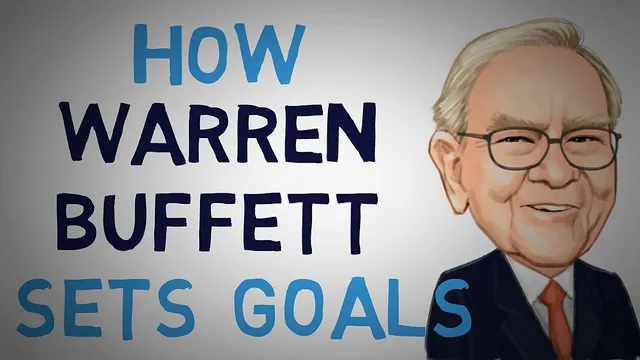
The 5/25 Rule - How Warren Buffett Sets His Goals (animated)
Based on Better Than Yesterday's video on YouTube. If you like this content, support the original creators by watching, liking and subscribing to their content.
Write down 25 goals to capture everything you think matters.
Briefing
Warren Buffett’s “5/25 rule” turns goal-setting into a focus system: write down 25 ambitions, circle the 5 that matter most, and treat the other 20 as distractions to be avoided until the top priorities are achieved. The core idea is simple but strict—success depends less on having many goals and more on refusing to let secondary ones steal time, attention, and momentum.
The story begins with Buffett flying regularly with his private pilot, who eventually asks for the “secret” behind Buffett’s productivity. Buffett has the pilot create a list of 25 things he wants to achieve, capturing every career and life goal that comes to mind. After the pilot finishes, Buffett asks him to review the list and circle only the top 5. That step proves difficult because the pilot initially views nearly everything as important. Still, he ends up with two groups: five circled items and twenty uncircled ones.
Buffett then challenges how the pilot plans to handle the two sets. The pilot says he will concentrate on the circled five while working on the other twenty “as he sees fit.” Buffett rejects that approach outright. The uncircled items don’t become “extra projects” to manage; they become an “avoid at all cost list.” The instruction is to forget those goals until the top five are successfully completed.
The logic behind the rule is practical. The twenty uncircled goals are still things the pilot cares about, so they feel justified in the moment. That’s exactly why they’re dangerous: they can be framed as worthwhile, urgent, or necessary—yet they compete with the few priorities that truly define progress. The transcript links this pattern to a common outcome: people end up with many half-finished projects instead of a smaller set of completed ones. By contrast, Buffett’s method forces a comparison—secondary priorities only look meaningful until they’re measured against the top five.
The payoff is tied to Buffett’s real-world focus, including his dedication to running Berkshire Hathaway as his number one priority. The rule is presented as a way to replicate that discipline: write down 25 goals, circle the five most important, and take action only on those. Knowing the framework isn’t enough; the emphasis falls on the first step toward the circled priorities—so focus becomes behavior, not just intention.
Cornell Notes
The 5/25 rule attributes Buffett’s focus to a disciplined goal filter. First, list 25 goals. Next, circle only the top 5—the priorities that matter most. Everything not circled becomes an “avoid at all cost list,” meaning those 20 goals should be ignored until the top five are completed. The method works because uncircled goals still feel important, making them easy to justify as distractions. The approach is meant to prevent the common trap of juggling many projects and finishing few, and it’s framed as consistent with Buffett’s long-term dedication to running Berkshire Hathaway.
What is the exact process behind Buffett’s 5/25 rule?
Why does the rule treat the uncircled 20 goals as an “avoid at all cost list”?
How does the rule address the problem of too many active projects?
What role does “taking the first step” play in making the rule work?
How is Buffett’s personal example used to reinforce the rule?
Review Questions
- If you wrote 25 goals and circled only 5, what should you do with the remaining 20 according to the rule?
- What makes uncircled goals especially likely to become distractions even when they feel important?
- How would the 5/25 rule change your day-to-day decisions compared with trying to work on all goals “as you see fit”?
Key Points
- 1
Write down 25 goals to capture everything you think matters.
- 2
Circle only the top 5 goals—those are the priorities that receive focused effort.
- 3
Treat the remaining 20 uncircled goals as an “avoid at all cost list,” not as projects to manage.
- 4
Use the top-5 comparison to prevent secondary goals from stealing time and attention.
- 5
Expect that caring about a goal makes it more distracting, not less.
- 6
Take action immediately on the circled priorities to convert intention into focus.
- 7
Long-term results are linked to protecting time for a single dominant priority, such as running Berkshire Hathaway.