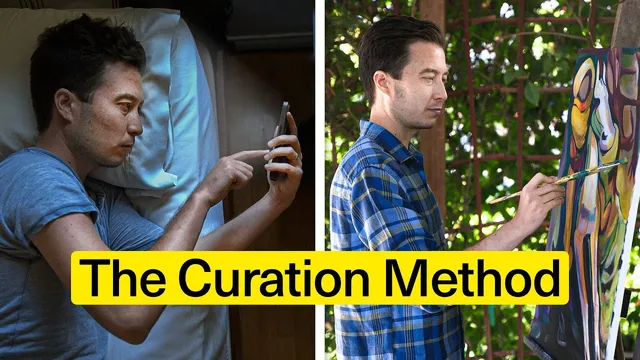
The 99/1 Rule: Go From Lurker to Creator (It's Easier Than You Think!)
Based on Tiago Forte's video on YouTube. If you like this content, support the original creators by watching, liking and subscribing to their content.
The 99/1 rule highlights a practical opportunity: most people lurk, so consistent publishing can stand out without needing celebrity status.
Briefing
Most people on the internet consume far more than they create—roughly a 99/1 split where 90% lurk, 9% occasionally engage, and only 1% regularly publish. The practical takeaway is that “becoming a creator” doesn’t require celebrity-level expertise or a polished brand from day one; it starts with a repeatable way to turn what’s already been collected into something worth sharing.
Tiago Forte frames creation as a forcing function for learning, a foundation for personal branding, and a gateway to real relationships. Writing, posting, or teaching forces gaps in understanding into the open—knowledge becomes clearer when it has to be organized and communicated. Meanwhile, shared ideas and stories become an online “resume,” building a narrative about who someone is and what they care about. Finally, publishing sparks conversations that can lead to collaborations, clients, and even friendships; Forte cites a reader, David Perell, who reached out to propose a course collaboration that later helped Forte hire his first full-time staff.
The core method for getting started is curation. Forte describes collecting as passive and ultimately insufficient: saving compelling articles, quotes, facts, and videos in a digital notes app doesn’t automatically change anything. Curation is the step that makes it public and transformative—sorting, selecting, and then organizing material into a story with a clear message. The “magic” is that curation naturally transitions into creation once the curator annotates, explains, and adds personal perspective, turning aggregated information into something uniquely theirs.
To make the idea concrete, Forte lists six formats that combine curation with original value: curated newsletters for niche news; infographics and diagrams that map tools, people, or companies; comparison tables that help others make decisions; toolkits that bundle resources for a specific skill; comprehensive guides for newcomers; and reviews that pair strong opinions with personality.
He then lays out five guiding principles. First, build a “second brain” to collect and store everything—using tools like Evernote, Notion, or Apple Notes—because effective curation requires a place to revisit and organize. Second, choose a topic to learn and commit to learning in public, documenting progress, mistakes, and messy drafts. Third, combine the personal and the objective by sharing useful, practical content while adding interpretation and commentary. Fourth, “always pitch something,” meaning every post is an invitation for someone’s time and attention—start by recommending what you’ve tried, then later frame your own ideas so people can take action. Fifth, feed and tune the network by sharing what you value so like-minded people find you, emphasizing that creativity is supported by community rather than solitary effort.
A major myth gets challenged: creators don’t need to be established experts before sharing. Expertise shifts quickly as knowledge changes, and peer-to-peer learning means someone slightly ahead can still provide real value. The journey is framed as a dialogue with one’s future self—each curated insight becomes a time capsule that documents growth, deepens understanding, and helps build a community starting with the act of posting.
Cornell Notes
The internet’s “99/1 rule” describes how most people lurk while only a small fraction actively create. Forte argues that creation is easier to start than it seems because curation turns collected material into original value: selecting, organizing, annotating, and adding personal perspective. He links publishing to learning (teaching reveals gaps), branding (posts become a public resume), and opportunity (conversations can lead to collaborations and work). Practical formats—newsletters, infographics, comparison tables, toolkits, guides, and reviews—show how to curate while still creating. A five-part system (second brain, pick a topic, mix personal + objective, always pitch, and feed your network) helps beginners move from passive saving to consistent sharing.
Why does Forte treat curation as the bridge from lurking to creating?
How does publishing help someone learn more than reading alone?
What are the six curation formats that also produce original output?
What does a “second brain” do in the curation workflow?
How can someone share without being an established expert?
What does “always pitch something” mean if the goal isn’t selling?
Review Questions
- What specific actions turn a saved collection into curation that creates original value?
- Which of the five guiding principles would be hardest for you to implement first, and what concrete step would you take this week?
- How do the learning, branding, and relationship benefits of content creation reinforce each other in Forte’s framework?
Key Points
- 1
The 99/1 rule highlights a practical opportunity: most people lurk, so consistent publishing can stand out without needing celebrity status.
- 2
Curation is the bridge from passive consumption to active creation because it adds selection, organization, annotation, and personal perspective.
- 3
Publishing improves understanding by forcing ideas into coherent form, revealing gaps that reading alone can hide.
- 4
A “second brain” (e.g., Evernote, Notion, Apple Notes) is essential for effective curation because it enables storing and later selecting the best material.
- 5
Beginners can learn in public by documenting progress, mistakes, and messy drafts while building a topic-focused body of work.
- 6
Mixing personal and objective content makes posts useful and engaging: practical value plus interpretation.
- 7
Community grows through consistent sharing and network “tuning,” not solitary effort or waiting to become an established expert.