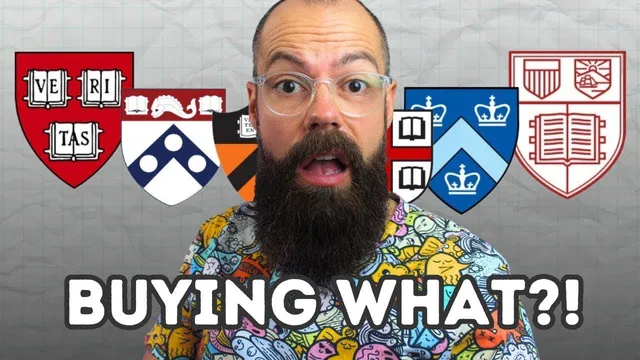
The Alarming Trend in Ivy League Admissions...
Based on Andy Stapleton's video on YouTube. If you like this content, support the original creators by watching, liking and subscribing to their content.
A marketplace of paid high school research programs and student journals is producing “peer-reviewed” publications as an admissions credential.
Briefing
High school students are increasingly paying thousands of dollars to become “peer-reviewed” authors—an admissions tactic that critics say is turning academic publishing into a pay-to-play credential rather than a genuine quality check. The core concern is that this creates a new, money-backed pathway to impressive-sounding publications, widening the gap between wealthy applicants and students who rely on grades, extracurriculars, and real research experience.
A growing ecosystem of online research programs and student-focused journals has emerged to monetize that ambition. Services marketed to middle and high school students promise mentorship, faculty or teaching-assistant support, and “methodology courses,” culminating in short papers placed in journals that advertise high acceptance rates. One example described is the Journal of Student Research, which is portrayed as publishing submissions with minimal or no edits—contrasting sharply with the expectations of traditional peer review. The transcript also points to preprints and journals that accept a large share of submissions (reported as roughly 75%–80%), framing the result as a “publication racket” where paying for production can substitute for the scrutiny that peer review is supposed to provide.
Critics argue the damage goes beyond individual fairness. First, the practice undermines academic credibility and integrity by signaling that publication is easy to obtain through outsourcing and payment, even when the work may lack substance. Second, it creates an unfair advantage for students who can afford these services—especially in a system where elite universities already draw disproportionately from privileged backgrounds. That dynamic risks further penalizing applicants who cannot purchase research coaching or publication support.
Third, the transcript highlights a cultural shift: students may learn to treat academic papers as career currency and box-ticking requirements rather than outcomes of curiosity, rigorous inquiry, and meaningful contribution. If applicants arrive at university already holding peer-reviewed credentials, universities may face a flood of low-value submissions and a credibility crisis around what “peer-reviewed” actually means.
The proposed remedy centers on universities refusing to treat these student publications as differentiators. The transcript argues that admissions offices should not accept peer-reviewed student papers produced through these services, because they may not reflect the depth of knowledge and experience needed to generate research worth reading. In the long run, the expectation is that the credential will lose value as more applicants present similar publications—eventually forcing institutions to tighten standards or reject the practice outright.
Overall, the trend is framed as an erosion of academia’s foundations: a shift from research as discovery to research as a purchasable credential, with predictable consequences for fairness, trust, and the incentives shaping the next generation of scholars.
Cornell Notes
High school students are increasingly paying for programs that produce “peer-reviewed” publications, creating a credential that critics say is easier to obtain than real peer review. The transcript describes a marketplace of research coaching and student journals with high acceptance rates and minimal editing, which can make “peer-reviewed” function like a marketing label. This is presented as harmful to academic credibility and integrity, because it blurs the difference between genuine scholarly scrutiny and paid production. It also deepens inequality by giving wealthy students an advantage tied to ability to pay rather than research skill. The transcript argues universities may eventually have to reject these student publications to protect standards and rebuild trust.
What mechanism is turning “peer-reviewed” authorship into a paid admissions credential?
Why do high acceptance rates and minimal edits matter for peer review credibility?
How does the trend widen inequality in elite admissions?
What cultural harm does the transcript associate with early publication incentives?
What solution does the transcript propose for universities?
What future escalation does the transcript anticipate?
Review Questions
- What specific features of the described student-journal pipeline (e.g., acceptance rates, editing practices) undermine the meaning of “peer-reviewed” credentials?
- How does the transcript connect monetized publication to both fairness in admissions and broader trust in academic standards?
- If universities refuse to accept these publications, what incentives might shift for students and programs in the next admissions cycle?
Key Points
- 1
A marketplace of paid high school research programs and student journals is producing “peer-reviewed” publications as an admissions credential.
- 2
Some student journals are described as accepting a large share of submissions and providing minimal editing, weakening the credibility of the peer-review label.
- 3
The system is framed as wealth-dependent, increasing inequality among applicants to elite universities.
- 4
Monetized publishing may teach students to treat academic papers as career currency and box-ticking rather than curiosity-driven inquiry.
- 5
The transcript argues universities should not treat these student publications as differentiators and may need to reject them to protect academic standards.
- 6
If peer-reviewed student credentials become common, universities could face a flood of low-value submissions and tighten policies further.