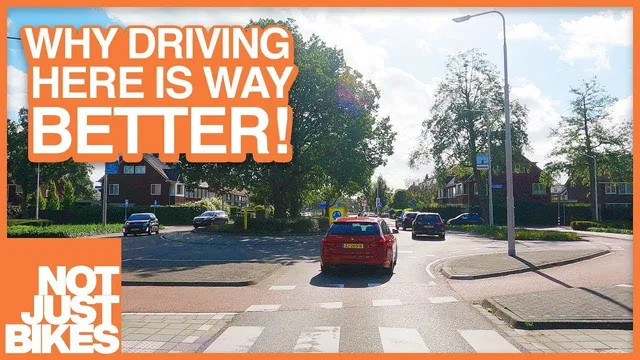
The Best Country in the World for Drivers
Based on Not Just Bikes's video on YouTube. If you like this content, support the original creators by watching, liking and subscribing to their content.
The Netherlands’ top driver ranking is tied to fewer cars on the road because cycling, walking, and transit handle many trips that would otherwise require driving.
Briefing
The Netherlands ranks as the best place in the world to drive because its cities reduce congestion and stress by building practical alternatives to car trips—then backing that up with smarter traffic control, safer intersections, and consistently well-maintained roads. The result is a driving experience that feels smooth and predictable even during busy periods, with less time lost to stop-and-go traffic than in many North American cities.
A key driver of that advantage is the Netherlands’ transportation system design: walking, cycling, and public transit are fast enough for many trips that fewer cars end up on the road in the first place. Cyclists often take the shortest, most direct routes, while drivers are forced onto longer detours when bike paths cut through areas that are pedestrianized or nearly car-free. That trade-off doesn’t hurt drivers as much as it sounds—if cycling weren’t faster, many of those riders would likely be in cars, worsening congestion. The pattern shows up historically too: Amsterdam’s approach in the 1970s demonstrated that prioritizing active transport and transit can improve conditions for drivers rather than degrade them.
Traffic flow also improves through operational details, especially signal timing. Many Dutch intersections use multiple detection loops placed not only at the stop line but also farther back, letting traffic lights switch based on whether another vehicle is actually approaching. That enables red lights to appear right after the last car clears and green phases to start early when it’s safe. Instead of the more rigid “all green in one direction, then all green in the other” pattern common in the US and Canada, Dutch signals run in multiple phases, including dedicated left and right movements that can occur simultaneously. The payoff is shorter waits and safer turns—particularly for left turns across traffic, a maneuver described as among the most dangerous and stressful in North America.
Road design further limits friction. Dutch streets have almost no “strodes” (a road type characterized by frequent side streets, driveways, and crossings that force repeated merging and interruptions). With fewer entry points and fewer traffic-light cycles, average speeds rise even when posted speed limits are lower. Roundabouts are also common and generally keep delays minimal, though the Netherlands uses “turbo roundabouts” when traffic volumes would otherwise cause backups.
The driving experience is also shaped by driver behavior and conflict levels. Stricter licensing requirements and, more importantly, the availability of alternatives mean that many people who live in Dutch cities drive only when they want to or truly need to. That reduces the pool of drivers who are forced into car trips for every errand. Meanwhile, conflicts with cyclists and pedestrians are minimized through protected bike lanes or fully separated routes, making it easier for drivers to avoid vulnerable road users.
Beyond traffic engineering, the Netherlands’ road infrastructure is described as exceptionally maintained, with potholes rare enough to be noteworthy. The transcript ties road quality to maintenance practices and to the broader financial reality that car-dependent sprawl creates more asphalt and stormwater infrastructure per person than cities can afford to sustain. Finally, the driving environment is portrayed as more pleasant visually and emotionally—less like stressful commuting on wide strode-style arterials, more like a designed landscape where driving feels like a means to get somewhere, not a daily ordeal. The speaker’s bottom line: the best driving country is the one that makes driving optional, then makes the remaining driving as efficient and safe as possible.
Cornell Notes
The Netherlands earns top marks for drivers by combining fewer cars on the road with traffic systems that waste less time. Cycling, walking, and public transit handle many trips, so drivers face lighter congestion and more predictable conditions. Intersections use advanced signal detection and multi-phase timing, often cutting waits and making turns safer—especially left turns across traffic. Dutch road layouts also reduce interruptions from side streets and driveways, keeping traffic moving and raising average speeds even with lower posted limits. The result is less stress for drivers because conflicts with cyclists and pedestrians are minimized and because many residents can avoid driving for everyday errands.
Why does having fewer cars on Dutch roads improve driving for the people who still drive?
How do Dutch traffic lights reduce waiting time compared with more rigid signal patterns?
What role do road design choices like the lack of strodes play in driving speed and stress?
Why does the transcript connect driver satisfaction to driver temperament and conflict levels?
How does road maintenance and funding relate to potholes and overall driving quality?
Review Questions
- Which combination of factors—mode share, signal control, and road layout—most directly explains why average driving conditions can be better even when posted speed limits are lower?
- How do multi-phase traffic signals and multiple detection loops change what drivers experience at intersections?
- Why does minimizing conflicts with cyclists and pedestrians matter for driver stress, even when cycling volumes are high?
Key Points
- 1
The Netherlands’ top driver ranking is tied to fewer cars on the road because cycling, walking, and transit handle many trips that would otherwise require driving.
- 2
Dutch traffic lights often use multiple detection loops and multi-phase timing to reduce wasted waiting and enable safer, simultaneous turning movements.
- 3
Road layouts with far fewer strodes (side-street/driveway-heavy interruptions) keep traffic flowing and can raise average speeds despite lower posted limits.
- 4
Cycling and pedestrian infrastructure reduces conflict points, making driving less stressful even in cities with many cyclists.
- 5
Driver satisfaction is reinforced by driver behavior shaped by alternatives: fewer residents are forced to drive for every errand, reducing anger and impatience.
- 6
Road quality is described as consistently high due to maintenance practices that prevent water intrusion and limit pothole formation.
- 7
Car-dependent sprawl can undermine road quality financially by creating more asphalt and stormwater infrastructure per person than cities can maintain.