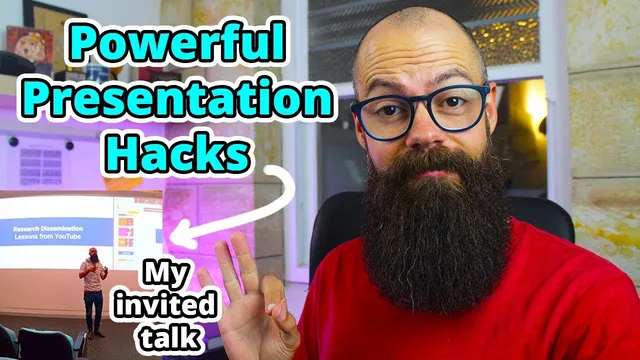
The best presentation tips no one taught you! | Three minute thesis (3MT) tips for winning
Based on Andy Stapleton's video on YouTube. If you like this content, support the original creators by watching, liking and subscribing to their content.
Build the talk around audience emotion and memorability, not slide design.
Briefing
Three-minute thesis competitions reward more than clarity—they reward emotional impact, memorability, and a tight narrative structure that makes audiences care. The core message is blunt: PowerPoint design doesn’t drive recall. What sticks is how the talk makes people feel, the few words they walk away repeating, and the problem your research solves in a human, relatable way.
The “secret formula” starts by ditching the instinct to build slides first. Instead, the talk should be engineered around audience psychology. People remember the emotional experience of a presentation more than the information delivered. To create that emotional tone, the advice is to decide what feelings the audience should have—comfortable, enthusiastic, even concerned about the problem—and then practice until confidence shows through. Practice isn’t just rehearsal; it’s what produces the vocal energy and presence that signals “safe hands,” whether someone is naturally extroverted or introverted.
Next comes the take-home message: compress the research into three to five words and repeat them deliberately. The talk should “spike” those words at key moments—typically early and again before the finish—because repetition is what turns a message into a memory. The structure then shifts from facts to story. A simple ABT framework (background → but/problem → therefore/solution) helps organize the narrative: provide one or two background “ands,” hammer the “but” with the real-world problem, and use “therefore” to show the specific approach that addresses it. The “but” is treated as the main event because audiences respond to problems, not lab achievements.
To manage energy across a short format, the guidance uses a “two-three-one” pattern. The opening “two” is a high-energy, feel-good or aspirational statement that hooks attention. The middle “three” can be lower energy because audiences typically remember the beginning and end of brief talks more than the middle. The final “one” is the most powerful statement—often a blue-sky vision of what changes if the research succeeds—since the last line heavily influences recall.
An optional “memorable moment” can further increase stickiness. The examples are intentionally unconventional: playing a ukulele in a physics presentation, doing a card trick, or even throwing a stack of papers during a pitch to create a hook people remember. The point isn’t relevance; it’s creating an interruption in attention so people remember who you are.
The second half broadens from performance to dissemination. The central rule is that nobody cares about research in the abstract; people care about their own biases, interests, and problems. Effective outreach starts by identifying what audiences are already searching for using “Answer the Public,” then building content that answers those questions while slipping in the research as a “trojan horse.” Practical dissemination steps include writing a lab blog using a story structure, pitching university comms teams or journalists with a clear human problem, and using platforms like YouTube when search demand exists. The strategy is iterative: keep publishing through a simple system, because success often depends on timing, the right editor or journalist, and persistent effort rather than perfect content.
Cornell Notes
Three-minute thesis success depends on engineering emotion and memory, not slide polish. The recommended workflow is: decide what feelings the audience should have, practice until confidence shows, compress the research into three to five repeatable words, and structure the message with ABT (background → but/problem → therefore/solution). A “two-three-one” energy arc helps manage attention: high-energy hook, lower-energy middle, and a powerful aspirational finish that leaves a vision of impact. For dissemination, outreach works only when it starts from audience questions and human problems—using tools like Answer the Public—then delivers research as the solution to what people already care about.
Why does PowerPoint get pushed to the end of preparation, and what replaces it?
How should a researcher choose the “three words” the audience should remember?
What does the ABT story structure do, and where does it place emphasis?
How does the “two-three-one” model manage attention in a three-minute thesis?
What is the role of a “memorable moment,” and why might it work even if it’s not research-related?
How does Answer the Public fit into research dissemination strategy?
Review Questions
- What are the three-to-five-word takeaway and repetition strategy, and where in a short talk should those words appear?
- Use ABT to outline a 3-minute thesis: what would count as the background, the “but” problem, and the “therefore” solution?
- How would you use Answer the Public to reframe a niche research topic into audience-relevant questions before pitching journalists or comms teams?
Key Points
- 1
Build the talk around audience emotion and memorability, not slide design.
- 2
Practice until confidence shows; vocal energy and presence are part of the message.
- 3
Compress the research into three to five repeatable words and repeat them at key moments.
- 4
Use ABT structure (background → but/problem → therefore/solution) and treat the “but” as the main event.
- 5
Manage attention with a two-three-one energy arc: high-energy hook, lower-energy middle, powerful aspirational finish.
- 6
Create a memorable moment to break attention patterns, even if it’s loosely connected to the research.
- 7
For dissemination, start from audience questions and human problems using Answer the Public, then insert the research as the solution.