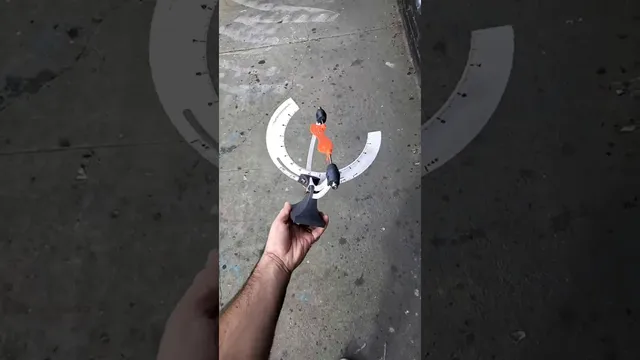
The Best Sundial
Based on Vsauce's video on YouTube. If you like this content, support the original creators by watching, liking and subscribing to their content.
Most sundials measure solar time, which varies because Earth’s orbit and axial tilt change the sun’s apparent motion across the sky.
Briefing
A sundial designed by Richard Schmoyer in the 1950s is being positioned as the most practical kind yet because it abandons “solar time” and instead tracks “civil time”—the same time people expect from phones, watches, and clocks. The shift matters because most sundials measure the sun’s apparent motion, while modern life runs on standardized timekeeping that assumes every day is the same length. By bridging that gap, the new model aims to keep users on schedule without forcing them to do the usual conversions.
Traditional sundials work by treating the sun as a moving reference point: a meridian line aimed at the sun marks a “finish line,” and the time it takes for that meridian to leave and return defines a solar day. That day length is not constant. Earth’s rotation and orbit combine to change the effective race each day—when Earth is closer to the Sun in January, it moves faster and drags the finish line eastward, stretching the journey; when it’s farther and moving slower in July, the journey shortens. A second effect comes from Earth’s tilted axis. Like a gyroscope, Earth keeps its orientation, so the sun’s apparent position shifts seasonally, altering how much the finish line is dragged east versus northeast or southeast. The result is that sundials naturally drift ahead and behind relative to modern clock time, because they follow real daylength variations.
Civil time emerged because society stopped being local. Early clocks tried to follow the sun, but railroads and rapid information exchange demanded a shared schedule. Time became standardized into uniform “tiny boxes,” and converting between local solar time and that standardized time became a recurring chore. Many sundials therefore include an “equation of time” plaque: users read the sun’s time, then adjust for daylight saving time, time zones, and the date-specific offset that accounts for the mismatch between solar and civil time.
Schmoyer’s updated sundial takes a different approach. Its Gman design automatically adjusts for the equation of time, and it is built to account for time zones and daylight savings without requiring manual calculations. The tradeoff is practical: it takes more effort to build and to use, but that effort is framed as part of the payoff—users gain a hands-on understanding of how modern timekeeping compresses nature’s variability into a standardized system. In short, the “best sundial” isn’t just a novelty for telling the sun’s time; it’s engineered to make the sun’s motion line up with the time people actually live by.
Cornell Notes
A conventional sundial measures solar time, which varies through the year because Earth’s orbit and axial tilt change the apparent “race” of the sun across a meridian line. Civil time, by contrast, is standardized into uniform day lengths and is synchronized across time zones and daylight saving rules. Many sundials therefore require manual correction using an equation-of-time plaque plus date, time zone, and daylight saving adjustments. Schmoyer’s Gman-designed sundial is built to display civil time directly, automatically handling time zones, daylight savings, and the equation of time. The payoff is fewer calculations and a clearer connection between the sun’s real motion and the standardized schedules modern life depends on.
Why do most sundials drift relative to modern clocks across the year?
What problem did railroads create for timekeeping?
How do many sundials compensate for the mismatch between solar time and civil time?
What makes Schmoyer’s sundial different from typical designs?
What does “civil time” mean in this context?
Review Questions
- How do Earth’s orbital speed changes and axial tilt combine to make solar days longer or shorter through the year?
- Why did standardized time become necessary once railroads expanded travel and communication?
- What specific corrections does the Gman design handle automatically that many sundials require users to compute manually?
Key Points
- 1
Most sundials measure solar time, which varies because Earth’s orbit and axial tilt change the sun’s apparent motion across the sky.
- 2
Earth’s faster orbit near January and slower orbit near July stretch or shorten the effective “solar race,” shifting sundial readings relative to clocks.
- 3
Axial tilt changes how the sun’s apparent position drags the meridian finish line eastward versus northeast/southeast, altering seasonal timing.
- 4
Standardized civil time emerged as railroads and rapid travel made local solar time insufficient for shared schedules.
- 5
Many sundials use an equation-of-time plaque plus daylight saving and time zone adjustments to convert solar time into civil time.
- 6
Schmoyer’s Gman-designed sundial is built to display civil time directly by automatically adjusting for the equation of time, time zones, and daylight savings.
- 7
Using and building the sundial takes more effort, but that work is framed as a way to better understand how modern timekeeping compresses natural variability.