The Capitol Riot Explained
Based on Second Thought's video on YouTube. If you like this content, support the original creators by watching, liking and subscribing to their content.
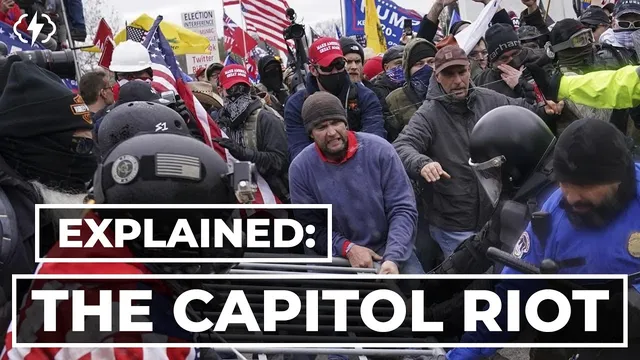
The riot is portrayed as an attempted election reversal centered on the “Stop the Steal” conspiracy, with thousands marching from a rally and storming the Capitol after months of encouragement and planning.
Briefing
The Capitol riot on January 6, 2021 is framed as a coordinated attempt to overturn the 2020 election—driven by the “Stop the Steal” conspiracy—and followed by a broader political and institutional backlash that could reshape both online speech and domestic security. Thousands marched from a rally in Washington, D.C. to the Capitol after months of online planning and encouragement from Donald Trump. Once inside, rioters broke windows, fought with Capitol Police, forced entry, and roamed the building—some treating it like a spectacle while others carried items suggesting more violent intent, including zip-tie handcuffs aimed at kidnapping members of Congress and chants targeting Vice President Mike Pence.
The death toll and the immediate chaos underscore the seriousness: five lives were lost, including four rioters and one Capitol Hill police officer who was knocked unconscious and beaten to death. Inside the Capitol, members of Congress sheltered with armed security as the mob surged outside. After hours of violence—along with assaults on reporters and attacks on mainstream media equipment—Capitol Police and the National Guard cleared the area. Trump’s response is described as lukewarm: he urged rioters to go home while also validating the stolen-election narrative and praising them as “very special people.”
A second major thread focuses on who participated and why that matters for interpreting the event. Rather than portraying the crowd as a uniform bloc of working-class supporters, the account emphasizes a wide mix that includes wealthy conservatives, business owners, lawyers, tech executives, off-duty police and military personnel, and a range of extremist ideologies. It highlights far-right and white supremacist symbols and groups, including neo-Nazi imagery and references to organizations and figures associated with extremist networks. The riot is presented as a convergence point where mainstream political actors, conspiracy communities (including QAnon), and explicit extremist currents overlapped.
The motivation is treated as both unified and fragmented. “Stop the Steal” functions as the rallying slogan tying the crowd together, but individual goals ranged from simple entry and humiliation of political opponents to more dangerous plans involving hostages and violence. The narrative draws a sharp distinction between a coup in the strict sense and an attempted overthrow: once inside, many rioters did not pursue systematic control of government, instead taking souvenirs, posing for selfies, and chanting slogans. Still, the consequences are argued to be substantial.
In the aftermath, the account points to two major consequences: a crackdown on extremist online ecosystems and an expansion of state surveillance and anti-terror powers. Social media actions—suspensions of Trump and large numbers of related accounts, threats and bans targeting QAnon-linked spaces, and migration to platforms like Gab—are framed as both potentially necessary and politically risky because they set precedents. More alarming, it argues, is the justification for domestic surveillance: federal identification efforts, proposed anti-terror legislation, and new no-fly orders could broaden into tools that disproportionately target dissent.
Finally, the riot is used to argue for a political realignment. The Republican Party is portrayed as having shifted so far right that it can’t be treated as a normal opposition, while the Democratic Party is criticized for corporate alignment and for adopting authoritarian tactics after other protests. The proposed alternative is a stronger left capable of demanding concrete reforms—especially on healthcare and economic security—rather than pursuing symbolic power grabs that primarily intensify policing, surveillance, and institutional control.
Cornell Notes
The Capitol riot is presented as an attempted election reversal built around the “Stop the Steal” conspiracy, with thousands marching from a rally and then storming the Capitol after months of planning and encouragement. Rioters included not only Trump supporters but also wealthy conservatives, legal and business figures, off-duty law enforcement, and explicit white supremacist and neo-Nazi elements—suggesting the movement’s ideological breadth. While some participants sought entry and spectacle, others carried signals of more violent intent, including plans consistent with hostage-taking. The aftermath is described as producing both online crackdowns and a push toward expanded surveillance and vague anti-terror legislation. The long-term takeaway is that the riot’s impact may extend beyond January 6 into how the state polices “extremism” and how political parties position themselves afterward.
What was the central goal tying the crowd together on January 6, and how did that goal translate into actions at the Capitol?
Why does the account emphasize the social makeup of the rioters rather than portraying them as a single class of supporters?
How does the account distinguish between an attempted coup and what happened after the Capitol was breached?
What are the two major post-riot consequences described, and why are both politically contentious?
What does the account argue about the future of American politics after January 6?
Review Questions
- How does the “Stop the Steal” narrative connect to both the march to the Capitol and the specific chants and targets mentioned?
- What evidence is used to argue that the riot’s participants included wealthy elites and extremist groups, not just working-class Trump supporters?
- Why does the account claim that anti-terror legislation and surveillance expansion could disproportionately affect political dissent?
Key Points
- 1
The riot is portrayed as an attempted election reversal centered on the “Stop the Steal” conspiracy, with thousands marching from a rally and storming the Capitol after months of encouragement and planning.
- 2
Rioters engaged in violent entry—breaking windows, fighting police, forcing doors—and the account links the chaos to both spectacle and more dangerous intent, including hostage-taking signals.
- 3
The participant mix is described as broad, including wealthy conservatives, legal and business figures, off-duty law enforcement, and explicit white supremacist and neo-Nazi elements.
- 4
After the breach, many actions are characterized as lacking concrete political demands, with much of the crowd shifting to souvenirs and selfies rather than coordinated control of government.
- 5
The aftermath is framed as twofold: social media crackdowns on extremist networks and a push toward expanded surveillance and vague anti-terror powers.
- 6
The account warns that anti-terror frameworks and no-fly orders can set precedents that may be used against political opponents, not only violent actors.
- 7
Long-term political implications are argued to require a leftward realignment focused on concrete reforms like healthcare and economic security rather than attempts to seize power through mass violence.