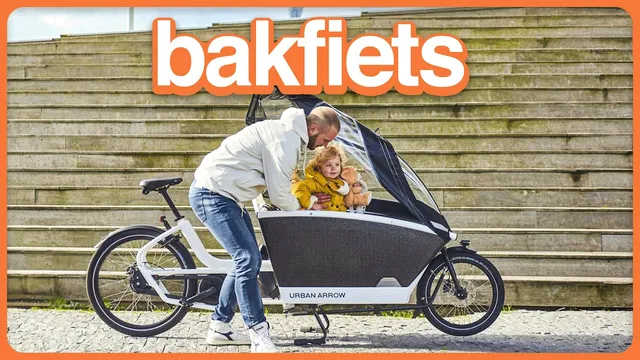
The Car-Replacement Bicycle (the bakfiets)
Based on Not Just Bikes's video on YouTube. If you like this content, support the original creators by watching, liking and subscribing to their content.
Electric assist is portrayed as the breakthrough that makes bakfiets practical enough to replace car trips in dense cities.
Briefing
A Dutch-style electric cargo bike—known as a bakfiets (box/bin bike)—is presented as a practical, family-ready replacement for a car, not a niche hobby. After moving back to Canada in 2014 and later relocating to Amsterdam, the family used a bakfiets for nearly everything: school runs, big grocery trips, hauling bulky items like an air conditioner and office chair, transporting a Christmas tree, and even taking recycling and hazardous waste to a depot. The core claim is that electric assist turns a century-old cargo-bike concept into a real “car replacement” option, especially in dense cities where parking and traffic make driving costly and inconvenient.
The most striking advantage described is how children experience the ride. Sitting in the open front box, kids get a clear view of the street and landmarks, helping them build a mental map of their neighborhood—something the author contrasts with the limited, car-window perspective of riding in a vehicle. That engagement also translates into behavior: kids reportedly prefer bakfiets rides over car trips almost universally, making the bike a daily transportation tool rather than an occasional outing.
Bakfiets are also framed as a modern evolution of older cargo bikes. While cargo bicycles have existed for more than a century—often used for deliveries—Dutch cities shifted toward car and truck dominance in the 1960s and 1970s, reducing their presence. A late-1990s comeback is attributed to environmental and efficiency pressures, but the real leap comes from electric assist. Two-wheeled bakfiets are described as agile and stable, while three-wheeled versions are criticized as slower and clunkier, with stability issues during sharp turns.
Cost and convenience are central to the “car replacement” argument. The electric bakfiets used in 2015 is priced at about 4,500 Canadian dollars, and the author notes that Canadians often treat bicycles as toys—yet balk at that figure even though they would accept similar spending on a used car. Operating costs are portrayed as minimal: no gas, no insurance, and cheap maintenance. The financial comparison is blunt—car ownership is estimated at roughly 7,000 to 10,000 dollars per year—so the bike can outperform car costs even if it were replaced annually. The family says the bakfiets has saved them tens of thousands of dollars since 2015.
Beyond personal use, the transcript points to broader urban logistics. In the Netherlands, bakfiets show up around schools and daycares, and they’re used commercially for delivering packages, groceries, mail, and electronics—often described as “truck replacement” in city settings because they avoid traffic jams and parking hassles. Rental options and app-based services are mentioned as ways to access larger cargo bikes when needed.
The biggest barrier is not the bike—it’s street safety. The argument concludes that many North American families are “robbed” of the chance to switch because infrastructure is designed for cars, and critics claim cargo and children are excuses to avoid building safe cycling networks. The transcript counters that once safe bike paths exist, bakfiets become usable by ordinary families, and cities that prepare for cargo bikes will be better for everyone—financially, environmentally, and operationally.
Cornell Notes
Electric bakfiets (Dutch box/bin cargo bikes) are presented as a realistic substitute for car ownership in dense cities, largely because electric assist makes them agile enough for everyday use. A family in Toronto and later Amsterdam uses a bakfiets for school runs, major grocery trips, hauling bulky household items, transporting a Christmas tree, and even waste drop-offs—while kids reportedly enjoy the ride more than car travel. The comeback of bakfiets is traced from earlier cargo-bike traditions to a late-1990s revival, with today’s electric versions turning a practical tool into a true “car replacement.” The transcript argues that the main obstacle is not the bikes but unsafe street design; safer infrastructure would let many families cut car costs and reduce emissions.
What makes an electric bakfiets different from older cargo bikes in practice?
Why does the transcript emphasize children’s perspective when comparing bakfiets to cars?
How are costs used to support the claim that bakfiets can replace cars?
What kinds of trips are cited as feasible without a car?
What role does infrastructure play in whether bakfiets can replace cars?
How are bakfiets portrayed in commercial and logistics settings?
Review Questions
- What specific feature is credited with turning bakfiets from a niche cargo bike into a practical car replacement?
- Which child-related benefits are described, and how do they connect to everyday transportation adoption?
- According to the transcript, what is the main reason many families in North America can’t switch to cargo bikes, and what infrastructure changes are proposed?
Key Points
- 1
Electric assist is portrayed as the breakthrough that makes bakfiets practical enough to replace car trips in dense cities.
- 2
Bakfiets are used for far more than errands: school runs, major grocery trips, hauling bulky household items, Christmas trees, and waste drop-offs.
- 3
Children’s improved visibility from inside the bakfiets is linked to stronger engagement and a preference over car rides.
- 4
The transcript frames the financial case using low operating costs and an estimated annual car cost of roughly 7,000 to 10,000 dollars.
- 5
Bakfiets show up as everyday commercial tools in the Netherlands, functioning as truck replacements for city deliveries.
- 6
The biggest adoption barrier is street safety; safer, wider bike infrastructure is presented as the prerequisite for large-scale switching.
- 7
Even when full car-free living isn’t possible, the transcript argues many households could reduce from two cars to one by using a bakfiets for most trips.