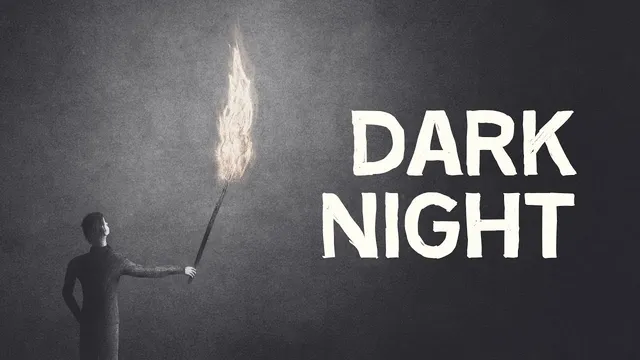
The Dark Night of the Soul (Losing Who We Thought We Were)
Based on Einzelgänger's video on YouTube. If you like this content, support the original creators by watching, liking and subscribing to their content.
John of the Cross and Teresa of Ávila frame the dark night as a necessary inner collapse that prepares people for a deeper union with the divine.
Briefing
The “dark night of the soul” is framed as a spiritual crisis that empties people of the identities and satisfactions they once relied on—then uses that inner collapse to prepare them for a deeper union with the divine. Rather than treating darkness as a dead end, John of the Cross and Teresa of Ávila describe it as a necessary passage: a confusing, often painful transformation that happens in the unconscious, where worldly pleasures can no longer soothe an “incomprehensible emptiness.” The result matters because it reframes despair as preparation—an endurance phase that can culminate in a new way of perceiving reality and loving.
Most lives, the transcript says, run on a cycle of seeking pleasure and avoiding pain. People keep chasing gratification—money, status, fame, even romantic love—only to find that each substitute is temporary and cannot fill the void. When that pattern stops working, a person may experience sudden clarity or a slow gray-zone disillusionment: old beliefs weaken, willpower falters, and familiar activities lose their pull. The “dark night” is described as the transitional space between the life that no longer satisfies and the life that has not yet become clear. It can look like quiet awareness, but it can also resemble spiritual depression, confusion, self-loathing, or hopelessness.
John’s language of God as “nada” (“nothing” or “no-thing”) is used to emphasize why ordinary senses and intellect fail to grasp the divine. The transcript contrasts this with more literal, image-based depictions of God, arguing that the divine is elusive and beyond mental capture. That emphasis is linked to the Taoist idea of “Tao,” an undefinable force that cannot be understood by the human mind—supporting the broader claim that the dark night is not limited to Christianity. It’s presented as a universal spiritual phenomenon that can occur regardless of religion.
The core mechanism is union through love. John and Teresa portray the journey as a “dynamic love affair,” full of passion and emotion, where the Lover seeks the Beloved. The divine is said to be present in everything and everyone, and the union is described as the filling of emptiness once the ego’s grip loosens. Teresa’s long period of confusion and self-loathing—followed by liberation after surrender—serves as an example of shedding attachments to other people’s opinions and to self-concepts.
Practically, the transcript stresses limits: there’s no direct control over what happens in the depths of the soul. Prayer, meditation, therapy, or belief systems may support awareness, but the transformation itself cannot be forced. The only reliable stance is endurance—sitting with the darkness, accepting it, and letting it run its course. In the end, “dawn” arrives not by manipulation, but by the gradual movement toward what the soul wants most: love, understood as union with the divine.
Cornell Notes
John of the Cross and Teresa of Ávila describe the “dark night of the soul” as a transformative crisis in which people lose the identities and pleasures that once seemed to provide fulfillment. The emptiness that follows worldly gratification can produce confusion, weakened will, and even depression—yet it functions as preparation for a deeper union with the divine. John’s “nada” frames God as beyond sensory perception and intellectual grasp, while the journey is portrayed as a love affair in which the Lover seeks the Beloved. The process is largely uncontrollable; the practical response is endurance, increased awareness, and acceptance until “dawn” arrives. Though rooted in Christianity, the transcript argues the phenomenon can occur across religions because it reflects a universal longing for completion and love.
Why do worldly pleasures stop working, according to John of the Cross and Teresa of Ávila?
What exactly is “nada,” and why does it matter for understanding the dark night?
How does the transcript connect the dark night to Taoism and the idea of “Tao”?
What does the “dark night” look like during the transition?
What role does love play in the dark night of the soul?
Why can’t people simply “fix” the dark night with techniques?
Review Questions
- How does the transcript explain the difference between temporary fulfillment (money, status, relationships) and the deeper emptiness that triggers the dark night?
- What does “nada” imply about how the divine is known, and how does that shape the experience of confusion during the dark night?
- In what ways does the transcript describe the dark night as both an unconscious process and a conscious life change?
Key Points
- 1
John of the Cross and Teresa of Ávila frame the dark night as a necessary inner collapse that prepares people for a deeper union with the divine.
- 2
Worldly satisfactions—money, status, fame, and even romance—are portrayed as temporary and unable to fill an underlying emptiness.
- 3
The dark night is described as a transitional “gray area” where old beliefs weaken, willpower falters, and familiar joys lose their pull.
- 4
John’s “nada” presents God as beyond sensory perception and intellectual grasp, helping explain why the experience feels elusive and confusing.
- 5
The journey is portrayed as a love affair: the Lover seeks the Beloved, and union is linked to shedding ego and becoming receptive.
- 6
The process is largely uncontrollable; the practical response emphasized is endurance, increased awareness, and acceptance rather than forcing outcomes.