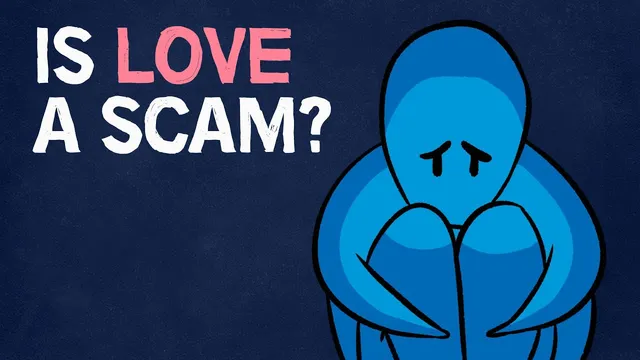
The Dark Side of Romance: Is Love Worth It?
Based on Einzelgänger's video on YouTube. If you like this content, support the original creators by watching, liking and subscribing to their content.
Falling in love is framed as an addiction-like process driven by dopamine and oxytocin, producing euphoria, attachment, and craving.
Briefing
Romantic love is often sold as the route to lasting happiness, but the case laid out here is that falling in love behaves less like a stable source of well-being and more like an addiction—one that can distort judgment and end in intense suffering. The central claim is that the same biological and psychological mechanisms that make romance feel transcendent also make it volatile: craving, obsession, and attachment can override rational thinking, increase risk-taking, and leave people vulnerable when the relationship falters.
The first major reason is “addiction.” When people fall in love, their brains shift into a chemically charged state tied to lust, excitement, euphoria, and attachment—especially through dopamine and oxytocin. That heightened focus can make ordinary life look dull and problems seem to vanish, which helps explain why people chase the experience. Biological anthropologist Dr. Helen Fisher is cited for comparing romantic love to cocaine: brain-scan evidence reportedly shows overlapping activation patterns between being in love and drug use. The craving cycle is described as moving from ecstasy to withdrawal, with “intensification” (escalating urges to interact with the beloved) and intrusive, obsessive thinking—patterns framed as central to addiction literature.
The second reason is that being in love distorts reality. Infatuation encourages “love goggles” or rose-tinted glasses, leading people to view a partner as more beautiful, special, and uniquely suited than they likely are. That distortion can hide flaws and increase the odds of choosing harmful partners, including narcissists or psychopaths. It can also fuel irrational decision-making: people may abandon boundaries, lie to appear more desirable, take major risks, or even cheat while married. Even when obstacles are real—money, religion, cultural differences, distance, or the desire (or lack) to have children—romance can cause people to treat dealbreakers as mere hurdles, underestimating how damaging those issues can become.
The third reason is pain. Romance is portrayed as a high followed by a low: heartbreak, depression, prolonged grief, and in extreme cases suicide or violence. The underlying mechanism is attachment. In Buddhist framing, attachment and desire are treated as the root of suffering—because happiness becomes conditional on keeping the object of attachment. If the relationship ends, or even seems at risk, the resulting loss can trigger intense emotional turmoil. Ajahn Sona is quoted describing the “dreadful nature of attachments,” where staying or leaving both produce suffering.
Still, the argument doesn’t end in a simple “avoid love.” It acknowledges a tension between rational advice—avoid the emotional extremes to preserve inner peace—and the idea that love also powers bonding, family formation, and major human achievements. The conclusion leaves the reader with a dilemma: romantic love may be a source of suffering, but dismissing its value entirely could be, as Bertrand Russell put it, “a great misfortune.”
Cornell Notes
Romantic love is portrayed as a high-cost psychological and biological process rather than a dependable path to happiness. Falling in love is likened to addiction: dopamine and oxytocin help drive euphoria and attachment, and brain-activation patterns are said to overlap with drug use, producing craving, intensification, and withdrawal-like distress. Love goggles then distort judgment, making partners seem uniquely special while downplaying flaws and encouraging risky, boundary-crossing behavior. When attachment is threatened or lost, the resulting pain can be severe, aligning with Buddhist ideas that desire and attachment generate suffering. The tension remains unresolved: avoiding love may protect peace, but love also enables bonding and life-shaping commitments.
Why does falling in love get compared to addiction, and what mechanisms are cited?
What are “love goggles,” and how do they change decision-making?
How does being in love affect how people treat real-world obstacles?
What role does attachment play in the emotional pain associated with romance?
Does the argument recommend avoiding love entirely?
Review Questions
- Which specific brain chemicals and behavioral patterns are used to support the addiction analogy for romantic love?
- How do “love goggles” contribute to both selecting partners and making risky choices?
- What Buddhist and Stoic ideas about desire/attachment are used to explain why heartbreak can become extreme?
Key Points
- 1
Falling in love is framed as an addiction-like process driven by dopamine and oxytocin, producing euphoria, attachment, and craving.
- 2
Brain-scan comparisons are used to argue that love can activate regions similar to those involved in drug use, supporting the “ecstasy to withdrawal” model.
- 3
“Love goggles” can hide a partner’s flaws and encourage people to treat an ordinary person as uniquely special and “meant to be.”
- 4
Infatuation can increase risk-taking, including boundary violations, lying, and even cheating while married.
- 5
Romance is portrayed as a high followed by a low, with heartbreak linked to attachment and fear of loss.
- 6
Buddhist teachings are used to connect desire and attachment to suffering, while Stoic ideas explain how unmet desire leads to disappointment and distress.
- 7
The case ends with a dilemma: avoiding love may preserve inner peace, but love also underpins bonding and major life commitments.