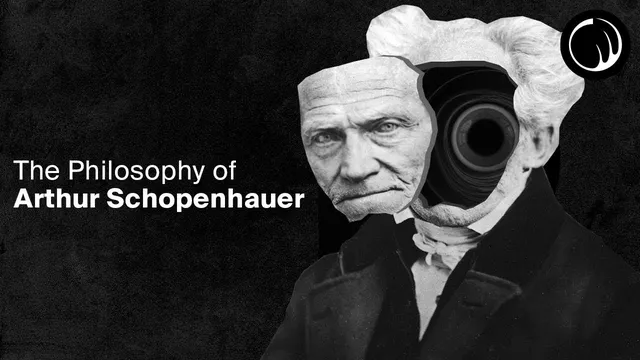
The Darkest Philosopher in History - Arthur Schopenhauer
Based on Pursuit of Wonder's video on YouTube. If you like this content, support the original creators by watching, liking and subscribing to their content.
Schopenhauer argued that experienced reality is a mental representation shaped by the mind, not direct access to things-in-themselves.
Briefing
Arthur Schopenhauer built a sweeping philosophy that treats lived experience as a distorted “representation” of a deeper, unified reality driven by a blind, unconscious force he called the Will to live—and he judged that force to be fundamentally unsatisfying. That combination—metaphysical monism plus a relentlessly pessimistic view of human existence—helped make Schopenhauer a defining figure for modern thought, even though recognition arrived late and his early work was largely ignored.
Schopenhauer’s system starts with an extension of Immanuel Kant’s transcendental idealism. He argued that the world as people experience it is shaped by the mind through senses and cognitive forms, so external objects cannot be accessed “as they really are” beyond consciousness. But he went further than Kant: he denied any real plurality of objects beyond experience, insisting instead on a single underlying oneness of reality. What can be known most directly, he claimed, is not the external world but the body as lived from within—an immediate, subjective access point to the core of being.
From that inward access, Schopenhauer identified the essence of reality as an unconscious, restless striving toward survival, nourishment, and reproduction. He called this force the Will to live. The term “Will” is deliberately misleading: it is not intention or human-like motivation, but a blind drive with no goal beyond continuing itself. Everything in the material world—movement, consumption, and even violent expression—functions as the Will sustaining the Will. Human beings, as expressions of this force, are therefore trapped in a cycle of desire and disappointment: achievements promise satisfaction, yet satisfaction never lasts, leaving individuals vulnerable to boredom and renewed need.
Schopenhauer’s pessimism is not merely temperamental; it is built into the structure of reality. He described suffering as inseparable from life’s basic necessities and needs, arguing that misfortune is the rule rather than an exception. Since the Will has no purpose other than perpetual continuation, it cannot be satisfied—and neither can those who embody it. In his view, individuals are deceived by mind and body into pursuing what ultimately undermines their fundamental interests.
He offered two main routes for coping with this condition. One is asceticism: depriving desire and self-indulgence so the Will is “denied” and turns against itself. The other is aesthetic and philosophical engagement: good art can provide clarity about existence without illusion, producing a kind of relief through a transcendent-like experience. For most people, he suggested the more realistic aim is not happiness as joy, but minimizing pain and lowering expectations.
Although Schopenhauer’s work drew heavily on Kant, it also carried striking parallels to Hindu and Buddhist themes, especially in its negative assessment of conscious selfhood and its emphasis on suffering. He combined these influences into a single, comprehensive system that remained consistent throughout his life. Early on, lectures and translations failed to gain traction, and major recognition came only in his fifties after publishing essays and aphorisms in 1851. Yet the ideas endured, shaping artists and writers such as Richard Wagner, Gustav Mahler, Marcel Proust, Leo Tolstoy, and Samuel Beckett, and influencing thinkers including Friedrich Nietzsche, Sigmund Freud, and Ludwig Wittgenstein. For many, Schopenhauer’s bleak honesty became oddly consoling: it reframed sadness and suffering as responses to a harsh reality rather than personal failure, and it opened a path to meaning “from within,” even when the world offers little comfort on its own.
Cornell Notes
Schopenhauer argued that what people experience as “the world” is a mental representation shaped by the senses and cognition, not direct access to reality. Beyond that experience, he claimed there is only one underlying reality: a unified essence expressed as an unconscious, blind striving he called the Will to live. Because the Will has no purpose other than continuing itself, it cannot be satisfied, and human life becomes a cycle of desire, temporary relief, and renewed dissatisfaction. His pessimism also aligns with Buddhist and Hindu themes about suffering and the instability of the self. He proposed coping strategies: ascetic denial of desire and, for many, art and philosophy as a clearer, more bearable way to confront existence.
How does Schopenhauer extend Kant’s idea of “representation” into a more radical claim about reality?
Why does Schopenhauer treat the body as the best access point to reality?
What exactly is the “Will to live,” and why does it produce pessimism?
What are Schopenhauer’s two main strategies for dealing with the Will?
How do Eastern influences show up in Schopenhauer’s system?
Why did Schopenhauer’s influence grow despite late recognition during his lifetime?
Review Questions
- What does Schopenhauer claim people can and cannot know about external objects, and how does that shape his view of reality?
- How does the Will to live explain the cycle of desire, dissatisfaction, and boredom in human life?
- Compare asceticism and aesthetic/philosophical engagement as responses to suffering: what does each aim to change?
Key Points
- 1
Schopenhauer argued that experienced reality is a mental representation shaped by the mind, not direct access to things-in-themselves.
- 2
He claimed that beyond experience there is not a plurality of objects but a single unified oneness of reality.
- 3
The Will to live is an unconscious, blind striving with no goal beyond self-continuation, and it underwrites both nature and human desire.
- 4
Because the Will can’t be satisfied, lasting happiness is structurally impossible, making suffering a pervasive feature of life.
- 5
Schopenhauer proposed two coping paths: ascetic denial of desire and, for many, art and philosophy as clarity and relief without illusion.
- 6
His system drew on Kant while also aligning with themes found in Hinduism and Buddhism, especially about suffering and the self’s instability.
- 7
Despite limited recognition during much of his life, Schopenhauer’s ideas later influenced major modern thinkers and artists across philosophy, literature, and music.