The Easiest Business to Start in 2026 for Beginners
Based on Ali Abdaal's video on YouTube. If you like this content, support the original creators by watching, liking and subscribing to their content.
Model revenue as customers multiplied by price, and treat customer acquisition as the main bottleneck for most beginners.
Briefing
A beginner-friendly path to financial freedom hinges on one practical shift: stop trying to win with huge customer volume at tiny prices, and instead build a business that can charge roughly $2,000–$20,000 per client. Money can be modeled as “number of customers × price,” and the counterintuitive takeaway is that finding 10 customers willing to pay $10,000 is often far easier than finding 10,000 customers willing to pay $10. That’s why “cheap, high-volume” ideas tend to feel straightforward at first but become brutal once you’re actually responsible for marketing, sales, and delivery.
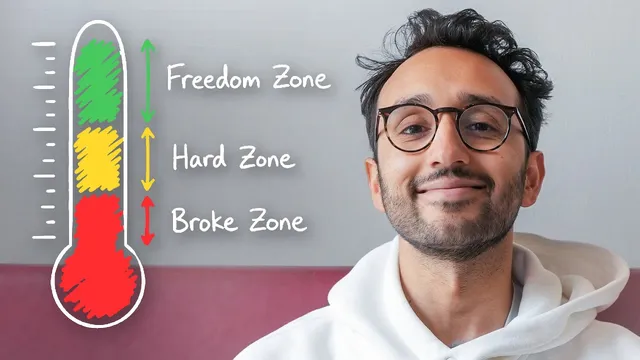
The framework then narrows the search space. As a starting target, the $2,000–$20,000 range is positioned as the “sweet spot” where the hardest part—getting customers—matters more than the even harder part of selling massive quantities. The transcript also warns against two common traps: the “red zone” of selling low-priced items that require constant volume, and the “job zone” of selling something for $100,000 to a single buyer, which resembles employment more than a scalable business. For most beginners, the goal is to craft an offer that feels expensive but is still realistic to sell.
From there, the easiest business type is framed as service-first. Product businesses are described as inherently harder to start because products are typically cheaper, forcing entrepreneurs into volume games that are difficult without existing fame or distribution. Services, by contrast, can command higher prices because the value is tied to outcomes and effort delivered for a specific client. The transcript lays out a service spectrum: “done for you” (highest price because the provider does the work), “done with you” (coaching/implementation support), and “do it yourself” (courses/apps where the customer does the work). Beginners are encouraged to start at the “done for you” end, with “done with you” as a stretch, while avoiding online courses as a default because AI-driven free content and rising expectations make low-priced information harder to justify.
A concrete example illustrates the pricing logic: a married couple, Elias and Hayatt, charge about $8,000 to help London accountancy practices speed up onboarding for new clients—an offer that saves time and money for businesses that already have budgets. The transcript argues that this kind of “boring” B2B service becomes “easy mode” when the buyer is wealthy, the problem is painful, and the promised result is tangible.
Finally, niche selection is reduced to two questions: who pays, and what problem hurts. The “easy mode” version targets rich customers with urgent, expensive problems—ideally ones where the solution helps them make money or save money directly. Intangible transformations (like mindset or imposter syndrome) are treated as harder to sell at $2,000–$20,000 unless the offer is tied to measurable external outcomes such as raises, promotions, or other financial returns. The overall message is less about finding a clever idea and more about engineering an offer that buyers can justify paying for—without needing massive audience scale.
Cornell Notes
Financial freedom for beginners is framed as a pricing-and-customer problem: revenue equals customers × price. The transcript argues it’s usually harder to sell tiny-priced products to huge numbers of people than to sell a smaller number of higher-priced services. It recommends targeting offers priced between $2,000 and $20,000, because customer acquisition is the main bottleneck while higher prices reduce the volume required. Service businesses are presented as easier than product businesses, especially “done for you” models where the provider delivers the work and can charge more. The niche should be built around rich buyers with painful, urgent problems that produce tangible ROI (making or saving money), while intangible transformations require careful translation into measurable outcomes.
Why does the “customers × price” equation push beginners toward higher-priced offers?
What are the “hard mode” and “easy mode” zones for starting a business?
Why are service businesses positioned as easier than product businesses for beginners?
How does the “service spectrum” affect pricing and beginner success?
What makes a niche and offer “easy mode” when pricing at $2,000–$20,000?
Why are intangible transformations harder to sell at high prices, and what’s the workaround?
Review Questions
- What revenue combinations can produce $100,000, and which part (volume vs price) does the transcript claim is usually harder to execute?
- Why does the transcript recommend “done for you” services over courses for beginners, especially in an AI-driven content environment?
- How should a $2,000–$20,000 service be positioned to a buyer so the value feels tangible rather than abstract?
Key Points
- 1
Model revenue as customers multiplied by price, and treat customer acquisition as the main bottleneck for most beginners.
- 2
Avoid “cheap, high-volume” business ideas because they tend to be harder to scale than higher-priced offers.
- 3
Target an initial offer price range of roughly $2,000–$20,000 to reduce the volume required to reach meaningful revenue.
- 4
Prefer service businesses over product businesses because services can be priced higher based on delivered effort and outcomes.
- 5
Start at the “done for you” end of the service spectrum to maximize beginner leverage and pricing power.
- 6
Choose niches where buyers are able to pay and the problem is painful, urgent, and tied to measurable ROI (making or saving money).
- 7
Translate intangible transformations into tangible external results (e.g., raises/promotions) to justify high pricing.