The Evolution of Programming | The Standup
Based on The PrimeTime's video on YouTube. If you like this content, support the original creators by watching, liking and subscribing to their content.
The talk being discussed prioritizes historical context and evolution of one concept over direct “OOP good/bad” prescriptions.
Briefing
A two-hour history deep dive into “big oops” moments in programming language design argues—without turning it into a simple pro/anti-OOP manifesto—that many widely held beliefs about how modern programming models emerged are based on misconceptions. Instead of prescribing best practices, the discussion tracks one thread through decades of evolution, showing how ideas hardened into conventions long before teams, tooling, and production realities caught up.
The conversation centers on a talk that runs from the 1950s through the 1990s, framed as historical context rather than a direct assault on object-oriented programming. The goal is to illuminate how a particular concept evolved over time and why today’s narratives about that evolution often miss the messy, contingent path that produced the end result. Even the Q&A is described as partly historical and partly technical, with the speaker intentionally avoiding a long detour into “should you or shouldn’t you” debates—partly to keep the material watchable for people who still like OOP.
Behind the scenes, the talk’s delivery is treated as a case study in preparation tradeoffs. The presenter assembled a massive amount of material—reportedly on the order of 100+ hours—yet did not rehearse the full two-hour run-through. Slides were built in Affinity Publisher and stored as PNGs, with no speaker notes available. The result: a cold start on stage, with confidence coming less from rehearsal and more from the time spent studying and internalizing the material. The group’s takeaway is blunt: deep study can substitute for practice, but timing and transitions still suffer without rehearsal.
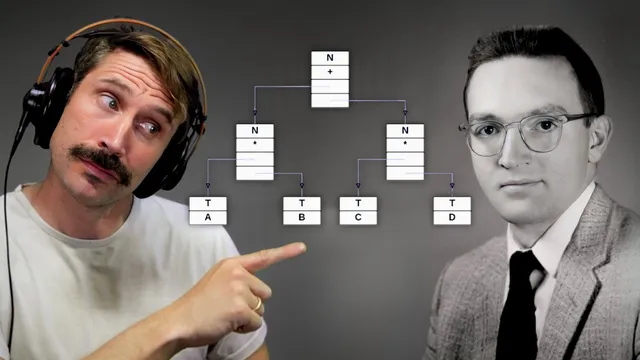
The most substantive historical content focuses on the concept of “plexes,” credited to Doug T. Ross. In the mid-1950s, Ross proposed “reverse indexing,” flipping how hardware array indexing works so that a program could treat a memory region as a packed bundle of related fields—an early blueprint for what later became structs/classes and the efficient in-memory layouts modern code assumes. The plex idea also included mechanisms that resemble today’s discriminated unions (via a type field), virtual-function-style dispatch (via function pointers/jumps), and memory management strategies such as free lists and arenas to reduce fragmentation.
The discussion then broadens into how programming history is preserved—and why it’s often incomplete. For contemporary language design, researchers can’t always rely on the same academic paper trails that existed in earlier eras. Instead, the group points to resources like the ACM SIGPLAN “History of Programming Languages” (HOPL) events and oral histories from museums, which compile primary-source accounts from language designers. The lack of money and the difficulty of translating technical primary sources into accurate, programmer-relevant narratives are cited as major barriers.
Finally, the standup format keeps circling back to language adoption and decay: Pascal’s role in structured programming education, the rise and fading of Borland-era tools like Delphi, and why some features—like discriminated unions—never made it into Go despite its Google lineage. The session ends with recommendations for other talks, including Ryan Flurry’s debugger architecture and talks aimed at practical UI performance and multi-threaded visualization, reinforcing the theme that architecture should solve problems rather than add new ones for users to carry.
Cornell Notes
The central thread is a historical, not prescriptive, look at how key programming ideas formed—especially the “big oops” moments that shaped what developers now treat as normal. Rather than arguing for or against object-oriented programming, the discussion tracks one concept across decades and challenges common misconceptions about how it evolved. A major example is Doug T. Ross’s “plex” work: reverse indexing that enabled packed, efficient in-memory bundles of related data, plus early ideas resembling discriminated unions, virtual dispatch, and memory-management techniques like free lists and arenas. The conversation also tackles why programming history is hard to write: primary sources for older languages exist, but modern language design often leaves less academic documentation, making events like HOPL and oral histories crucial. The practical lesson is that deep study can outperform rehearsal, but accurate history requires careful sourcing and technical fluency.
What does “plex” (and reverse indexing) mean in the context of early computing, and why does it matter?
How did Ross’s plex concept anticipate features that look like modern type safety and polymorphism?
Why does the conversation treat the talk’s preparation as an instructive lesson about public speaking?
What resources are suggested for building accurate programming language histories, and what problem do they solve?
Why is writing programming history harder for modern languages than for older ones?
How does the discussion connect language design to organizational incentives like Conway’s Law?
Review Questions
- What specific technical idea did Doug T. Ross propose in the mid-1950s that enabled packed, efficient data layouts, and how did it work at a high level?
- List two ways the plex concept is said to anticipate modern language features (e.g., type-based processing or dispatch).
- Why does the conversation claim that programming history is often incomplete, and what kinds of sources are recommended to fix that?
Key Points
- 1
The talk being discussed prioritizes historical context and evolution of one concept over direct “OOP good/bad” prescriptions.
- 2
A two-hour technical talk can succeed without full rehearsal when the presenter has invested extensive time studying and assembling the material.
- 3
Doug T. Ross’s “plex” work is presented as an early blueprint for packed in-memory data structures via “reverse indexing.”
- 4
Ross’s plex paper is credited with ideas resembling discriminated unions (type fields) and virtual dispatch (function-pointer/jump addresses).
- 5
Programming history is hard to write accurately because modern language design often leaves fewer academic primary sources than earlier eras.
- 6
HOPL (ACM SIGPLAN) events and oral histories from museums are highlighted as key tools for reconstructing design timelines from primary accounts.
- 7
The group argues that claims about languages being designed for large teams often lack strong historical evidence; those rationales may be retrofitted after adoption.