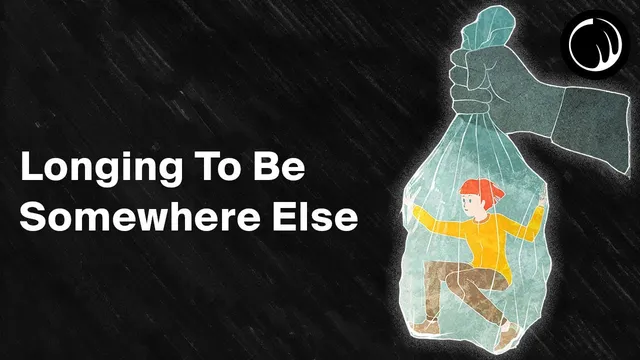
The Feeling That Life Will Never Be As Good As It Once Was
Based on Pursuit of Wonder's video on YouTube. If you like this content, support the original creators by watching, liking and subscribing to their content.
Sarah’s childhood stress and social uncertainty establish a lifelong habit of comparing the present unfavorably to remembered earlier ease.
Briefing
Life’s best moments don’t vanish because they weren’t good—they fade because memory edits them. Across Sarah’s childhood, adulthood, and old age, the same pattern repeats: each stage feels worse than the one she’s remembering, even when the present is objectively full of meaning. The turning point comes when she realizes nostalgia isn’t just selective recall; it’s a color filter that can hide other emotions, including anxiety and stress, until time makes those feelings feel distant and manageable.
Sarah’s first major “before” arrives in fifth grade. Moving to a new town leaves her nervous and socially on edge, stuck in a daily cycle of tests, presentations, and constant self-doubt. Recess and a small friend group become her lifeline, but even then, the school week keeps pressing down—especially math tests and public speaking. One hallway moment crystallizes her later worldview: watching a younger kid cry while a counselor reassures them it’s “just a game,” Sarah thinks how little kids understand how good they have it. At sixteen, the same logic returns in a different form—college planning, grades, and the pressure to become someone—while freedom brings its own complications, including heartbreak and social competitiveness.
Years later in New York City, Sarah’s life looks like it should be better. She has roommates, a job in publishing typesetting, and a side graphic design business. Yet loneliness persists, and the pressure of financial uncertainty and career stagnation gnaws at her. She drinks alone, digs through old photos and videos, and feels the pull of earlier simplicity: summers that still felt like summers, semesters that reset cleanly, friends who weren’t always busy, and a boyfriend who made loneliness feel less real. The longing isn’t for a specific event—it’s for a time when possibilities felt open.
That openness arrives in a different way later. Sarah becomes a successful graphic designer, eventually leading brand identity work for a start-up tech company and building a studio and consulting practice. Her schedule fills up constantly, and her life is full—yet she still feels trapped by responsibility and by the sense that “anything else” is no longer available. Even when she watches young adults in their twenties, she envies their unburdened uncertainty.
At 84, after years of success and family, she tells her granddaughter Olivia that her regret is not recognizing how good life felt until it was gone. She insists that youth is only obvious in hindsight. But then she questions her own advice: if the past always looks rosy, what does that mean for the present? Sarah concludes that memories are tinted—rose-colored moments don’t erase the other colors; they blend them. When stress and confusion fade with resolution, the “brownish or grayish” mix clears, and the original experience becomes visible without the emotional paint. In that realization, she finally sees the present as it is: not worse than the past, just harder to view without the filter.
Cornell Notes
Sarah’s life is shaped by a recurring belief: each age feels worse than the one she’s remembering. As a child, she endures social pressure and school stress, then later longs for the simplicity of recess and easy friendships. In her twenties and thirties, even career success and family fullness don’t stop nostalgia—she still craves the “unknown” feeling of earlier years. At 84, she tells her granddaughter Olivia not to wait to appreciate youth, then challenges her own certainty by noticing how memory color-codes the past. Her final insight is that nostalgia is a filter: time dissolves the emotional “paint,” revealing the underlying experience while the rose tint always existed somewhere in the mix.
What early experience sets up Sarah’s lifelong pattern of longing for “then” over “now”?
How does Sarah’s nostalgia change as she moves from childhood to adulthood?
Why doesn’t Sarah’s success fully cure her sense of dissatisfaction?
What does Sarah regret telling her granddaughter Olivia, and what does she mean by it?
How does Sarah ultimately complicate her own “rosy past” advice?
What is the final psychological mechanism Sarah proposes for nostalgia?
Review Questions
- How does Sarah’s interpretation of a younger child’s distress in elementary school foreshadow her later reflections on aging?
- In what ways does Sarah’s longing shift from social simplicity (recess, friends) to existential openness (the unknown) as she grows older?
- What does Sarah’s “color filter” model add to the idea that people romanticize the past?
Key Points
- 1
Sarah’s childhood stress and social uncertainty establish a lifelong habit of comparing the present unfavorably to remembered earlier ease.
- 2
Recess, small friend groups, and low-stakes moments function as emotional anchors during school years, shaping what she later calls “having it good.”
- 3
Even in adulthood, loneliness and career pressure can coexist with external success, driving nostalgia toward earlier feelings of possibility.
- 4
Professional achievement and family life don’t eliminate the sense of being “trapped” by responsibility, which keeps the longing moving backward in time.
- 5
Sarah’s regret at 84 centers on not appreciating youth until it’s gone, especially when mobility and independence decline.
- 6
Her final insight reframes nostalgia as a memory tint: time dissolves emotional “paint,” revealing the underlying experience while rose-colored perception remains part of the mix.