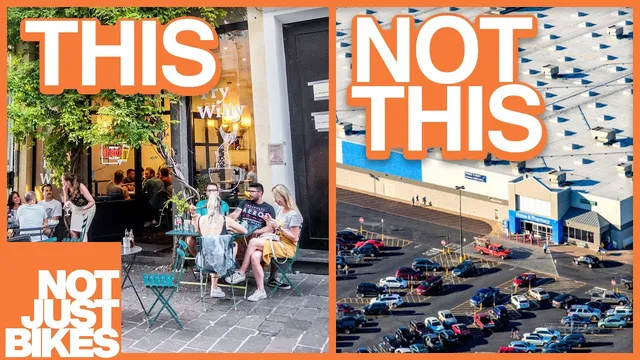
The Great Places Erased by Suburbia (the Third Place)
Based on Not Just Bikes's video on YouTube. If you like this content, support the original creators by watching, liking and subscribing to their content.
Third places are low-cost public locations where people can socialize outside home and work, and their decline is most severe in car-dependent suburbs.
Briefing
Third places—low-cost public spots to hang out that aren’t home or work—are disappearing in car-dependent suburbs, and that loss is undermining social trust, job connections, and community resilience. In walkable cities, places like local pubs, cafés, libraries, churches, and community centers create everyday opportunities for neighbors to meet, recognize one another, and build relationships that don’t require a planned event. When those spaces vanish, suburban life increasingly funnels people into private, demographically uniform routines where chance encounters rarely happen.
The argument is grounded in the everyday mechanics of neighborhood life. A classic example is the UK pub: a walkable local embedded in a residential area where regulars form informal ties over time. Losing such a pub to redevelopment into housing is framed as more than a personal inconvenience—it removes a nearby “elsewhere” where residents can relax, chat, and spontaneously socialize. That spontaneity matters because third places don’t just provide entertainment; they generate social cohesion by mixing people who otherwise wouldn’t interact. The video points to sociological research on “weak ties,” noting that many job opportunities come through acquaintances rather than close friends—something that’s unlikely to happen when people spend most of their time at home.
Third places also function as trust infrastructure. Citing an American Community Life survey, the transcript claims that 81% of Americans who socialize with people they recognize in third places say they trust their neighbors, compared with 66% among those without such places. The difference is presented as a practical antidote to suspicion—an alternative to purely online social tools.
Beyond day-to-day benefits, third places are described as emergency assets. Cities such as Baltimore and Minneapolis are said to be building “resilience hubs” in trusted civic locations like churches and community centers, where residents can access informal help faster after floods or fires than they might wait for national aid. Yet in much of North America, zoning and loitering enforcement make it hard to create or maintain accessible public gathering spaces. Zoning that favors single-family housing in large swaths of land limits the ability to build pubs, cafés, or community venues within walking distance.
Attempts to replace third places often fall short. Shopping malls are criticized for drawing people from outside the neighborhood and for failing to create local familiarity or conversation. Big-box retail is portrayed as even worse. Some cities try to recreate third-place behavior by reserving public park seating for office work and socializing, but that planning requirement removes the “pop by” spontaneity that defines third places. Even private substitutes—backyard barbecues, social clubs, or “man caves”—tend to restrict encounters to people who already match the household’s demographics and socioeconomic profile.
The transcript also highlights a broader decline: after the 2008 recession and accelerated by pandemic lockdowns, fewer Americans report having a regular local spot. In 2021, 56% say they have a place they go to regularly, down 9 points from 2019, with those who do more often living in denser, walkable areas rather than suburbia.
The takeaway is blunt: third places can’t thrive in neighborhoods designed to exclude them. Neighborhoods that prioritize them—through zoning and walkability—become better places to live overall, because they make everyday social life easier, safer, and more connected.
Cornell Notes
Third places—public, low-cost gathering spots that are neither home nor work—are central to community life, but they’re being erased in car-dependent suburbs. The transcript links their decline to zoning patterns that restrict mixed-use development and to rules that discourage lingering in public. Losing third places weakens “weak ties” that often lead to jobs, reduces neighborhood trust (citing an American Community Life survey), and limits how quickly communities can coordinate informal help during emergencies. Attempts to substitute with malls, big-box stores, or planned park seating miss the spontaneity and local familiarity that make third places work. The result is fewer regular social anchors, especially in suburban areas.
What makes a “third place” different from home or work, and why does spontaneity matter?
How do third places strengthen social networks and job access?
What evidence is cited about third places and neighborhood trust?
Why are third places framed as useful during emergencies?
Why do zoning and loitering rules make third places hard to sustain in North American suburbs?
Why do malls and private recreations fail as substitutes for third places?
Review Questions
- What specific social functions do third places serve beyond entertainment, and how do those functions change when third places disappear?
- How do zoning and loitering enforcement interact to reduce both the availability of third places and the ability to use them?
- Which replacement strategies (malls, reserved park seating, private backyards) are criticized in the transcript, and what key third-place feature do they each miss?
Key Points
- 1
Third places are low-cost public locations where people can socialize outside home and work, and their decline is most severe in car-dependent suburbs.
- 2
Third places build social cohesion by mixing people who wouldn’t otherwise interact, strengthening “weak ties” that can lead to jobs.
- 3
Repeated recognition in third places is linked to higher neighborhood trust, with an American Community Life survey cited as 81% versus 66%.
- 4
Trusted community venues can act as “resilience hubs,” enabling faster informal assistance after disasters.
- 5
Zoning that limits mixed-use development and loitering enforcement that discourages lingering both reduce the creation and use of third places.
- 6
Common substitutes like malls and big-box retail don’t generate neighborhood familiarity or conversation because they’re designed to draw outsiders.
- 7
A decline in regular local gathering spots—down to 56% in 2021 from 2019—correlates with denser, walkable areas having more third-place access than suburbia.