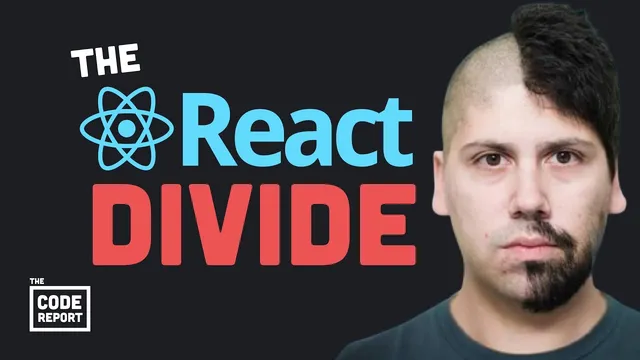
The growing divide among React developers…
Based on Fireship's video on YouTube. If you like this content, support the original creators by watching, liking and subscribing to their content.
Server components compute UI on the server and stream only the final rendered output to the client, reducing initial JavaScript bundle size.
Briefing
React’s “server components” push has split the React community into two camps: developers who want the benefits without the ecosystem lock-in, and framework builders who see the shift as a chance to standardize full-stack React around a single architecture. The core promise is technical: server components let React compute UI on the server and stream only the finished result to the browser, reducing JavaScript bundle size and enabling composition “across the network.” Paired with Suspense, this approach can show immediate fallback UI and then stream the rest as it becomes available—turning rendering into a progressive, server-driven workflow rather than a purely client-side one.
The backlash centers less on the concept and more on the operational complexity and the growing difficulty of separating React from the frameworks that implement it. Server components require three moving parts: a bundler that distinguishes server and client components, a server that can stream the generated output to the client, and a client-side router capable of requesting and processing that stream. That complexity makes adoption harder than the old “npm install React at latest” model, and it also shifts power toward the frameworks that already solved the plumbing.
React’s team addressed that gap through a multi-year partnership with Next.js, effectively betting that server-components-first full-stack React would become the default way to build. Many in the ecosystem now argue that bet didn’t pay off—either because the architecture is overkill for apps that don’t need it, or because the React vision has become too tightly coupled to Next.js and, by extension, to hosting platforms pursuing monetization. The transcript frames this as a “divide” where developers may dislike the added complexity and framework constraints, while framework authors may feel the partnership has narrowed the ecosystem’s options.
For developers trying to avoid what’s described as a “money machine” tied to hosting, the transcript lists alternatives. React Router v7 (formerly known as Remix) is positioned as a standards-focused routing layer that can be paired with Vite to build a full-stack React framework. TanStack Start is presented as a more comprehensive option—still in beta—offering document SSR, streaming, server functions, and bundling. For teams with unique constraints, the transcript suggests building their own setup, with React.gg offered as a learning path.
Overall, the dispute isn’t about whether server components are useful; it’s about who controls the stack, how much complexity teams must accept, and whether React’s server-first direction will fragment into multiple approaches or consolidate around a single framework-and-hosting pipeline.
Cornell Notes
Server components extend React beyond the browser by computing UI on the server and streaming the result to the client, which can shrink JavaScript bundles and improve perceived performance—especially when combined with Suspense for fallback-first rendering. The catch is practical: server components require a bundler that separates server/client code, a server that streams output, and a client router that can handle the stream. React’s partnership with Next.js was meant to make this workable, but many developers and framework authors now see the ecosystem as too tightly coupled to Next.js and hosting incentives. Developers looking for options can use React Router v7 (Remix) with Vite, adopt TanStack Start (beta) for a fuller SSR/streaming stack, or build a custom solution.
What problem do server components solve, and how do they change what the browser downloads?
Why does Suspense matter in a server-components workflow?
What three infrastructure pieces are required to use server components effectively?
Why does the React–Next.js partnership create tension in the ecosystem?
What alternatives are suggested for React developers who want to avoid the Next/hosting path?
Review Questions
- How do server components alter the division of labor between server rendering and client hydration compared with traditional client-only React components?
- List the three required infrastructure components for server components and explain why each one matters.
- What tradeoffs does the React–Next.js coupling introduce for developers versus framework authors?
Key Points
- 1
Server components compute UI on the server and stream only the final rendered output to the client, reducing initial JavaScript bundle size.
- 2
Composition can extend across the network, letting teams build complex UIs from isolated components while managing state more cleanly.
- 3
Suspense enables fallback-first rendering, which pairs naturally with streaming server-rendered UI.
- 4
Adopting server components requires more than installing React: a compatible bundler, a streaming server, and a client-side router are all necessary.
- 5
React’s multi-year partnership with Next.js aimed to standardize the server-components architecture, but many now view the coupling as too restrictive.
- 6
Developers seeking alternatives can use React Router v7 (Remix) with Vite, TanStack Start for an integrated SSR/streaming stack, or build custom solutions.
- 7
The main conflict is increasingly about ecosystem lock-in and complexity, not the underlying performance idea behind server components.