The Joys of Not Needing People
Based on Einzelgänger's video on YouTube. If you like this content, support the original creators by watching, liking and subscribing to their content.
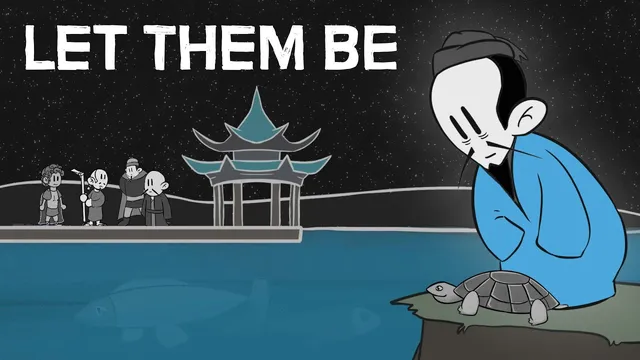
Zhuangzi’s drought parable is used to argue that when survival doesn’t require others, relationships shift from emergency solidarity to personal choice.
Briefing
A dried-up lake in ancient Chu becomes a parable for modern life: when people (and fish) no longer have to rely on each other to survive, they gain freedom—but also risk loneliness. The core claim is that “not needing people” can be genuinely joyful because it turns social contact from a necessity into an option, letting individuals choose their own routes through life rather than endure constant dependence, compromise, and conflict.
In Zhuangzi’s story, fish survive a drought by smearing slime and exchanging saliva—solidarity born from desperation. Zhuangzi admires their mutual aid, yet wonders whether a full lake would be better, since fish could swim freely without drastic, interdependent measures. The transcript draws a line from that image to today’s individualistic societies, where wealth and technology reduce everyday mutual reliance. People can order goods online, hire services for relocation, cleaning, or caregiving, and even replace certain forms of companionship with AI-driven robots. The “lake is full” metaphor becomes literal: self-reliance is easier, so social ties are less required.
That shift brings a new problem—loneliness—especially where human contact is infrequent. Still, the argument insists loneliness shouldn’t be the only lens. With needs met independently, a person can move through the world like a lone fish in open water: exploring, choosing when to socialize, and leaving relationships when they no longer serve. Socializing becomes a matter of preference rather than survival logistics. The transcript frames this as a form of physical and psychological autonomy that can be pleasurable for those who value solitude.
The benefits are not limited to freedom from loneliness. Optional dependence can also reduce exposure to social turmoil. Close-knit communities may provide safety and interaction, but they can also drag individuals into gossip, bullying, antagonism, and fights. When people rely on each other, they may tolerate harmful behavior to keep their needs met. When they don’t, they can set boundaries, exit toxic friendships, and avoid unwanted conformity.
The transcript also treats “not needing people” as a double-edged change in intimate life. Marriage and religious pressure have weakened in many places, and survival without a partner is increasingly feasible. That trend can raise divorce rates and contribute to demographic concerns such as Japan’s population crisis, but it also makes relationships more selective—sometimes protecting people from abusive or mismatched partners. The downside is that selectivity can make it harder to find a compatible partner, and that easier exits can reduce commitment.
Finally, the discussion reframes famous pessimism about others. “Hell is other people” is interpreted not as a claim that humans are inherently awful, but as an observation about being trapped by other people’s gaze and judgments. Pursuing approval can erode authenticity, a critique echoed through Schopenhauer’s warning about vanity and the importance of others’ opinions. The transcript ends by arguing that “not needing people” doesn’t mean rejecting connection; it means keeping the freedom to associate when desired and retreat into solitude when it’s the better fit—without letting others’ expectations dictate one’s life.
Cornell Notes
The transcript uses Zhuangzi’s drought story to argue that when survival no longer depends on other people, social life becomes optional rather than mandatory. That shift can worsen loneliness, but it also creates real freedom: individuals can choose when to connect, leave relationships that harm them, and avoid the conformity pressures that come with close groups. Technology and wealth make self-reliance more practical, turning many services and even companionship into purchasable or automated options. The discussion also treats intimacy as more selective when marriage is no longer required, bringing both risks (broken homes, demographic decline) and protections (escaping abuse or mismatch). Ultimately, “not needing people” is presented as a way to preserve authenticity and access solitude without denying human connection.
How does Zhuangzi’s fish story set up the transcript’s main idea about “not needing people”?
Why does the transcript say individualism can increase loneliness, even while it praises self-reliance?
What “joy” does the transcript associate with a life where people are not required for survival?
How does the transcript connect optional relationships to boundaries and reduced conflict?
What does the transcript claim about marriage and why does it treat the change as both negative and positive?
How does the transcript reinterpret “Hell is other people”?
Review Questions
- What does the transcript suggest changes when social ties become optional rather than necessary for survival?
- Which harms does the transcript associate with close-knit communities, and how does it argue self-reliance mitigates them?
- How does the transcript connect approval-seeking to authenticity, and what thinkers are used to support that connection?
Key Points
- 1
Zhuangzi’s drought parable is used to argue that when survival doesn’t require others, relationships shift from emergency solidarity to personal choice.
- 2
Wealth and technology reduce everyday mutual reliance, making human contact less frequent and turning many services—and some companionship—into substitutes.
- 3
Loneliness is treated as a real cost of reduced human contact, but the transcript claims the benefits of optional social ties are often overlooked.
- 4
A “lake full of water” symbolizes freedom: individuals can explore independently, socialize when desired, and leave interactions without feeling trapped by necessity.
- 5
Optional dependence can reduce exposure to conformity pressures and social turmoil such as gossip, bullying, and conflict within groups.
- 6
Marriage and commitment are described as more selective when they are not mandatory, bringing both protections (escaping abuse or mismatch) and downsides (divorce and demographic decline).
- 7
“Hell is other people” is interpreted as a warning about being governed by others’ gaze and judgments, not as a simple argument for avoiding people entirely.