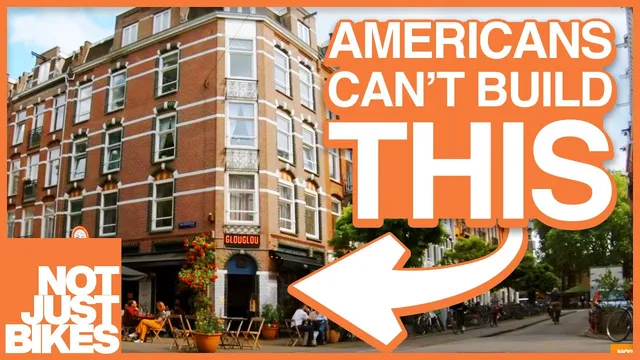
The Lively & Liveable Neighbourhoods that are Illegal in Most of North America
Based on Not Just Bikes's video on YouTube. If you like this content, support the original creators by watching, liking and subscribing to their content.
Euclidean zoning in much of North America can make it illegal to place shops and restaurants inside residential zones.
Briefing
North American cities often outlaw the very kind of small shops and restaurants that make neighborhoods feel lively and walkable—rules based on Euclidean zoning can make it illegal to open a business inside large swaths of residential areas. The result is a built environment that pushes daily errands into car trips, concentrates retail into big parking-lot “power centers,” and drains street life from places where people actually live.
The zoning logic traces back to the Industrial Revolution, when heavy industry could be placed directly in residential neighborhoods, creating pollution and unsafe living conditions. Zoning emerged to separate incompatible land uses, and many countries adopted it as a public-health safeguard. But in much of the US and Canada, the separation goes further than intended: if an area is zoned residential, “nothing else” can be built there. The transcript points to a typical zoning map example in London, Ontario, where shop or restaurant uses are prohibited within a yellow-shaded residential area. Even where noise, crowding, garbage, or other conflicts can occur when commercial uses sit near homes, the claim is that planners need balance rather than blanket bans.
Walkability is presented as the core mechanism linking zoning to everyday life. When a neighborhood includes a local grocer, restaurant, or pub, residents can reach destinations on foot. When residential areas are isolated from other uses, everyone must drive—even for small trips like buying milk—leading to more car traffic and fewer chances for people to patronize multiple small businesses. The transcript argues that once drivers commit to getting in the car, they’re more likely to skip local shops and head to large retail centers with extensive parking.
That shift affects who can thrive economically. Walkable neighborhoods, with enough residents within walking distance and less reliance on parking lots, are said to support local entrepreneurs and smaller-scale retail—businesses that contribute to the local economy in ways big-box stores typically do not. The transcript also connects physical design to social experience: compact retail pockets create inviting streetscapes with patios and places to linger, rather than empty, car-dependent corridors.
There is some optimism. Many US and Canadian cities now talk about “mixed-use development,” a term used elsewhere to describe integrating uses. Yet the transcript criticizes how these projects often remain limited to transit hubs or along major arterial roads, rather than restoring low-impact cafes, restaurants, and shops inside existing residential neighborhoods. Toronto is used as a cautionary example: despite its density, much of the city is still surrounded by a “yellow belt” of single-family zoning.
The takeaway is straightforward: zoning that bans neighborhood-scale commerce increases car dependence, reduces local business opportunities, and suppresses the street-level liveliness that makes places feel livable. The speaker closes by emphasizing support for small businesses and inviting viewers to back the channel via Patreon.
Cornell Notes
Euclidean zoning in much of the US and Canada often prohibits commercial uses inside residential areas, making it illegal to open shops or restaurants within large “yellow” zones. The transcript traces this to Industrial Revolution-era zoning meant to prevent harmful land-use conflicts, but argues North American rules went too far by separating nearly everything from everything else. The practical consequence is reduced walkability: residents must drive for errands, which increases car traffic and pushes spending toward big-box “power centers” with large parking lots. In contrast, mixed-use neighborhood retail pockets support local entrepreneurs, create inviting street life with patios and places to linger, and reduce the need for cars. Even where mixed-use is discussed, the transcript says it’s often limited to transit hubs or major roads rather than restored throughout existing residential neighborhoods.
Why did zoning emerge in the first place, and what problem was it meant to solve?
What does “Euclidean zoning” do to residential neighborhoods in practice?
How does zoning translate into more car traffic?
Why does walkable neighborhood retail matter economically?
What’s the critique of “mixed-use development” as currently implemented?
What does the transcript use Toronto’s zoning to illustrate?
Review Questions
- How does separating land uses under Euclidean zoning change residents’ daily travel patterns for errands?
- What economic differences does the transcript associate with walkable local retail versus big-box retail centers?
- Why does the transcript argue that mixed-use projects can still fall short if they’re limited to transit hubs or arterial roads?
Key Points
- 1
Euclidean zoning in much of North America can make it illegal to place shops and restaurants inside residential zones.
- 2
Zoning began as a public-health tool to prevent harmful land-use conflicts, but strict separation often went too far.
- 3
Banning neighborhood-scale retail reduces walkability and forces residents to drive even for small errands.
- 4
Car dependence tends to shift spending away from local shops toward big-box “power centers” with large parking lots.
- 5
Walkable neighborhoods can sustain local entrepreneurs because they concentrate enough customers within walking distance.
- 6
Mixed-use development is often implemented only in limited areas (transit hubs or along major roads) rather than restored throughout existing residential neighborhoods.
- 7
Toronto’s “yellow belt” of single-family zoning is used to show how widespread residential-only rules can persist despite overall urban density.