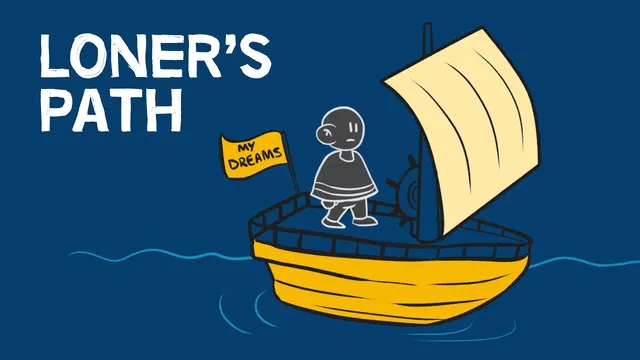
The Loner's Path | Philosophy for Non-Conformists
Based on Einzelgänger's video on YouTube. If you like this content, support the original creators by watching, liking and subscribing to their content.
Meursault’s nonconformity—emotional detachment and refusal to embrace Christianity—triggers condemnation because others treat deviation from social scripts as moral evidence.
Briefing
Nonconformity can bring freedom—but it also triggers social punishment, often because outsiders are misread rather than understood. Albert Camus’ Meursault in L’Étranger becomes the clearest case: he refuses to perform the expected emotional and moral script, and the community treats that refusal as evidence of cruelty. Yet his indifference isn’t framed as a desire to harm; it’s tied to a worldview in which the universe carries no built-in meaning. In the final stretch before execution, that meaninglessness becomes a source of inner peace, turning social condemnation into a kind of personal liberation.
Ralph Waldo Emerson’s Self-Reliance supplies the philosophical engine for why such a “loner’s path” matters. Emerson argues that people possess an inborn intuition—an inner compass—that can guide right and wrong without borrowing authority from others. He describes this inner divine spark as the “over-soul,” suggesting that each person’s experiences are uniquely fitted to them, so imitation is not only unnecessary but spiritually misleading. The result is a direct challenge to conformity: society functions like a joint-stock arrangement in which individuals surrender liberty and culture in exchange for security, status, and belonging. Emerson acknowledges the cost—going against the grain invites misunderstanding and estrangement—but insists that choosing convenience over conscience betrays the self.
Nietzsche’s Übermensch concept pushes the same break from herd morality in a more secular direction. Where Emerson locates meaning in God-within, Nietzsche rejects God and treats meaning as a human creation. In Also sprach Zarathustra, Zarathustra describes humanity as a rope stretched over an abyss between “beast” and “overman,” and calls for a dangerous crossing beyond mediocrity and mass conformity. The point is not merely self-expression; it’s escape from nihilism after the collapse of universal moral authority—captured in the claim “God is dead.” Without self-generated values, people may replace lost meaning with substitutes like nationalism, gang-mentality, or consumer-driven comfort.
Taken together, the three thinkers form a single prescription: the loner’s path is not a generic “road less traveled,” but a personalized route built from one’s own values and purpose. That construction requires a specific compass—inner conviction for Emerson, self-created goals for Nietzsche—and the willingness to endure ridicule, ostracism, accusations, and even legal trouble. Camus’ story supplies the warning and the payoff: when someone refuses to play the social game, the crowd often condemns them not because they violate a clear moral rule, but because they don’t resemble the crowd’s expectations. The freedom comes when the individual stops seeking approval and instead anchors life in an internal source of meaning, even if that meaning is the acceptance of a meaningless universe.
Cornell Notes
The loner’s path is framed as a deliberate refusal to outsource morality and meaning to society. Camus’ Meursault becomes the test case: he doesn’t perform expected grief or religious conversion, so others interpret his indifference as moral emptiness, leading to condemnation. Emerson’s Self-Reliance argues that people have an inner intuition—an “over-soul”—that should guide action above social opinion, even though nonconformity brings misunderstanding. Nietzsche’s Übermensch pushes the same independence further by rejecting God as a moral authority and insisting that meaning must be created by individuals to avoid nihilism. Together, the thinkers treat nonconformity as costly but potentially liberating when anchored in self-made values.
Why does Meursault’s behavior trigger such harsh judgment from the community?
What does Emerson mean by self-reliance, and how does it justify nonconformity?
How does Emerson reconcile nonconformity with living among others?
What is the Übermensch, and how does it differ from Emerson’s source of meaning?
Why does Nietzsche connect the Übermensch project to escaping nihilism?
What shared lesson emerges across Camus, Emerson, and Nietzsche about the cost of being different?
Review Questions
- How does Meursault’s refusal to display expected emotions function as a moral “signal” to others, and why does that matter for the story’s theme?
- Compare Emerson’s “over-soul” and Nietzsche’s rejection of God: how do their accounts of meaning lead to different justifications for nonconformity?
- What does Nietzsche’s “rope over an abyss” metaphor imply about the difficulty of moving beyond herd values, and how is that difficulty connected to nihilism?
Key Points
- 1
Meursault’s nonconformity—emotional detachment and refusal to embrace Christianity—triggers condemnation because others treat deviation from social scripts as moral evidence.
- 2
Camus frames the acceptance of a meaningless universe as a route to inner freedom, even when it culminates in execution.
- 3
Emerson’s Self-Reliance argues that people have an inborn intuition (“over-soul”) that should guide action above social opinion, making imitation unnecessary and misleading.
- 4
Society is portrayed as trading liberty and culture for security and status, so self-reliance requires resisting conformity even when it brings misunderstanding.
- 5
Nietzsche’s Übermensch rejects inherited moral authorities and creates values to escape nihilism after the collapse of “God” as a universal anchor.
- 6
Nonconformity is presented as costly: ridicule, ostracism, accusations, and legal trouble often follow when others misinterpret those who don’t resemble them.
- 7
A loner’s path is described as uniquely constructed—requiring a personal compass and the willingness to endure social punishment for authenticity.