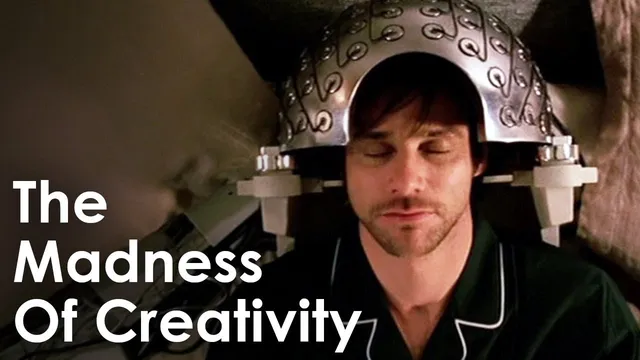
The Madness of Creativity - Charlie Kaufman On Facing Your True Self
Based on Pursuit of Wonder's video on YouTube. If you like this content, support the original creators by watching, liking and subscribing to their content.
Identity is portrayed as a shifting product of a feedback loop between one’s actions, others’ perceptions, and one’s assumptions about those perceptions.
Briefing
Charlie Kaufman’s creative philosophy centers on a brutal, practical idea: people live inside a feedback loop between their actions, other people’s perceptions, and their own assumptions about those perceptions—so “true self” is hard to locate, constantly shifting, and rarely socially visible. The work’s core claim is that art, writing, and other creative acts can turn the mirror back on that process, making room to confront the parts of identity people hide: flaws, shame, confusion, and the vices that make normal social performance feel like a mask.
In this view, most people manage relationships by staying on the surface—editing out darker or more difficult traits to avoid burdening others. That social strategy can smooth daily life, but it also deepens loneliness because the same struggles remain unspoken. Kaufman’s writing treats that silence as the problem. Creativity becomes a sanctioned space to say what usually can’t be said: the awkward, self-doubting, even “dumb” or “weird” impulses that feel too risky to share. The payoff is not just personal catharsis; it’s recognition. When someone writes or creates honestly enough, others who feel similarly trapped in their own minds can see themselves and feel less alone.
The transcript anchors this philosophy in a sociological framing attributed to Charles Cooley: “I am not who you think I am… I am who I think you think I am.” Identity, then, is not a fixed inner essence but a negotiated construction shaped by imagined judgment. Kaufman’s characters repeatedly wrestle with self-contempt and fear of being fraudulent—worrying their work is narcissistic, self-indulgent, boring, or cliché. Yet the insistence is that the only way through is to keep going anyway. Facing rejection—risking embarrassment, being wrong, sounding strange—is portrayed as the price of making anything earnest.
A further thread ties the personal to the existential. The transcript describes consciousness as a kind of confinement: the brain trying to understand itself, trapped in a body and world without clear answers. Even when someone looks successful or admired, the inner condition can be broken and confused. Kaufman’s films, including Animal ISA (as referenced here), are presented as demonstrations of this contradiction—public competence alongside private disarray—made bearable through honest sharing rather than concealment.
Ultimately, the “true self” is compared to a moving target: visible enough to aim at, but never fully reachable. The practical instruction is to aim anyway—toward authenticity in work, relationships, and everyday life—using creativity as a disciplined way to shoot for something real even while it keeps shifting. The sponsor segment adds a separate note about Skillshare as an online learning community, but the central message remains unchanged: vulnerability in creation can transform private confusion into something others can recognize, and therefore survive.
Cornell Notes
The transcript frames identity as a moving target shaped by a constant feedback loop: actions, other people’s perceptions, and one’s assumptions about those perceptions. Because social life rewards surface-level performance, people often hide flaws and shame, which leaves many feeling isolated despite sharing the same struggles. Kaufman’s approach treats creativity as a space to risk authenticity—writing through fear of rejection, sounding “dumb” or “weird,” and continuing despite self-doubt. The payoff is recognition: honest creative work can help others feel less alone and find their own truth. Even existential consciousness—feeling trapped in mind and body—becomes something art can translate into shared, workable meaning.
How does the transcript define “true self,” and why does it keep slipping away?
Why does the transcript say people hide parts of themselves, and what does that cost?
What role does creativity play in confronting identity and loneliness?
What does the transcript treat as the “price” of making honest work?
How does the transcript connect personal identity to existential confinement?
What example of self-doubt is used to illustrate the creative struggle?
Review Questions
- How does the transcript’s use of Charles Cooley’s quote change the way you think about identity—fixed self vs. socially constructed self?
- What kinds of risks (social, emotional, creative) does the transcript claim are necessary for authenticity in writing?
- Why does the transcript argue that sharing flaws can reduce loneliness even when people fear rejection?
Key Points
- 1
Identity is portrayed as a shifting product of a feedback loop between one’s actions, others’ perceptions, and one’s assumptions about those perceptions.
- 2
Social “surface performance” can reduce friction but also deepens loneliness by keeping shared struggles unspoken.
- 3
Creativity is framed as a space where people can risk vulnerability and say what feels too dangerous to share in ordinary life.
- 4
Honest work requires tolerating rejection risk—being wrong, sounding strange, or feeling exposed—rather than waiting for perfect confidence.
- 5
Kaufman-style self-doubt is treated as part of the process, not proof that the work is fraudulent.
- 6
Existential confinement (consciousness trapped in mind/body/world) is used to explain why inner confusion can persist regardless of outward success.