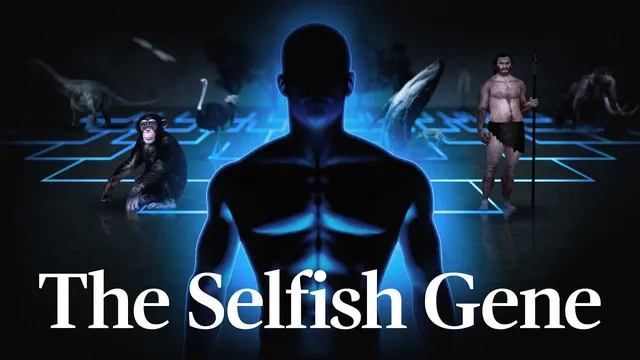
The Most Controversial Idea in Biology
Based on Veritasium's video on YouTube. If you like this content, support the original creators by watching, liking and subscribing to their content.
Different organisms can experience the same biological substance in opposite ways because survival incentives differ across species.
Briefing
Poop smells bad to humans because evolution has effectively “filtered” for microbes that make it dangerous to eat—while flies treat it as a nutrient source. That contrast becomes a gateway into a deeper claim: natural selection isn’t best understood as a contest between individuals or even between species, but as a competition among replicating information units—genes—whose success depends on copying with variation.
The discussion starts with a seemingly trivial question—why feces stink—and uses it to highlight how different organisms experience the same biological reality through different survival incentives. Humans are repelled by the bacterial load and associated toxins; flies are attracted because the material is rich in nutrients. The key evolutionary logic is that traits that would make feces “pleasant” to humans would likely increase illness and reduce reproduction, so those traits are unlikely to persist. In other words, the smell is not a moral judgment or a universal truth; it’s a byproduct of what different organisms can tolerate and exploit.
That leads to a more controversial problem in evolutionary theory: altruism. If natural selection favors selfish survival of the “fittest,” why do worker bees sting predators to protect the hive, why do sterile worker ants labor for the colony, and why do animals like wolves and monkeys share resources or care for orphans? The transcript argues that neither “survival of the fittest individual” nor “survival of the fittest group” fits neatly with how selection actually operates. For selection to work, there must be replicators that copy themselves and then face differential survival. Groups don’t reproduce as coherent units, so group-level competition is hard to map onto the mechanics of heredity.
To build the case, the narrative rewinds to Earth’s early chemistry and uses a simplified “replicator” simulation. In a primordial soup of simple molecules, energy spikes allow compounds to form, but most unstable combinations fall apart. Occasionally, chance produces a more stable configuration that can attract the right building blocks and replicate—turning one structure into two. Replication then spreads until copying errors introduce mutation, generating a population of related variants. When resources become limited, a “replicator battle” emerges: variants with higher replication rates, lower death rates, and appropriate mutation rates tend to dominate. The environment matters because it changes which traits confer an advantage.
From there, the argument shifts to genes as the practical unit of selection. A gene is described as the right size: long enough to influence traits, short enough to be copied faithfully, and therefore capable of being pruned by selection across generations. This perspective is linked to Richard Dawkins’ “The Selfish Gene,” which frames behaviors—including cooperation—as strategies that increase the propagation of genes, even when the individual carrying them pays a cost.
Kin selection provides the clearest example. California ground squirrels emit alarm calls that can increase the caller’s risk, but the calls can still benefit shared genes in relatives. Because siblings and close kin share substantial fractions of DNA, saving relatives can outweigh the caller’s personal loss. The transcript also addresses why sex persists despite its apparent “waste”: genes that benefit from sexual reproduction can spread, even if sex is costly to many other genes.
Finally, the gene-centric framework faces major criticisms. Some evolution is driven by genetic drift—random changes in allele frequencies—especially in small populations or for traits not strongly affected by selection. The “selfish” language is acknowledged as metaphorical, since molecules lack intent. And the gene-to-trait mapping is more complex than a one-gene/one-trait story: genes interact, regulate each other, include non-coding DNA, and their effects depend on the environment. Even so, the transcript concludes that viewing evolution through replicators—genes—offers a powerful way to understand why certain traits become common and why biology’s diversity can arise from differential copying over time.
Cornell Notes
The transcript uses a “weird” question about why poop smells bad to illustrate a broader evolutionary point: traits that benefit survival spread, even when they look strange from a human perspective. It argues that natural selection works best when framed around replicators—ultimately genes—rather than individuals or species, because replicators copy and then face differential survival. A simplified early-Earth chemistry simulation shows how replication can arise by chance, how mutation generates variation, and how limited resources create competition among variants. The gene-centered view explains altruism through kin selection, where costly behaviors can still increase the survival of shared genes in relatives. The framework remains controversial due to genetic drift, metaphorical “selfish” language, and the complex, non-deterministic relationship between genes and traits.
Why does poop smell bad to humans but attract flies?
Why doesn’t “survival of the fittest individual” fully explain altruism?
What does the replicator simulation add to the gene-centric argument?
How does kin selection make sense of costly alarm calls in California ground squirrels?
What is genetic drift, and why does it challenge a purely selection-driven view?
What are the main criticisms of The Selfish Gene framework?
Review Questions
- How does the transcript connect the smell of feces to the idea that selection filters traits based on survival outcomes?
- In the replicator simulation, which traits tend to produce the winning variant, and why do limited resources change the outcome?
- Explain kin selection using the California ground squirrel alarm-call example, including how relatedness affects the payoff.
Key Points
- 1
Different organisms can experience the same biological substance in opposite ways because survival incentives differ across species.
- 2
Natural selection requires replicators that copy and then face differential survival; groups and species don’t reproduce as coherent units in the same way.
- 3
A simplified origin-of-replication model shows how chance-stable chemistry can produce replicators, then mutation and resource limits drive competition.
- 4
Genes are framed as the unit of selection because they are long enough to influence traits and short enough to be copied reliably across generations.
- 5
Altruism can evolve when it increases the propagation of shared genes in relatives, a mechanism formalized as kin selection.
- 6
Genetic drift introduces randomness that can sometimes overpower natural selection, especially in small populations or for traits with weak selective pressure.
- 7
The gene-centric view is powerful but incomplete: gene effects are complex, “selfish” is metaphorical, and environment shapes which genes get expressed.