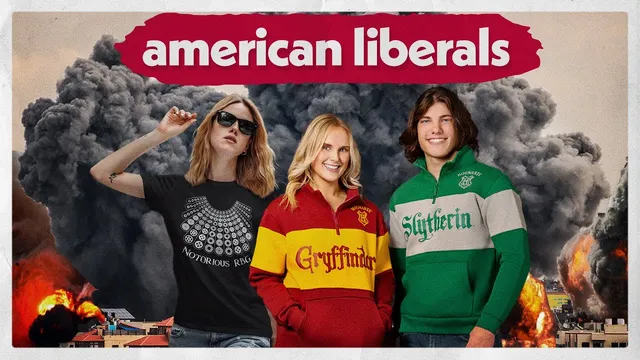
The Most Dangerous Thing In The Western Hemisphere
Based on Second Thought's video on YouTube. If you like this content, support the original creators by watching, liking and subscribing to their content.
The transcript frames Western liberalism as dangerous because it pairs pro-justice rhetoric with material support for empire, repression, and the interests of capital.
Briefing
“The most dangerous thing in the Western Hemisphere” is framed as Western liberalism—portrayed as a political force that speaks the language of justice and peace while repeatedly siding with empire, capital, and state violence. The core claim is that liberalism’s danger lies less in overt brutality than in its ability to disguise complicity with moral performance, optics-focused objections, and selective outrage—making it harder to recognize and harder to resist than more openly authoritarian politics.
The argument begins with a reassessment of the U.S. civil rights era. Rather than treating Martin Luther King Jr.’s rise as a moment when “everyone” suddenly embraced equality, the transcript emphasizes how white northern liberals allegedly shifted from supportive rhetoric to discomfort once protest challenged systemic power. King’s “Letter from Birmingham Jail” is used as a turning point: as the movement increasingly targeted economic inequality and structural racism, liberal allies supposedly demanded less disruption and more “proper” optics. The transcript leans on the idea that protest is inherently disruptive—so liberal calls for “peaceful” demonstrations can function as a demand that oppression continue uninterrupted.
From there, the framing expands beyond domestic civil rights into foreign policy and contemporary conflicts. Liberalism is described as opposing imperialism only on aesthetic grounds—supporting certain rights or identities while still enabling global domination. The transcript points to Gaza as a test case: it claims that even prominent Democrats who criticize aspects of Israel’s actions ultimately vote to continue funding, portraying this as a pattern of performative concern that preserves the political status quo. The same logic is applied to immigration and policing, with examples suggesting liberal leaders maintain or expand coercive systems rather than dismantle them.
International leadership is used to illustrate the “liberal predator” metaphor. Trudeau is cited for condemning protests outside a hospital while the transcript argues that Israel’s military actions against hospitals and medical staff are far more severe. The transcript also argues that liberal rhetoric about anti-Semitism becomes a tool to delegitimize criticism of Israeli policy—especially once Jewish dissent against Israel’s conduct becomes visible.
A major through-line is the claim that liberalism blocks real emancipation by demanding moral purity and procedural compliance from the oppressed. The transcript argues that when rights to protest, assemble, and speak are curtailed, “data” and “critical mass” of outrage won’t automatically produce change; instead, it insists that freedom is not granted through peaceful appeals to power. It ends by warning socialists who may still carry liberal instincts that the liberal “on-ramp” to socialism is unreliable, because liberal institutions and incentives ultimately steer movements back toward empire.
Finally, the transcript includes a personal note about sponsorship: content is said to have been flagged for “brand safety,” reinforcing the message that principled pro-Palestine socialist work faces economic and institutional pressure. The call to support the creator on Patreon functions as both funding request and evidence of the broader theme—political speech that threatens entrenched interests is punished, while performative mainstream politics remains protected.
Cornell Notes
The transcript argues that Western liberalism is the “most dangerous” political force in the hemisphere because it disguises complicity in empire and repression behind language of peace, inclusion, and moral concern. It claims liberal allies historically backed civil rights in theory but became uncomfortable when protest challenged systemic power, shifting toward optics and procedural limits. The same pattern is applied to Gaza and other foreign-policy issues: liberal politicians and institutions are portrayed as opposing violence only cosmetically while continuing funding and support. The transcript concludes that real emancipation cannot rely on persuading liberal institutions with facts or “legal and government-approved” channels, since rights to protest and speech are being restricted. It urges socialists to reject lingering liberal assumptions and to support pro-Palestine, anti-imperial work despite economic pressure.
How does the transcript reinterpret the civil rights era to support its claim about liberalism?
What does “optics” mean in this argument, and why is it treated as a political tactic?
How does the transcript connect liberalism to Gaza and U.S. Democratic politics?
Why does the transcript use a “fox vs. wolf” metaphor for conservatives and liberals?
What is the transcript’s warning to socialists about liberal ideology?
How does the sponsorship anecdote reinforce the transcript’s broader thesis?
Review Questions
- What specific shift does the transcript claim occurred when civil rights protest moved from ideals to systemic demands, and how does it connect that to “optics”?
- According to the transcript, why doesn’t “showing people enough data” reliably produce political change?
- How does the fox/wolf metaphor shape the transcript’s view of why liberalism is more dangerous than conservatism?
Key Points
- 1
The transcript frames Western liberalism as dangerous because it pairs pro-justice rhetoric with material support for empire, repression, and the interests of capital.
- 2
It argues that white northern liberal support for civil rights weakened when protest became disruptive and targeted systemic economic power, not just symbolic equality.
- 3
“Optics” is treated as a tactic that shifts attention away from injustice and toward how protest appears to the dominant public.
- 4
Gaza is presented as a key test case where liberal politicians’ criticism is portrayed as performative, while funding and policy support continue.
- 5
The transcript claims liberal leaders use anti-Semitism accusations and other vague moral charges to delegitimize criticism of Israeli policy.
- 6
It argues that rights to protest and speech are being curtailed, so emancipation cannot depend on persuasion through mainstream legal channels.
- 7
A sponsorship “brand safety” incident is used to illustrate how pro-Palestine, anti-imperial content can face economic retaliation.