The Most Radioactive Places on Earth
Based on Veritasium's video on YouTube. If you like this content, support the original creators by watching, liking and subscribing to their content.
Ionizing radiation is the type energetic enough to rip electrons off atoms, and Geiger counters measure that specific category.
Briefing
Ionizing radiation is often portrayed as instantly lethal, but the real story is dose and context: most people live with low, constant background radiation, while a handful of locations and activities can deliver much higher exposures. A Geiger counter only responds to ionizing radiation—radiation energetic enough to rip electrons from atoms—so everyday sources like bananas, soil, rocks, air, and even space contribute to a baseline level of exposure. Typical global background radiation is around 0.1 to 2 micro C per hour, with a cited example of about 0.15 micro per hour in Sydney.
Against that baseline, the most radioactive places on Earth turn out to be a mix of nuclear history, contaminated materials, and surprisingly “ordinary” human behavior. Near Hiroshima, the Peace Dome area still registers only about 3 micro C per hour decades after the first nuclear bomb, showing how time and decay reduce radiation levels. In contrast, an old uranium mine in New Mexico—where uranium was discovered and where Marie Curie obtained raw material—can reach roughly 17 micro C per hour, about ten times background. Within Curie’s former lab, small hotspots persist, including a door knob and the back of her chair, where alpha particles can still be detected due to lingering contamination from her work with radioactive materials.
The Trinity nuclear test site in New Mexico adds another twist: the bomb’s heat fused desert sand into a rare mineral called trinitite. Radiation readings there are around 8 micro per hour, with trinitite itself measuring higher (about 2 to 3 micro per hour). Yet the highest exposures encountered so far come from outside Earth’s atmosphere. At cruising altitudes, cosmic rays face less shielding, pushing readings upward—up to about 0.5 micro per hour at 18,000 ft, around 1 micro per hour at 23,000 ft, over 2 micro per hour at 33,000 ft, and above 3 micro per hour at higher altitudes, especially toward the poles.
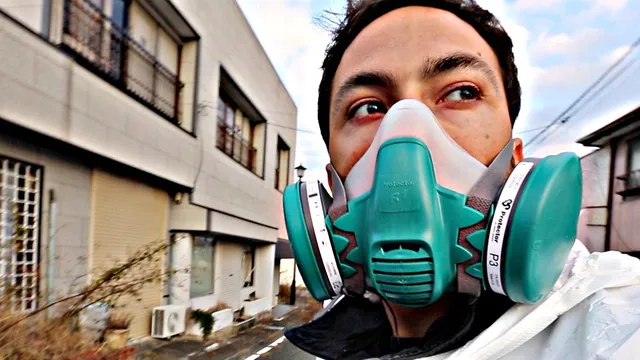
Major nuclear accidents remain among the most contaminated environments. Chernobyl’s reactor number four melted down on April 26, 1986, blowing radioactive isotopes across the region; current readings are cited around 5 micro per hour. Fukushima’s exclusion zone is described as similarly intense, with readings often in the 5 to 10 micro per hour range during approach, driven by fresh contamination (the accident was only about three years earlier at the time of measurement). Cleanup efforts—such as removing meters of topsoil in Chernobyl and collecting contaminated soil in Fukushima—keep doses from becoming even higher.
But the largest doses highlighted in the comparison are not from nuclear sites. A smoker’s lungs receive about 160,000 micro C per year due to radioactive polonium and lead in tobacco. In that framing, the “most radioactive place” is an everyday habit: not Fukushima, not Chernobyl, not even typical radiation work—smoking delivers the highest ionizing radiation dose among the groups compared, while also adding carcinogens and toxins.
Cornell Notes
Ionizing radiation levels vary dramatically by location and activity, but the key determinant is dose relative to background. Background radiation on Earth is typically around 0.1–2 micro C per hour, from soil, air, and space. Nuclear sites can be highly contaminated—Chernobyl and Fukushima are described with readings around 5 micro C per hour, while a uranium mine and Curie’s lab hotspots reach much higher values (e.g., ~17 micro C per hour in the mine). Cosmic rays become a major factor at high altitude, with airplane readings rising above 3 micro C per hour at very high altitudes. Surprisingly, the highest dose comparison goes to smokers’ lungs, estimated at ~160,000 micro C per year from radioactive polonium and lead in tobacco.
Why does a Geiger counter not alarm near common household items like a mobile phone or microwave?
How do background radiation levels help interpret readings from extreme places?
What are the lingering radiation sources at Hiroshima’s Peace Dome area and at Curie’s former lab?
Why do radiation readings rise on airplanes as altitude increases?
How do Chernobyl and Fukushima differ in contamination persistence and current dose levels?
Which activity receives the highest ionizing radiation dose in the comparisons, and why?
Review Questions
- What makes ionizing radiation measurable by a Geiger counter, and how does that distinction change how people interpret everyday radiation sources?
- Compare how time since an accident (Chernobyl vs. Fukushima) and shielding (Earth’s atmosphere vs. airplane altitude) affect radiation readings.
- Why does the transcript conclude that smoking can deliver higher ionizing radiation doses than visiting contaminated nuclear sites?
Key Points
- 1
Ionizing radiation is the type energetic enough to rip electrons off atoms, and Geiger counters measure that specific category.
- 2
Earth’s baseline radiation typically falls around 0.1–2 micro C per hour, so extreme readings must be interpreted against background.
- 3
Small contamination hotspots can persist for decades in places tied to radioactive materials, including specific objects in Marie Curie’s former lab.
- 4
Cosmic rays drive higher radiation exposure at altitude because less atmosphere shields the body.
- 5
Nuclear accident sites like Chernobyl and Fukushima can still show multi-micro-per-hour readings, but cleanup actions (such as removing topsoil) reduce exposure.
- 6
Among the comparisons made, smoking delivers the highest estimated ionizing radiation dose to smokers’ lungs due to radioactive polonium and lead in tobacco.