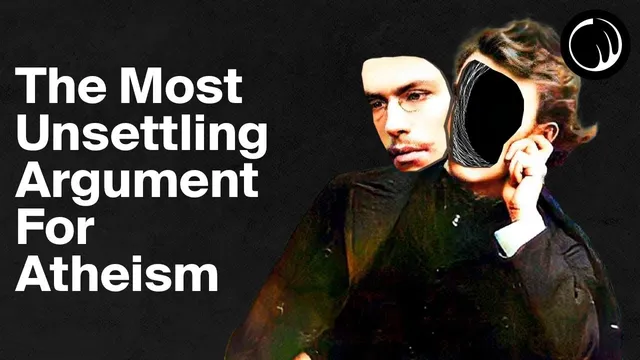
The Most Unsettling Argument for Atheism - Philipp Mainländer
Based on Pursuit of Wonder's video on YouTube. If you like this content, support the original creators by watching, liking and subscribing to their content.
Philipp Mainländer’s Philosophy of Redemption treats existence as moving from unity toward fragmentation, with the ultimate aim of negation and annihilation.
Briefing
Philipp Mainländer’s brand of philosophical pessimism reaches its most unsettling endpoint: a worldview that treats non-being as preferable to being, paired with a life that ends by suicide at age 34. The core significance isn’t just the darkness of the ideas—it's the way the system’s logic appears to culminate in literal action, raising uncomfortable questions about how belief, suffering, and meaning can intertwine.
Mainländer was born in 1841 in Germany as Philipp Bots into a wealthy family, the youngest of six. His father ran a demanding business and pushed him through a sequence of work roles—first a trading house, then his father’s company, and later banking—before Mainländer enlisted in the military around age 32, apparently seeking an escape from monotonous dread and financial strain. Military life quickly exhausted him, and he left. During this period and into early adulthood, he found emotional relief in poetry and philosophy, effectively self-educating until he became adept.
A turning point came in 1876 when Mainländer encountered Arthur Schopenhauer’s The World as Will and Representation. Schopenhauer’s pessimism—life as fundamentally negative, pleasure eclipsed by pain, and existence driven by an irrational “will” that endlessly strives—reframed Mainländer’s outlook. Schopenhauer’s will operates through constant need and desire, using beings as instruments to sustain itself. Mainländer absorbed this framework and then revised it into his own system.
Mainländer’s Philosophy of Redemption argues that the world consists of individuality and “movement” (a metaphysical activity), unified by the same underlying force he also calls the will. Yet the universe is not stable unity: it disintegrates from a former oneness into egoistic multiplicity. Where Schopenhauer’s will has no ultimate purpose beyond sustaining itself, Mainländer claims the movement has a goal—negation, dissolution, and ultimately nothingness. He portrays the universe as the decaying corpse of God: an initial unity (which he calls God while insisting he is an atheist) that “dies,” splitting apart as it moves away from itself. Interpreting cosmic change through this mythic lens, he links the will to a “will to death,” where redemption means minimizing suffering and then ending it completely.
In Mainländer’s terms, redemption culminates in annihilation—an extinction of the will and the erasure of the self from “the Book of Life.” After publishing his masterwork, he died by suicide, stepping off a stack of his own newly received copies with only a rope to catch him. The motivation remains speculative, but the timing makes the connection between thought and action hard to ignore.
The transcript also stresses that Mainländer’s pessimism may have been shaped by personal anguish rather than caused it. Mental illness is suggested as a family pattern: his grandfather and older brother reportedly took their own lives. Poetry and philosophy functioned as temporary lifelines—providing haven, purpose, and a way to endure—until the perceived completion of his system left him feeling he had nothing further to contribute. Even so, Mainländer is described as politically progressive (a Social Democrat concerned with poverty and resource equality) and emotionally empathetic, holding onto a kind of hope for the reduction of suffering despite his insistence that existence trends toward extinction.
Overall, Mainländer’s legacy sits in a paradox: an atheist who treats nature’s origins and fate with near-sacred seriousness; a pessimist who still values art, literature, philosophy, and politics; and a thinker whose attempt to transmute meaninglessness into a coherent system ends with the ultimate refusal to keep living.
Cornell Notes
Philipp Mainländer develops a radical form of philosophical pessimism after reading Arthur Schopenhauer. He adopts Schopenhauer’s “will” as the driving force of existence but adds a cosmic aim: the universe is moving from unity toward fragmentation, and that movement culminates in negation and annihilation. Mainländer frames this as “redemption,” where the will seeks the end of suffering through the extinction of life and the self. The unsettling part is that after publishing his masterwork, Mainländer died by suicide at age 34, making the link between his system and his final act difficult to separate from personal suffering. The transcript also suggests his pessimism may have been downstream of inherited anguish, with poetry and philosophy acting as temporary relief.
What does Schopenhauer’s “will” mean, and how does Mainländer build on it?
How does Mainländer’s “redemption” differ from ordinary pessimism or nihilism?
What is the “God dies” idea, and why does it matter to his pessimism?
Why does the transcript connect Mainländer’s philosophy to his suicide, and what alternative explanation is offered?
What political and emotional traits complicate the stereotype of a purely passive pessimist?
How does the transcript frame Mainländer’s paradoxes?
Review Questions
- How does Mainländer reinterpret Schopenhauer’s “will” so that it ends in annihilation rather than endless striving?
- What role does the idea of an original unity (“God”) play in Mainländer’s explanation of cosmic suffering and redemption?
- What competing explanations for Mainländer’s suicide are suggested, and how do they change the interpretation of his philosophy?
Key Points
- 1
Philipp Mainländer’s Philosophy of Redemption treats existence as moving from unity toward fragmentation, with the ultimate aim of negation and annihilation.
- 2
Mainländer adopts Schopenhauer’s “will” but adds a cosmic purpose: the will’s trajectory is toward ending suffering through the extinction of life and self.
- 3
He portrays the universe as the decaying corpse of God—an original unity that “dies” by splitting apart—while insisting he is an atheist.
- 4
The transcript links Mainländer’s suicide at age 34 to his published system, while also noting speculation that inherited mental anguish may have been a major driver.
- 5
Poetry and philosophy are described as temporary lifelines for Mainländer, providing haven and purpose until his perceived intellectual completion left him feeling empty.
- 6
Mainländer is portrayed as politically progressive (a Social Democrat) and emotionally empathetic, complicating the stereotype of pessimism as purely passive or reactionary.