The No Cloning Theorem
Based on minutephysics's video on YouTube. If you like this content, support the original creators by watching, liking and subscribing to their content.
Perfect quantum cloning of an unknown state is impossible even in principle, due to a mathematical contradiction with quantum linearity.
Briefing
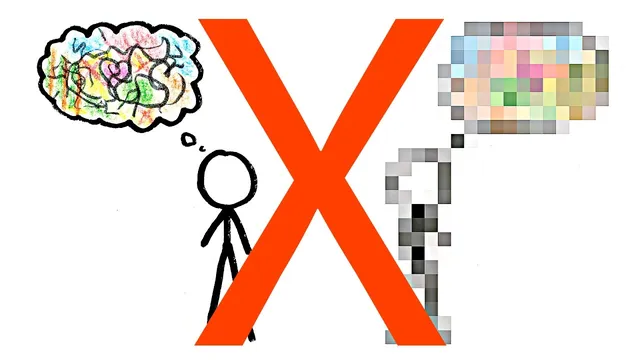
Perfect quantum cloning—making an identical copy of an unknown quantum state down to the subatomic level—is mathematically impossible, even in principle. The no-cloning theorem doesn’t hinge on today’s technology or any particular machine design; it follows from three basic rules of quantum mechanics. Those rules force a contradiction: a process that would copy an arbitrary quantum state perfectly would also have to behave like ordinary algebra, but quantum states don’t multiply and distribute the way perfect copying requires.
The argument starts by defining what “cloning” would mean for quantum particles. A cloning device would take an input system in some unknown quantum state, transform some blank “materials” into a second system, and leave the original intact—producing two indistinguishable copies. Crucially, the device can’t be tailored to a specific known state; it must work for any specimen. That requirement matters because quantum states can be in superpositions—simultaneously in multiple possibilities, like Schrödinger’s cat being both alive and dead in the same description, or a photon interfering with itself after passing through two slits.
Quantum mechanics also treats composite systems differently from classical intuition. When multiple particles form a single quantum object, the overall state behaves like a product (and, more generally, a superposition of products) of the parts. Finally, transformations distribute over superpositions: applying a physical operation to a superposed whole acts like applying the operation to each component of the superposition and then adding the results.
Now consider a cloning attempt on a superposition. If the input is in a state like “exploded” plus “not exploded,” then perfect cloning would require the output to be the same as cloning the whole superposition at once. But the distribution rule implies an alternative route: cloning should effectively act on each component separately and then combine them. Algebraically, that would demand that (A + B)² match A² + B². In quantum mechanics, it doesn’t. The “whole-first” and “parts-first” routes generate extra cross terms that can’t be eliminated while keeping the original intact and producing two perfect copies. The contradiction means that at least one assumption must fail—since quantum mechanics is supported by extremely precise experiments, the only consistent conclusion is that a universal perfect quantum cloning machine cannot exist.
The theorem is often misunderstood as a ban on having multiple copies in the universe. It doesn’t forbid creating more than one system; it forbids making a perfect copy of an unknown quantum state while leaving the original unchanged. Imperfect copying is still possible: qubits can be cloned with limited fidelity (the transcript cites an average of 83%). And quantum teleportation remains viable because it transfers a state using shared entanglement and classical communication, not by copying the unknown state directly. In the end, the no-cloning theorem places a hard boundary on “100% perfect” duplication: if there’s only one of each person in the universe, quantum mechanics implies you can’t make a perfect quantum-mechanical clone of them.
Cornell Notes
The no-cloning theorem says perfect cloning of an unknown quantum state is impossible, even with an ideal device. The proof relies on three quantum facts: (1) particles can exist in superpositions, (2) composite quantum systems combine as products (or superpositions of products) of their components, and (3) operations distribute over superpositions. Assuming a universal cloning machine leads to a contradiction when cloning a superposed state: the algebra required for “clone the whole” conflicts with the algebra implied by “clone each part and add.” Since quantum mechanics is strongly validated experimentally, the only consistent conclusion is that such a perfect cloning process cannot exist. Imperfect cloning and teleportation are still allowed.
What does “perfect cloning” mean for quantum states, and why must the device work for unknown inputs?
How do superposition and the “distribution” of transformations drive the contradiction?
Why does composite-system behavior matter (the “product” rule)?
What is the key algebraic mismatch highlighted in the proof?
Does the no-cloning theorem mean you can never create multiple copies of something?
Why is teleportation still possible if cloning is forbidden?
Review Questions
- What three quantum-mechanical properties are used to derive the no-cloning contradiction, and how does each one constrain cloning?
- In the proof, where exactly do the “extra terms” come from when cloning a superposed state?
- Why does the theorem allow imperfect cloning and teleportation, even though perfect cloning is impossible?
Key Points
- 1
Perfect quantum cloning of an unknown state is impossible even in principle, due to a mathematical contradiction with quantum linearity.
- 2
The no-cloning proof relies on superposition, composite-system product structure, and the way operations distribute over superpositions.
- 3
Assuming a universal perfect cloning machine forces an algebraic requirement like (A + B)² = A² + B², which fails for superpositions.
- 4
The contradiction implies that at least one assumption must break; given quantum mechanics’ experimental success, the cloning assumption must fail.
- 5
Imperfect cloning is still possible, with cited qubit cloning fidelity around 83% on average.
- 6
Teleportation remains possible because it transfers states using entanglement and classical communication rather than copying the unknown state directly.
- 7
The theorem does not prevent having multiple copies in general; it blocks perfect copying of an unknown quantum state while preserving the original.