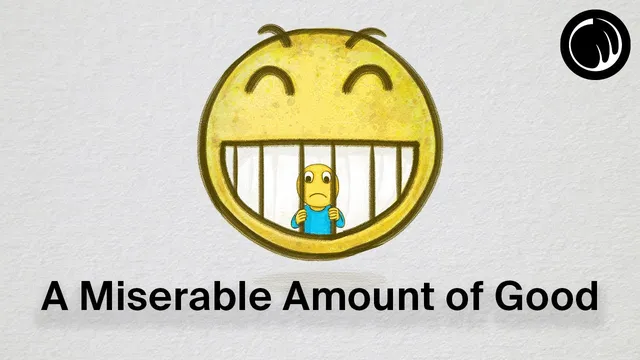
The Perfectionist Paradox - A Miserable Amount of Good
Based on Pursuit of Wonder's video on YouTube. If you like this content, support the original creators by watching, liking and subscribing to their content.
Emma’s life is optimized across sleep, exercise, diet, work planning, and volunteering, leaving little room for visible “imperfection.”
Briefing
A life engineered to eliminate every flaw can still produce one outcome no amount of optimization can fix: social rejection. Emma’s routine is so meticulously perfected—sleep, exercise, diet, productivity, volunteering, and communication—that it leaves other people feeling judged, inadequate, and unable to connect. The paradox isn’t that perfection fails at work or health; it’s that perfection can make human relationships feel unsafe, even when the person doing everything “right” is genuinely kind.
The day begins with tightly controlled sleep habits: no snooze, an alarm clock instead of a phone, and phone-free time at both waking and bedtime. She stretches, brushes for the American Dental Association–recommended 120 seconds, runs regardless of weather, and then follows a researched strength-and-meditation regimen—30 minutes of guided breathing practice—before showering with carefully vetted organic products. Meals are preplanned from a set of seven breakfast options and rotated through the day to preserve nutritional balance without boredom. Even her volunteering at a homeless shelter follows the same pattern of competence and restraint: she helps cook and serve, suggests recipes and facility ideas, but accepts that the shelter’s leadership owns the decisions and never tries to take credit.
At work, her organization is equally systematized. She uses multiple scheduling apps, a prioritization weighting system, and constant calendar awareness to stay on track and keep management informed. She avoids taking advantage of her high position, defers credit, and even turns down promotions she could have claimed, believing others deserve them more. In conversations, she listens with refined mirroring and conversational techniques, then offers specific resources and personal practices—always framed as optional, never imposed.
Yet the more Emma removes friction from every interaction, the more friction appears around her. Co-workers close their doors when she approaches. People don’t trust her or open up; mutual connection rarely happens. Her cheerful, earnest smile and “impenetrable” social skill—intended as kindness—lands as aggravating and exhausting. Others start imagining worst-case scenarios about her, which deepens avoidance and turns her presence into a mirror that makes everyone feel like they’re failing.
The story lands on a single unsettling insight: eliminating character flaws doesn’t eliminate the imperfection of life. Even pure perfection can become a flaw when it unintentionally communicates superiority, control, or emotional distance. Emma’s final coping mechanism—treating adversity as an opportunity to improve—doesn’t solve the social paradox, but it does keep her moving, suggesting the real challenge isn’t optimizing behavior; it’s learning how to be human in a way that invites others to be human too.
(There’s also a sponsor segment for Surfshark VPN, focused on privacy, multi-device use, and location-changing features.)
Cornell Notes
Emma’s life is built on relentless optimization: strict sleep habits, researched exercise and meditation, carefully rotated meals, and highly organized work systems. She volunteers with competence and restraint, defers credit and promotions, and communicates with attentive listening and supportive, non-imposing advice. Despite all of that, people avoid her and struggle to trust or connect with her. The central paradox is that removing flaws can still create social harm—her perfection makes others feel judged or inadequate, turning kindness into discomfort. The takeaway is that human relationships can’t be engineered purely through correctness; imperfection and emotional safety matter.
How does Emma’s routine demonstrate “perfection” in daily life?
What does Emma do at work and in volunteering that should, on paper, build goodwill?
Why do co-workers and acquaintances react negatively despite Emma’s kindness?
How does Emma’s communication style contribute to the paradox?
What is the core “perfectionist paradox” the story reaches?
Review Questions
- Which parts of Emma’s routine are most likely to affect how others perceive her (sleep discipline, productivity, volunteering competence, communication style)?
- What evidence in the narrative suggests that Emma’s “non-imposing” advice is still experienced as pressure?
- How does the story distinguish between perfection that works functionally (health/work) and perfection that fails relationally (trust/connection)?
Key Points
- 1
Emma’s life is optimized across sleep, exercise, diet, work planning, and volunteering, leaving little room for visible “imperfection.”
- 2
Her communication is supportive and carefully framed as optional, yet others still interpret it as passive-aggressive or subtly controlling.
- 3
Co-workers avoid her and don’t trust her, even though she defers credit and promotions and consistently helps others.
- 4
The central paradox is relational: perfection can make other people feel judged or inadequate, damaging emotional safety.
- 5
Even genuine kindness can land as aggravating when it signals flawless competence and emotional distance.
- 6
The story concludes that adversity and imperfection can’t be engineered away, so improvement must include how to relate—not just how to perform.