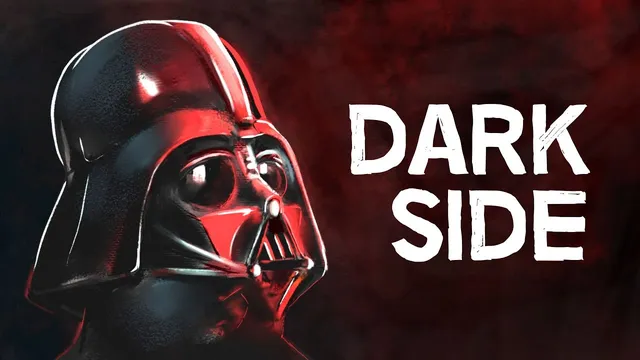
The Philosophy of the Sith | An Examination of the Dark Side (Star Wars)
Based on Einzelgänger's video on YouTube. If you like this content, support the original creators by watching, liking and subscribing to their content.
The dark side is portrayed as “venom,” becoming less potent when spread across many users, which motivates the Rule of Two.
Briefing
Sith philosophy centers on one core claim: real freedom comes through passion, conflict, and concentrated power—not through peace, restraint, or moral calm. In Star Wars terms, the dark side draws strength from emotions like anger, fear, and greed, and it grows more potent when Force power is concentrated in a few rather than spread thin. That framework matters because it turns the Sith-Jedi rivalry into a deeper moral and psychological argument about what humans should pursue—self-mastery through serenity, or self-mastery through struggle.
The Force is treated as a unifying energy field that flows through all living beings, and both Jedi and Sith rely on it—just with opposite moral mechanics. The Jedi align with the light side, using it for defense, healing, and maintaining harmony across the galaxy. Their guiding ideal is balance, and their code insists on the absence of emotion, ignorance, passion, chaos, and death as a final end. Even death is reframed as transformation into the Force, with Force Ghosts as a kind of proof that endings aren’t absolute.
The Sith invert that structure. The dark side is described as “venom”: it loses potency when diluted across many users, which underpins the Rule of Two—only a master and an apprentice at a time—so power can be maximized and preserved. Their Sith Code rejects peace as a lie and treats passion as the engine of strength, power, victory, and eventual liberation. Freedom, in this view, is not mental tranquility; it’s freedom in the material world achieved through strife—conquering enemies, destroying obstacles, and refusing to let anyone else rule.
That emotional and conflict-driven worldview is then mapped onto established philosophy, especially Friedrich Nietzsche’s contrast between master morality and slave morality. The Sith resemble Nietzsche’s “masters”: they value hierarchy, pride, ambition, courage, and the right of the strong to rule. The Jedi resemble “slaves”: they emphasize kindness, patience, humility, obedience, and self-sacrifice, and they regard themselves as morally superior while claiming their virtues are freely chosen. Nietzsche’s twist—used here to interpret the Jedi—claims those virtues are often a disguise for weakness, maintained by herd morality rather than genuine strength.
The analysis also links the Jedi-Sith split to Nietzsche’s Dionysian vs. Apollonian duality. Jedi ideals align with Apollo: reason, order, moderation, and emotional restraint, similar to Stoic aims like cool-headedness and harmony with nature. Sith ideals align with Dionysus: indulgence, chaos, ritual ecstasy, and life-affirming passion. The result is a philosophy that treats conflict as a catalyst for growth—captured in the claim that struggle forces change, adaptation, evolution, or death.
Finally, the practical value of Sith ideas is presented as conditional. The dark side can offer tools for self-preservation, worldly success, and sharper ethical thinking about consequences—illustrated through Kreia’s critique of charity as potentially weakening both giver and recipient. Yet the same path carries predictable costs: constant competition, mistrust, destructive behavior toward others, fragile power, and the sense that “freedom” is actually bondage to maintaining dominance. The Sith are therefore framed as both empowering and dangerous—an intensification of life that also courts annihilation.
Cornell Notes
Sith philosophy treats the dark side of the Force as a source of strength that depends on passion and concentrated power. Its Rule of Two limits Sith numbers so the dark side remains potent, and its Sith Code rejects peace as a lie, claiming freedom comes through conflict, victory, and dominance. The Jedi code does the opposite by promoting emotional restraint, harmony, and a view of death as transformation into the Force. The analysis connects this rivalry to Nietzsche’s master-slave morality and to the Apollonian (order, reason) versus Dionysian (chaos, life-affirming passion) contrast. In daily life, Sith ideas may help with self-preservation and consequence-based ethics, but they also risk constant mistrust and destructive, unstable power.
How does the Rule of Two change the way Sith power works compared with the Jedi approach to the Force?
What do the Jedi and Sith codes treat as the route to freedom?
How does the analysis use Nietzsche’s master-slave morality to interpret Jedi and Sith values?
Why does the Apollo vs. Dionysus framework matter for understanding the Jedi-Sith conflict?
What practical benefits does the analysis claim Sith philosophy can offer, and what ethical risks come with it?
How does the transcript reconcile Sith “freedom” with the idea that their power is still a kind of bondage?
Review Questions
- Which specific features of the Jedi code and Sith code are treated as direct opposites, and how do those opposites define each side’s idea of freedom?
- How does the “venom” metaphor support the Rule of Two, and what does that imply about the Sith’s view of power concentration?
- In Nietzsche’s terms, what would count as “master morality” versus “slave morality,” and which Star Wars faction is mapped to each?
Key Points
- 1
The dark side is portrayed as “venom,” becoming less potent when spread across many users, which motivates the Rule of Two.
- 2
The Jedi code frames freedom as peace, knowledge, serenity, harmony, and freedom from fear of death through transformation into the Force.
- 3
The Sith code rejects peace as a lie and treats passion as the path to strength, power, victory, and liberation in the material world.
- 4
The analysis links Sith-Jedi values to Nietzsche’s master-slave morality: hierarchy and dominance for masters versus humility and altruism for slaves.
- 5
Jedi ideals are compared to Apollonian and Stoic themes of reason and emotional restraint, while Sith ideals are compared to Dionysian life-affirming chaos.
- 6
Sith philosophy is presented as potentially useful for self-preservation and consequence-based ethics, but it predictably produces mistrust, destructive power, and unstable leadership.
- 7
Even when Sith pursue “freedom,” the need to maintain dominance is framed as a form of bondage to fate and internal threats.