The Physics of Caramel: How To Make a Caramelized Sugar Cube
Based on minutephysics's video on YouTube. If you like this content, support the original creators by watching, liking and subscribing to their content.
Caramelization is chemically complex, producing hundreds of compounds through many reactions that aren’t fully understood.
Briefing
Caramel isn’t just “melted sugar”—it’s a controlled transformation driven by both chemistry and the physics of heating. Refined sugar (sucrose) starts as a white, odorless, fine-grained solid that can behave somewhat like a liquid, but turning it into caramel requires more than reaching a single magic temperature. Caramelization produces hundreds of compounds through many overlapping chemical reactions, and researchers still don’t fully understand the process end-to-end. That complexity helps explain why caramel-making can look simple in recipes yet behave unpredictably in practice.
A second complication is the idea of “melting point.” For many substances, melting happens at a well-defined temperature under a given pressure, because molecules need enough energy to break free from their neighbors. Water melts at 0ºC, gallium at about 30ºC (which is why it liquefies in a warm hand), and iron at roughly 1500ºC. Sugar, however, doesn’t follow the neat script: studies disagree on the temperature at which sucrose “melts,” and the outcome depends on how quickly heat is applied. The transcript reframes this by arguing that sucrose doesn’t truly melt in the usual sense. Before it reaches any apparent melting behavior, sucrose breaks down into glucose and fructose.
Glucose and fructose are more stable and do have real melting points. When recipes say sugar “melts” during caramelization, what’s actually visible is the behavior of these breakdown products rather than sucrose itself. That distinction matters because it changes how you can think about making caramel: you don’t necessarily need to melt sucrose at all.
Most caramel recipes recommend heating around 160ºC–180ºC (320°F–355°F), whether in an oven or a pot. But the transcript suggests a different route: keep the temperature lower—around 150ºC (300°F)—and hold it longer. At that level, sucrose can undergo the breakdown and caramel-forming chemistry without ever reaching conditions where it would melt into a liquid. In other words, the process can go from solid to solid.
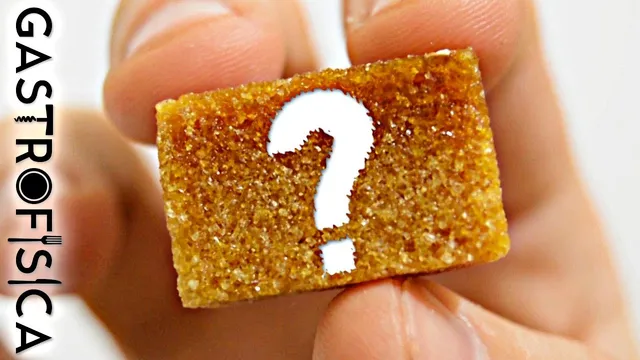
To test the physics, the creators dried-caramelized sugar cubes in an oven set to 150ºC (300°F) for about 3.5 hours. The result was “perfectly caramelized sugar cubes” that didn’t melt, yet tasted, smelled, and effectively behaved like caramel—caramelized sugar in cube form. The takeaway is practical and scientific at once: caramelization depends on reaction pathways and heating history, and understanding sucrose’s decomposition into glucose and fructose enables a method that produces caramel without melting anything.
Cornell Notes
Caramelization is not a simple matter of melting sugar. Sucrose’s “melting” behavior is complicated: heating rate and conditions affect what temperature it appears to melt at, and sucrose breaks down into glucose and fructose before true melting occurs. Glucose and fructose have real melting points and melt in the conventional way, which explains why caramel-making often looks like melting even when sucrose itself isn’t behaving like a typical solid-to-liquid transition. By lowering the temperature to about 150ºC (300°F) and extending the heating time, caramel can form while the material stays solid. Dry-caramelized sugar cubes baked this way for roughly 3.5 hours turned into caramel cubes that smelled and tasted like caramel without melting.
Why doesn’t sucrose behave like a typical substance with a single, reliable melting point?
What chemical change underlies the transformation from white sugar to caramel?
How does the physics of melting relate to the caramel-making process?
Why can caramel be made without melting anything?
What experimental result supports the lower-temperature, longer-time approach?
Review Questions
- What decomposition step does sucrose undergo before any apparent melting during caramelization?
- How does heating rate influence the observed temperature behavior of sugar, according to the transcript?
- Why does holding sugar at ~150ºC for longer enable caramelization while keeping the cubes solid?
Key Points
- 1
Caramelization is chemically complex, producing hundreds of compounds through many reactions that aren’t fully understood.
- 2
Sucrose’s apparent melting behavior depends on heating conditions, and it can decompose before true melting occurs.
- 3
Glucose and fructose—products of sucrose breakdown—have real melting points and melt in the conventional solid-to-liquid way.
- 4
Lowering the temperature to about 150ºC (300°F) and heating longer can produce caramel through a solid-to-solid pathway.
- 5
Typical recipes use 160ºC–180ºC (320°F–355°F), but that range is not required for caramel formation if time and temperature are adjusted.
- 6
Dry-caramelized sugar cubes baked at 150ºC for roughly 3.5 hours became caramelized cubes without melting.