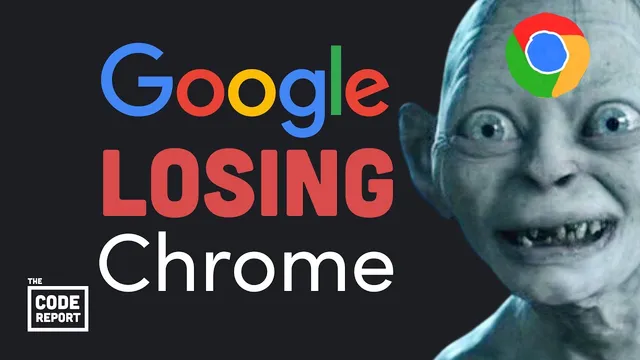
The plan to break apart Google... RIP Chrome
Based on Fireship's video on YouTube. If you like this content, support the original creators by watching, liking and subscribing to their content.
Chrome’s dominance (about 66.6% browser share) makes it a critical distribution channel for Google search and ads.
Briefing
A U.S. antitrust case could force Google to split up or sell Chrome—its dominant browser—an outcome that threatens to reshape both web search and the advertising engine that depends on Chrome as the “front door” to Google services. The stakes are high because Chrome controls about 66.6% of browser market share, and Google search remains highly influential even on non-Chrome browsers like Safari and Firefox. The underlying complaint centers on illegal, exclusionary deals that helped Google pay to stay the default search option across major platforms, including arrangements tied to Apple devices worth roughly 36% of ad revenue (about $20 billion per year). A judge’s ruling under the Sherman Act of 1890 has already pushed Google onto the “Monopoly offenders” list, and regulators are now pressing for remedies that go beyond fines.
Chrome matters to Google’s business model because it collects browsing history and search behavior, which then feeds targeted advertising. Alphabet’s ad business is described as overwhelmingly profitable—gross margins above 50%—and the browser is portrayed as the critical pathway that keeps users inside Google’s ecosystem. Department of Justice lawyers are reportedly pushing for Chrome to be split off or sold to another company, with an estimated price tag of at least $20 billion. Potential buyers named include Meta, Apple, and Amazon—each of which faces its own antitrust scrutiny for alleged monopoly behavior—raising the risk that the remedy simply swaps one gatekeeper for another.
If Chrome changes hands or search defaults shift, Google’s search dominance—estimated at around 90%—could erode as browsers begin presenting alternative search engines. The transcript points to plausible substitutes such as OpenAI’s search offering and DuckDuckGo, suggesting that default placement and distribution deals are the lever that keeps Google’s search share stable.
Google is expected to fight aggressively. The transcript notes that the DOJ’s internal leadership is about to change, and whoever takes over may be less inclined toward sweeping remedies. It also argues that Google may be allowed to keep Android, while uncertainty remains around how Google’s AI strategy—particularly Gemini—will unfold. Still, the browser is framed as essential for routing users toward Gemini and other Google services; losing Chrome could reduce Google’s incentive to invest in browser technology.
The transcript draws a cautionary line from past antitrust outcomes: Microsoft was declared a monopoly after bundling Internet Explorer with Windows and suppressing competitors like Netscape, but avoided a breakup and instead faced lighter remedies such as opening APIs and ending exclusivity. The concern is that Google’s remedy could be more damaging because Chrome is central to Google’s ad and product distribution. The transcript ends with betting odds of roughly 13% that Chrome is actually forced into a breakup or sale, implying skepticism that Google will ever surrender its “one browser” position.
Cornell Notes
Google’s antitrust troubles under the Sherman Act have raised the possibility of a breakup remedy targeting Chrome, not just search deals. Chrome’s dominance (about 66.6% browser market share) makes it the key distribution channel for Google services and the data pipeline that powers targeted ads. Regulators are reportedly seeking a Chrome split-off or sale (estimated at $20 billion), which could weaken Google’s search dominance (around 90%) if browsers offer alternative search engines such as OpenAI’s or DuckDuckGo. The outcome is uncertain: leadership changes at the DOJ and the likelihood of Google keeping Android could limit how far remedies go. The biggest risk to Google is losing the browser “front door,” which could also affect incentives to invest in browser technology and the rollout of Gemini.
Why is Chrome central to Google’s antitrust exposure and business model?
What conduct is tied to the antitrust case, and how does it connect to default search deals?
What remedy is being discussed, and who might buy Chrome?
How could Chrome’s breakup affect search market share and user choice?
Why might the DOJ’s approach change, and what other Google assets could remain intact?
What historical comparison is used to gauge the odds of a breakup?
Review Questions
- What specific role does Chrome play in feeding Google’s advertising model, and why would a breakup disrupt that loop?
- How do default search and distribution deals (including payments tied to device placement) influence search market dominance?
- What factors in the transcript create uncertainty about whether Chrome will actually be sold or split off?
Key Points
- 1
Chrome’s dominance (about 66.6% browser share) makes it a critical distribution channel for Google search and ads.
- 2
Illegal default-search and exclusivity-style deals—such as payments tied to Apple devices—are central to the antitrust narrative.
- 3
Chrome’s data collection (search queries, browsing history, online behavior) directly supports targeted advertising and Alphabet’s high ad profitability.
- 4
A DOJ remedy discussed as a Chrome split-off or sale (estimated at $20 billion) could weaken Google’s ~90% search dominance if browsers offer alternatives.
- 5
Potential buyers named (Meta, Apple, Amazon) face their own monopoly allegations, raising concerns about replacing one gatekeeper with another.
- 6
Leadership changes at the DOJ and the possibility of Google keeping Android could limit how far remedies go, but Chrome loss would still affect Google’s incentives and AI distribution.
- 7
The Microsoft antitrust precedent is used to argue that breakup outcomes are not guaranteed even after monopoly findings.