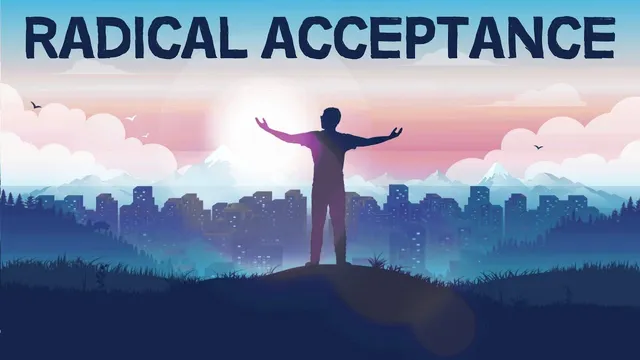
The Power of Radical Acceptance
Based on Einzelgänger's video on YouTube. If you like this content, support the original creators by watching, liking and subscribing to their content.
Healing is portrayed as requiring acknowledgment that a painful event occurred, not denial or resistance to the fact of it.
Briefing
Radical acceptance is presented as the turning point that allows people to heal from overwhelming pain—especially when denial has lasted so long that the mind feels like it’s under constant pressure. When something brutal happens, there are multiple immediate reactions: ignore it, resist it, or fight against the fact that it occurred. Healing, the transcript argues, comes only when the event is acknowledged as real, regardless of how harsh it is. Acceptance is framed not as approval, but as an honest recognition of what’s happening inside and around a person—an act that can feel “radical” precisely because it demands facing what has been avoided.
The transcript pushes back against the common belief that acceptance equals surrender or weakness. Refusing to look at reality as it is is portrayed as the weaker option, because it keeps people trapped in “blissful ignorance.” Instead of confronting truth, people often cope through sugarcoating, downplaying, denial, or even building elaborate lies to protect themselves from the ugliness of what’s real. Over time, this avoidance can harden into cognitive dissonance—ranging from silent withdrawal (sticking one’s head in the sand) to explosive defense (violent lashing out). The result is stagnation for years, sometimes for a lifetime, because the mind never processes what it’s been running from.
Radical acceptance is then defined more concretely: it means acknowledging experiences that are excruciatingly painful and morally or emotionally destabilizing—parental abuse, hated traits about oneself, the reality of serious illness (even lethal disease), past crimes, and the guilt attached to them. The transcript emphasizes that resisting these truths keeps them active in a person’s inner life: “what we resist, persists,” while “what we accept, we move beyond.” Acceptance is described as necessary for letting go and progressing, not for excusing harm.
A key philosophical anchor is the Stoic distinction between what can and cannot be controlled. People cannot control the outside world, change the past, or guarantee the future. What remains within reach is the stance a person takes toward life—how they meet reality. Kierkegaard is quoted to underline the direction of growth: life can only be understood backwards, but must be lived forwards. From that perspective, the transcript argues that people cannot improve outcomes while denying what’s true; they can’t bandage a wound they refuse to acknowledge, and trying to fix a “false reality” built on lies is both irrational and counterproductive.
Finally, radical acceptance is portrayed as both internal and outward. It’s likened to taking a deep breath, standing tall, and looking directly at the abyss—signaling readiness to face consequences and confidence in the ability to deal with them. The central message is straightforward: acknowledging reality is the prerequisite for processing pain and shaping a better future out of the present moment’s ugliness.
Cornell Notes
Radical acceptance is framed as the only reliable route to healing from deep pain. Instead of ignoring or fighting what happened, people move forward by honestly acknowledging reality as it is—without condoning it. The transcript argues that denial breeds cognitive dissonance and can trap someone for years by pushing trauma into the shadows or building protective lies. Acceptance becomes “radical” when the truth conflicts with long-held beliefs or when self-deception has gone on so long that the mind feels ready to explode. Grounded in Stoic thinking, it distinguishes between uncontrollable facts (past, outside events, uncertainty about the future) and controllable attitude—how a person chooses to face life going forward.
Why does the transcript treat acceptance as the mechanism for healing rather than resistance or avoidance?
How does the transcript redefine “acceptance” to avoid the idea that it means approval?
What harms does denial create over time, according to the transcript?
What does “radical acceptance” specifically require when the truth is painful or identity-threatening?
How do Stoic ideas shape the transcript’s version of acceptance?
What is the practical “forward motion” the transcript connects to acceptance?
Review Questions
- What reactions to a traumatic event does the transcript contrast, and which one does it claim leads to healing?
- How does the transcript distinguish acceptance from approval, and why does that distinction matter?
- According to the Stoic framework cited, what can a person control, and how does that relate to moving forward?
Key Points
- 1
Healing is portrayed as requiring acknowledgment that a painful event occurred, not denial or resistance to the fact of it.
- 2
Acceptance is defined as honest recognition of reality, not approval or condoning of what happened.
- 3
Denial is described as a long-term coping strategy that can produce cognitive dissonance and keep people stuck for years.
- 4
Radical acceptance targets truths that are identity- and belief-threatening, including abuse, serious illness, past wrongdoing, and guilt.
- 5
The Stoic distinction is used to separate uncontrollable facts (past, outside events, uncertainty) from controllable attitude toward life.
- 6
The transcript argues that resisting reality keeps it active (“what we resist, persists”), while accepting it enables progress (“what we accept, we move beyond”).
- 7
Moving forward is framed as impossible without acknowledging reality—like treating a wound only after admitting it exists.