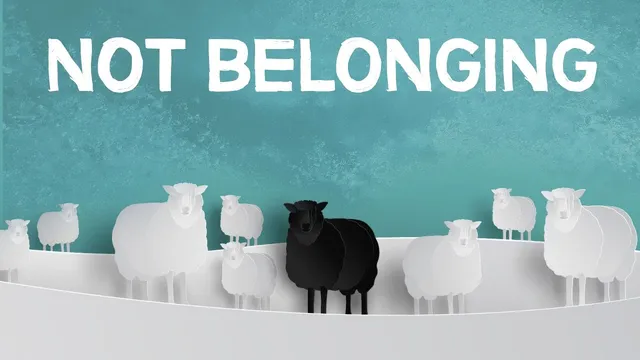
The Priceless Benefits of Not Belonging
Based on Einzelgänger's video on YouTube. If you like this content, support the original creators by watching, liking and subscribing to their content.
Group membership can restrict more than beliefs—often it governs speech, movement, dietary choices, and even physical access to places.
Briefing
Not belonging can be painful, but it also unlocks three major advantages: freedom from group control, a more universal form of love, and room for self-actualization that doesn’t depend on fitting in. The core claim is that in-group membership often comes with ideological and behavioral constraints—how people think, speak, move, eat, and even where they’re allowed to go. Groups can restrict physical access (buildings or countries) and impose dietary rules based on ideology rather than logic. Even when a group’s prescriptions are beneficial, the argument insists that people don’t need the group’s narrative to live well. Albert Camus is cited to frame the psychological cost of obedience: “Every ideology is contrary to human psychology.” The tradeoff is clear—belonging can feel like safety because it surrounds someone with conforming peers, but it also demands effort to mirror the group’s language, beliefs, and appearance.
Freedom is presented as the first payoff of not belonging. Without a group’s ideology steering daily life, a person can choose how to dress, who to associate with and love, and what to think and say—becoming “ideologically independent.” The paradox is that this independence can still enable genuine community: not belonging doesn’t eliminate the possibility of belonging to a group; it changes the basis for it. Instead of being absorbed by a default herd, people can join communities by preference.
The second benefit targets love and social bias. Using Buddhism’s Metta practice—loving-kindness—the transcript contrasts universal compassion with in-group preference. In many groups, affection concentrates on members while hostility rises toward outsiders. That love can become conditional: if someone becomes an outcast or switches affiliations (religion, street gang, friend group, even a soccer team), the warmth may disappear. Not belonging, the argument goes, prevents that asymmetry. It removes the obligation to love only one’s in-group and frees people to direct compassion wherever they choose, supporting a broader concern for humanity or, in Buddhist framing, for all sentient beings. A mother’s love is used as the metaphor for boundless, hate-free compassion.
The third benefit is self-actualization over conformity. The transcript references the “sigma male” concept to describe a person who doesn’t identify with a fixed rank or group, using the hierarchy without surrendering autonomy—an idea extended to “sigma female” as well. The emphasis is on the energy required to be normal. Camus again is quoted: “Nobody realizes that some people expend tremendous energy merely to be normal.” Conformity takes effort, and the alternative is to invest that energy in self-development and values that feel authentic. The cost is not having a place in the herd, but the speaker argues that this doesn’t automatically mean isolation; it can mean choosing principles over permission.
The closing takeaway ties the three themes together: ultimate freedom, less in-group favoritism leading to more universal love, and self-actualization above conformity. Even with solitude and uncertainty, the transcript concludes that the “delight of not belonging” is priceless because it allows a person to question everything without repercussions.
Cornell Notes
The transcript argues that not belonging—while often painful—can produce three lasting benefits. First, it grants “ultimate freedom” from group-imposed ideology that can control speech, movement, diet, and access to places. Second, it reduces in-group preference, making it easier to practice universal loving-kindness rather than conditional loyalty to insiders. Third, it supports self-actualization above conformity by redirecting the energy spent on being “normal” toward personal growth and self-chosen values. The result is less dependence on herd approval and more capacity for authentic community and compassion.
How does group membership restrict people beyond just social acceptance?
Why does the transcript treat “freedom” as both independence and the possibility of better belonging?
What is Metta, and how does it contrast with in-group preference?
How does not belonging change how someone gives love or compassion?
What does “self-actualization above conformity” mean in the transcript’s framework?
Review Questions
- Which kinds of restrictions does the transcript attribute to group ideology (social, physical, dietary, or access-related), and why does it matter?
- How does the transcript connect not belonging to universal loving-kindness rather than conditional in-group loyalty?
- What tradeoff does the transcript claim comes with self-actualization over conformity, and how does it address the risk of isolation?
Key Points
- 1
Group membership can restrict more than beliefs—often it governs speech, movement, dietary choices, and even physical access to places.
- 2
Ideological obedience is portrayed as psychologically costly, even when some group rules seem beneficial.
- 3
Not belonging enables “ultimate freedom” to choose appearance, relationships, and values without a group narrative steering life.
- 4
Universal loving-kindness (Metta) is contrasted with in-group preference, where affection can become conditional on insider status.
- 5
Not belonging is framed as reducing reciprocal loyalty to insiders, making compassion more freely distributable.
- 6
Self-actualization is presented as an alternative to conformity, redirecting the energy spent on being “normal” toward personal growth.
- 7
The transcript argues that not belonging doesn’t automatically mean isolation; it can still allow chosen community and authentic connection.