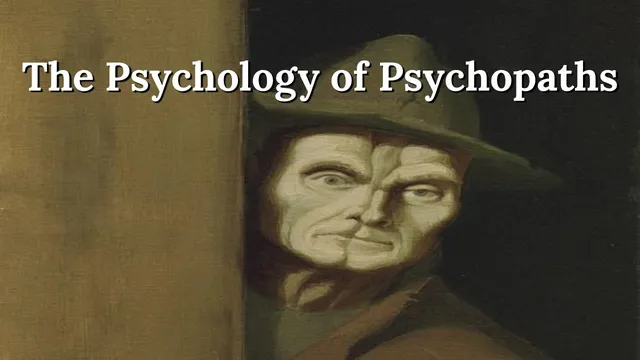
The Psychology of Psychopaths - Predators who Walk Among Us
Based on Academy of Ideas's video on YouTube. If you like this content, support the original creators by watching, liking and subscribing to their content.
Psychopathy is framed as a lack of conscience plus reduced empathy and guilt, enabling repeated harm without remorse.
Briefing
Psychopaths are portrayed as emotionally unrestrained “human predators” who can blend into everyday life—making them especially dangerous in workplaces and politics where power and access amplify harm. Estimates cited in the discussion put psychopathy at roughly 1% of the population (Robert Hare) or closer to 4% (Martha Stout). Either way, the central warning is that many psychopaths do not look like classic criminals; they often avoid incarceration while still coercing, manipulating, lying, stealing, defrauding, abusing, and even taking lives without guilt or remorse.
A key distinction drives the rest of the analysis: most people restrain harmful behavior through conscience, empathy, and the emotional cost of causing suffering. Psychopaths, by contrast, are described as lacking conscience and the capacity for empathy and guilt. They are also depicted as unable to form warm emotional bonds—so relationships, when they exist, function more like tools, resources, or possessions. That emotional void helps explain why psychopaths can commit repeated harm while appearing calm or even casual about brutality. Hare’s description emphasizes a self-centered, callous, remorseless style “without the restraints of conscience,” and the discussion links that missing restraint to the social harmony most humans rely on.
The internal engine of psychopathy is framed as the pleasure principle and a need for continual stimulation, with power singled out as the most seductive reward. Whether the person is a career criminal, a middle manager, a CEO, a financier, a bureaucrat, or a politician, the obsession is controlling other people—“making others jump” and “winning,” as Stout puts it. A psychological report excerpt about a person named Earl illustrates the pattern: people are valued only insofar as they can be exploited, coerced, or manipulated, and the person constantly assesses opportunities for advantage.
Attempts at rehabilitation are described as largely ineffective, with Hare summarizing the literature’s bleak consensus: the shortest chapter in books on psychopathy is often “treatment,” ending in “No effective treatment has been found” or “Nothing works.” Part of the problem is identification. Psychopaths are said to wear a “mask of sanity,” mimicking normal behavior and often presenting as more charming, confident, and charismatic than others. Their lower baseline stress and anxiety can make them seem socially smooth, while their ability to lie convincingly about past achievements and character can mesmerize victims into staying despite harm.
Still, the discussion argues the mask has cracks. Psychopaths may show an inflated sense of self-importance and entitlement, and their eyes—reported by victims as empty, cold, intense, and reptile-like—can be a tell. In conversation, they may struggle with coherent narratives: statements can be contradictory, questions may go unanswered or be met with irrelevant replies, and some accompany speech with exaggerated hand movements and facial expressions that distract from inconsistencies. The root cause is described as unknown, but evidence is cited for a strong biological predisposition—“nature, not nurture”—with little convincing link between the absence of conscience and childhood maltreatment.
Finally, the threat is expanded from individual harm to political risk. Because psychopaths crave power and can be skilled at deception and domination, the discussion warns that contemporary political centralization and invasive technologies could enable a system where psychopaths rule. Łobaczewski’s concept of “pathocracy” is introduced as a framework for a government run by a small pathological minority that can “paralyze everything” across economics, culture, science, technology, and administration.
Cornell Notes
Psychopathy is described as a form of emotional and moral unconstraint: people with psychopathy lack conscience, empathy, and guilt, and treat others as tools or resources rather than as partners in human connection. The discussion links this to a drive for stimulation and especially power, explaining why harm can occur without the internal brakes that stop most people. Many psychopaths are said to avoid obvious criminal detection by blending in through charm, low anxiety, and persuasive lying—often wearing a “mask of sanity.” Identification is difficult, but cracks can appear in inflated entitlement, unsettling eye contact, inconsistent narratives, irrelevant answers, and distracting gestures. Because effective treatment is portrayed as lacking, prevention and early recognition—especially in politics and corporate power—are emphasized as the practical defense.
What distinguishes psychopathy from other harmful behavior in this discussion?
Why does the discussion say many psychopaths avoid incarceration?
How does the “mask of sanity” make psychopaths hard to detect?
What signs are offered as cracks in the mask?
What does the discussion claim about treatment and why it fails?
How does the discussion connect psychopathy to political risk?
Review Questions
- Which traits are described as missing in psychopathy, and how do those missing traits change how harm is carried out?
- What specific behavioral and conversational “tells” are suggested as ways to see through the “mask of sanity”?
- Why does the discussion argue that rehabilitation efforts for psychopathy tend to fail?
Key Points
- 1
Psychopathy is framed as a lack of conscience plus reduced empathy and guilt, enabling repeated harm without remorse.
- 2
Many psychopaths are portrayed as avoiding obvious criminal detection by committing immoral acts that can fly under the radar.
- 3
Power is described as the most seductive stimulant, with control of others functioning as the central “game.”
- 4
Psychopaths are said to blend in through charm, low anxiety, and persuasive lying, often creating a “mask of sanity.”
- 5
Potential identification cues include inflated entitlement, unsettling eye contact, inconsistent narratives, irrelevant answers, and distracting gestures.
- 6
The discussion claims that effective treatment for psychopathy has not been found in the scholarly literature.
- 7
Political centralization and technology are presented as conditions that could amplify the risk of “pathocracy,” where psychopaths rule.