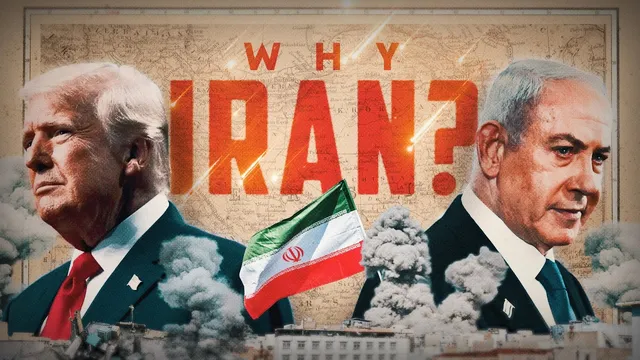
The Real Reason The US Attacked Iran
Based on Second Thought's video on YouTube. If you like this content, support the original creators by watching, liking and subscribing to their content.
The transcript argues that nuclear-weapons claims about Iran rely on weak or politicized sourcing and conflict with earlier assessments that Iran paused nuclear work in 2003.
Briefing
The U.S.-Israel strikes on Iran are framed as a “decapitation” campaign, but the central claim is that the stated justifications—nuclear danger and humanitarian protection—don’t hold up. Instead, the attack is portrayed as part of a longer pattern of U.S. and Israeli interests, where civilian harm is treated as acceptable and the real drivers are geopolitical leverage and profit.
A key thread targets the nuclear rationale. Iran is repeatedly described as being “weeks” or “months” away from weaponization, with claims that it could rapidly produce fissile material and build an arsenal. The transcript counters that Iran’s nuclear program was assessed as halted in 2003 and that Ayatollah Kamani opposed nuclear weapons publicly. It also argues that the shift toward preemption lacks credible military sourcing, pointing to political figures—specifically Jared Kushner—as the origin of the “defensive” narrative. The result: the war is characterized as lacking a legitimate security basis.
The second justification—protecting Iranians and responding to repression—is also attacked as performative. The transcript cites early casualty figures (about 1,000 Iranians killed within roughly two weeks) and highlights strikes on civilian targets, including a missile hitting an all-girls school that killed 175 people. It also points to attacks on oil facilities, producing toxic smoke and acid rain, and claims these chemicals are carcinogenic and can cause burns and lung damage. The argument extends beyond immediate deaths: past U.S. interventions are described as producing far larger long-term mortality through environmental and health impacts. From there, the transcript links the “lifting the veil” rhetoric used in Afghanistan to a pattern of outcomes where civilians suffer and political freedom does not improve.
With nuclear and humanitarian explanations dismissed as “zero evidence excuses,” the transcript pivots to three proposed motives. First, disrupting Iran is said to pressure China, which is described as a major client for Iranian (and Venezuelan) oil. The claim is that even if China can mitigate some impact through stockpiling and renewable growth, the disruption still aligns with U.S. anti-China strategy.
Second, war is portrayed as a business engine: Middle East conflicts are said to raise both oil prices and weapons demand, boosting profits for oil companies and defense contractors. The transcript cites the war’s reported daily cost (2–3 billion dollars) and argues that the money flows from the Pentagon budget to major contractors such as Boeing.
Third—and presented as the biggest driver—is Israel. The transcript argues that Israeli leadership has long sought to eliminate Iran as a regional constraint and quotes Benjamin Netanyahu describing the coalition as enabling an ambition he pursued for decades. It connects the escalation to Israel’s broader priorities, including actions against Palestinians and territorial moves in the West Bank and Lebanon. In this framing, the U.S. is using the Iran crisis to distract from those conflicts and to manufacture legitimacy through shifting narratives, including religious framing.
The closing call to action focuses on anti-war organizing through conversation: the goal is to plant doubt, connect today’s claims to past cycles of deception and escalation, and encourage people to challenge the idea that “this time is different.” The transcript ends with a direct request to identify one person to persuade—because, it argues, stopping the war depends on widening skepticism before the conflict becomes even more entrenched.
Cornell Notes
The transcript argues that the U.S.-Israel campaign against Iran is not driven by genuine security or humanitarian concerns. It challenges claims that Iran is close to building nuclear weapons, citing contrary assessments and questioning the credibility of the preemption rationale. It also disputes the “protect Iranians” narrative by pointing to early civilian casualties, including an attack on an all-girls school, and to environmental harms from strikes on oil facilities. With those justifications rejected, the transcript proposes three motives: pressuring China’s oil supply, enriching oil and defense industries, and advancing Israel’s long-term regional goals. It concludes with a strategy for anti-war outreach—planting seeds of doubt by linking current claims to past cycles of escalation and deception.
Why does the transcript say the nuclear-weapons justification for attacking Iran is unconvincing?
What evidence does the transcript use to attack the humanitarian justification for the strikes?
How does the transcript connect the war to U.S. economic incentives?
What role does China play in the transcript’s explanation of why the U.S. is attacking Iran?
Why does the transcript place Israel at the center of the escalation?
What does the transcript recommend people do to oppose the war?
Review Questions
- Which parts of the transcript are used to challenge the credibility of the nuclear-weapons timeline, and what alternative sources or claims are cited?
- How does the transcript link early civilian casualties and environmental harms to its conclusion that humanitarian justifications are false?
- What three motives does the transcript propose beyond “safety,” and which one does it describe as the biggest driver?
Key Points
- 1
The transcript argues that nuclear-weapons claims about Iran rely on weak or politicized sourcing and conflict with earlier assessments that Iran paused nuclear work in 2003.
- 2
It frames early strikes as inconsistent with humanitarian goals, citing civilian deaths including an attack on an all-girls school and alleged toxic environmental effects from oil-facility bombings.
- 3
It claims preemption rhetoric lacks credible military justification and instead traces the narrative to political influence, naming Jared Kushner.
- 4
It proposes that disrupting Iran can pressure China’s oil supply, even if China has mitigation options like stockpiling.
- 5
It argues wars in the Middle East boost profits by raising oil prices and weapons demand, with daily conflict costs flowing through the Pentagon budget to defense contractors such as Boeing.
- 6
It identifies Israel as the primary strategic driver, citing Benjamin Netanyahu’s statements about long-held ambitions and linking the escalation to broader regional priorities.
- 7
It urges anti-war outreach through conversation—planting doubt by connecting current claims to past cycles of deception and escalation.