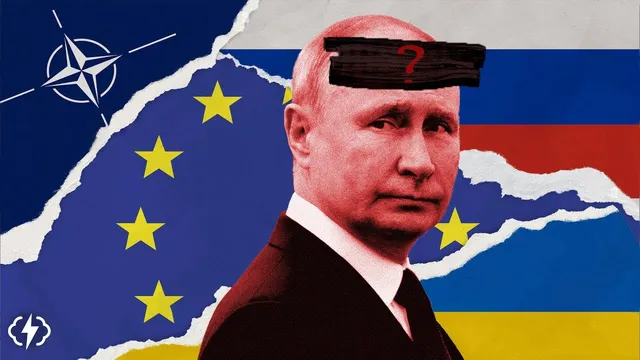
The Russia/Ukraine Conflict : What Is Putin Thinking?
Based on Second Thought's video on YouTube. If you like this content, support the original creators by watching, liking and subscribing to their content.
Calling Putin “crazy” can unify support for Ukraine and increase urgency for diplomacy, partly by making nuclear escalation feel more immediate.
Briefing
The most consequential takeaway is that calling Vladimir Putin “crazy” has been politically useful in the short term—helping unite Western and allied support, speed diplomacy, and intensify fear of nuclear escalation—yet it risks distorting incentives and long-term strategy. The framing can mobilize public opinion against the invasion and justify rapid military and economic backing for Ukraine. It also heightens urgency around negotiations by making nuclear catastrophe feel plausible, pushing governments to seek a diplomatic off-ramp quickly.
At the same time, the “madman” label creates a strategic trap. If leaders treat Putin as irrational, they may rush into unequal negotiations or adopt policies that look decisive but are structurally risky—especially when nuclear weapons are involved. The transcript lays out a tension: portraying Putin as a deranged terrorist tends to push people toward unilateral military solutions, while portraying him as a rational actor who would never use nuclear weapons tends to favor negotiation. Nuclear weapons make that difference sharper, because the cost of misreading an opponent is no longer just battlefield failure but mass annihilation.
The analysis also introduces a possibility that the “crazy” narrative could be exploited. “Madman theory” suggests that a leader can gain leverage by performing unpredictability—making threats seem more credible even if they are strategically irrational. In that scenario, emphasizing Putin’s instability could inadvertently strengthen his bargaining position, including the ability to extract territorial or other concessions without achieving full occupation.
Beyond immediate crisis management, the transcript argues that focusing too tightly on one man can obscure what will remain after he leaves office. Even if Putin were removed, the underlying economic and institutional drivers—especially concentrated wealth and resource dependence shaped after the Soviet Union’s collapse—could keep tensions alive. The discussion contrasts three broad lenses from international relations: liberal accounts that emphasize identity and institutions; realist accounts that emphasize military power and NATO’s perceived threat; and a Marxist/historical-materialist approach that emphasizes how post-1991 privatization concentrated fossil-fuel and political influence among oligarchs.
In that materialist framing, Russia’s post-Soviet economic restructuring created instability: austerity for most people, enrichment for a few, and a political environment where nationalism and expansion can become tools for managing domestic crises. Ukraine’s modernization—especially in agriculture and energy—then threatens the profit channels and influence networks oligarchs and their political allies have relied on. The war, on this view, is not only a personal decision but an outcome of conditions that predate Putin and would likely persist.
The transcript ends by rejecting two extremes: it warns against using partial analysis to justify imperialism—whether Russian aggression or calls for Western escalation—and insists that violence cannot be morally redeemed by context. The practical goal remains rapid resolution through diplomacy, without nuclear use and without NATO expansion as a driver of further confrontation. The core message is that personalizing the conflict may help in the short term, but long-term peace depends on confronting the economic and institutional systems that make war more likely.
Cornell Notes
The transcript argues that labeling Putin “crazy” has had short-term political benefits—uniting support for Ukraine, hardening public opposition to the invasion, and increasing urgency around diplomacy because nuclear threats feel more immediate. But it also warns that the “madman” framing can mislead policymakers: it may encourage unequal bargaining, complicate military choices, and create incentives that strengthen Putin’s leverage. A key alternative is to shift attention from one leader to underlying institutions and material conditions, including post-Soviet privatization that concentrated economic power among oligarchs and tied political influence to resource profits. Even if Putin left office, the economic tensions and dependency structures could remain, shaping the prospects for peace or renewed conflict.
Why does portraying Putin as irrational or “mad” seem to help in the short term?
How can the same “madman” framing become strategically dangerous?
What is “madman theory,” and how might it relate to bargaining leverage?
Why does the transcript argue that focusing on Putin alone is risky for the long term?
How do the transcript’s three international-relations lenses differ?
What does the transcript say should not be done with this analysis?
Review Questions
- What specific short-term effects does the transcript attribute to describing Putin as irrational, and what long-term risks does it associate with that framing?
- How does the historical-materialist explanation connect post-1991 privatization, oligarchic power, and incentives for war?
- In the transcript’s discussion of nuclear weapons, how does the perceived rationality of an opponent change the policy options available to Western governments?
Key Points
- 1
Calling Putin “crazy” can unify support for Ukraine and increase urgency for diplomacy, partly by making nuclear escalation feel more immediate.
- 2
Treating nuclear threats as credible because an opponent is irrational can lead to unequal negotiations and policy hesitation with catastrophic stakes.
- 3
“Madman theory” suggests unpredictability can be performed to gain leverage, potentially turning fear into bargaining power.
- 4
A long-term peace strategy should account for structural economic and institutional conditions that would outlast any single leader.
- 5
The transcript contrasts liberal (identity/institutions), realist (military power/NATO influence), and historical-materialist (oligarchic concentration/resources) explanations for the war.
- 6
Post-Soviet privatization and concentrated fossil-fuel wealth are presented as key conditions shaping political incentives and instability.
- 7
Contextual analysis should not be used to justify imperialism or escalation; diplomacy and de-escalation remain the stated goal.