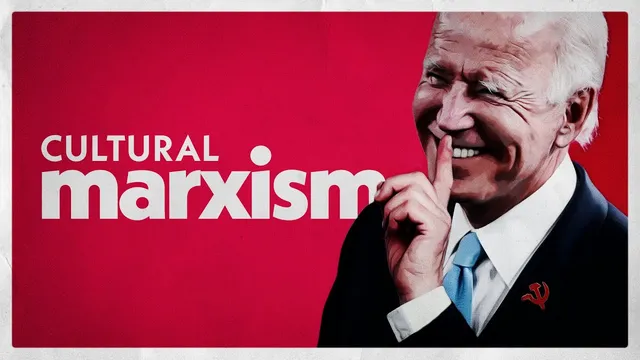
The Secret Marxist Conspiracy
Based on Second Thought's video on YouTube. If you like this content, support the original creators by watching, liking and subscribing to their content.
“Cultural Marxism” is portrayed as a scare label that bundles progressive issues into a single conspiracy narrative rather than a precise political concept.
Briefing
“Cultural Marxism” functions less as a coherent theory than as a right-wing scare label—one that bundles misread progressive ideas into a supposed shadow conspiracy, then uses that fear to justify political hardening and, in some cases, violence. The core claim is that the phrase is deployed to frighten conservative voters, distort how power works under capitalism, and recast demands for equality as an existential threat to a “real” America defined as white, Christian, patriarchal, and capitalist.
The argument traces the conspiracy logic to earlier anti-left propaganda. In Nazi Germany, “cultural Bolshevism” (and “Judeo-Bolshevism”) was promoted by Adolf Hitler and Joseph Goebbels as a plot by Jewish communists to destroy German society and the West—an ideological setup used to rationalize mass repression and the Holocaust. Decades later, a similar U.S. conspiracy framework gained traction in the mid-1990s and early 2000s through paleo-conservative writers including Michael Minnicino, Gerald Atkinson, and William Lind, with Lind emerging as the most influential. Their writings mixed terms like “cultural Marxism,” the “Frankfurt School,” and “political correctness” to argue that progressive culture wars—feminism, gay rights, “rewritten history,” and other changes—were not organic social developments but the product of a coordinated Marxist project.
Lind’s version centers on the Frankfurt School and critical theory. The narrative claims that a small group of Marxist intellectuals, later embedded in universities and media, engineered a society divided into oppressors and victims—weakening the country and making it vulnerable to communism. The transcript counters that this framing ignores the fact that racial, gender, and class divisions existed long before those thinkers, and that social movements for equality were responses to real marginalization rather than inventions imposed from above. It also challenges the conspiracy’s “elite control” premise by pointing to the actual structure of U.S. power: governments dominated by wealthy donors, major universities run through corporate influence, economics departments teaching capitalist frameworks, and media companies owned and funded by billionaires.
A further escalation in the conspiracy story is the emphasis on foreignness and Jewish identity. The transcript argues that highlighting the Frankfurt School’s Jewish membership echoes xenophobic tropes—suggesting outsiders imported socialist ideas—rather than confronting domestic capitalist power. It then links the rhetoric’s endgame to a broader white-supremacist worldview: “the West” is defined narrowly as a specific ethno-racial, religious, sexual, and economic order, and “cultural Marxists” are portrayed as enemies who want to destroy it.
The most consequential warning is that this rhetoric can move from persuasion to action. The transcript cites Anders Breivik’s 2011 massacre in Norway, where his manifesto framed the attack as defense against “cultural Marxism,” “political correctness,” and multiculturalism, including the killing of children at a labor party summer camp. The takeaway is that “cultural Marxism” operates as a political weapon: it turns social change into a conspiracy, encourages voters to back more right-wing candidates, and can—at the extreme—help justify terror against those deemed outside the boundaries of “Western” society.
The transcript closes by illustrating how media outlets can amplify this fear through incendiary, undefined buzzwords—using “Us versus Them” framing and emotional triggers rather than evidence—then recommends Ground News as a tool for comparing coverage and assessing bias and ownership.
Cornell Notes
“Cultural Marxism” is presented as a right-wing buzzword that functions like a conspiracy theory: progressive social changes are reframed as the work of hidden Marxists who supposedly control institutions. The transcript traces the logic to Nazi-era “cultural Bolshevism/Judeo-Bolshevism,” then argues that U.S. versions gained influence in the mid-1990s and early 2000s through writers such as William Lind. It counters Lind’s Frankfurt School narrative by emphasizing that social divisions predated those thinkers and that equality movements emerged from real marginalization rather than top-down engineering. It also criticizes the rhetoric’s use of foreignness and Jewish identity as a scapegoating mechanism. The most serious concern raised is that this framing can contribute to real-world violence, citing Anders Breivik’s 2011 attack.
Why does “cultural Marxism” matter politically, beyond being a vague insult?
How does the transcript connect today’s conspiracy language to earlier historical propaganda?
What is William Lind’s central claim about the origins of “cultural Marxism,” and what’s the counterpoint?
How does the transcript challenge the idea that Marxists control U.S. institutions?
What role does identity—especially Jewishness and foreignness—play in the conspiracy framing?
Why is the transcript’s violence example significant?
Review Questions
- What specific steps does the transcript say turn “cultural Marxism” from a political label into a conspiracy theory with real-world consequences?
- How does the transcript use the Frankfurt School narrative to explain both the appeal of the conspiracy and the reasons it claims the story is misleading?
- What evidence does the transcript offer to argue that capitalist elites—not anti-capitalist movements—dominate U.S. power structures?
Key Points
- 1
“Cultural Marxism” is portrayed as a scare label that bundles progressive issues into a single conspiracy narrative rather than a precise political concept.
- 2
The transcript links the conspiracy structure to Nazi-era “cultural bolshevism/Judeo-bolshevism,” arguing that similar blame patterns have been used to justify mass repression.
- 3
U.S. versions are traced to paleo-conservative writers, especially William Lind, who ties cultural change to the Frankfurt School and critical theory.
- 4
The counterargument emphasizes that social divisions existed before critical theory and that equality movements arose from real marginalization rather than top-down manipulation.
- 5
The transcript argues the conspiracy narrative misrepresents who holds power by ignoring corporate and billionaire influence across government, universities, and media.
- 6
It warns that the rhetoric can contribute to violence by dehumanizing perceived enemies, citing Anders Breivik’s 2011 attack as an example.
- 7
Incendiary media framing is described as relying on undefined “destroy the West” style triggers and “Us versus Them” emotions instead of evidence.