The Secret to Japan's Great Cities
Based on Not Just Bikes's video on YouTube. If you like this content, support the original creators by watching, liking and subscribing to their content.
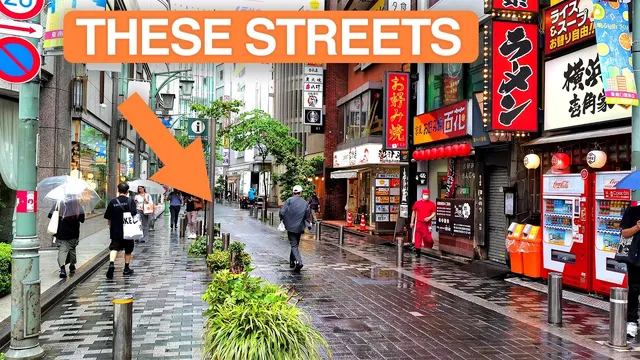
Japan’s walkable street design—often narrow, sometimes roofed—creates a daily environment where pedestrians feel comfortable moving through the street space, not just along sidewalks.
Briefing
Japan’s great cities aren’t just the product of good transit or pretty neighborhoods—they’re stitched together by a specific street form: compact, often narrow “everyone-walks-here” streets that make daily life easy on foot and keep car traffic from dominating. The core claim is that these streets work as a system with Japan’s national zoning rules and community-driven planning, producing walkable access, safer speeds, and transit-oriented development that cuts car dependence.
A typical Japanese street is about 5 metres wide building-to-building, sometimes covered for rain protection, and designed so pedestrians feel natural walking in the middle rather than being confined to a tiny sidewalk. That comfort matters because walkability is treated as the primary measure of livability. Even in suburban areas dominated by single-family homes, the narrow street layout and efficient land use can place residents within easy walking distance of train stations and everyday amenities like shops and restaurants.
The mechanism behind that access is zoning. Japan’s zoning is set nationally and is described as far more permissive than common North American approaches. The most restrictive category—“Low-Rise Residential”—still allows detached homes but also permits schools, religious buildings, two-story apartments, mixed-use residential buildings, and home-based businesses. Because housing types can be built across much of the country, residents can shift from houses to apartments (or vice versa) without leaving their community as their needs change—an issue framed as especially painful in the US and Canada, where seniors can become trapped in car-dependent “McMansions” after children move out.
Japan’s planning culture also includes “Machizukuri,” or community building, where residents, local businesses, and organizations participate in shaping public spaces and influencing local zoning. Together, national zoning and Machizukuri are presented as the foundation for neighborhoods that are not only pleasant but also more efficient for transportation and land use.
Street design then reduces car traffic by shrinking trip distances and slowing vehicles. The biggest congestion lever is said to be bringing homes closer to daily destinations and to rapid transit stops. Japan’s train stations are held up as a contrast to car-first station areas: instead of parking lots consuming the valuable land around stations, Japanese stations often sit amid shops, restaurants, and housing—an example of transit-oriented development (TOD). Keeping streets compact also has financial implications, reducing the amount of asphalt and utility infrastructure per person.
The transcript repeatedly returns to the idea that narrow streets require low speeds to function safely. Japanese streets often cap speeds at 30 kilometres per hour, and narrowing the driving area is described as an effective traffic-calming tactic. Through traffic is discouraged using one-way streets and neighborhood design that prevents cars from cutting across residential areas—pushing traffic to wider roads where walking is less comfortable but safety is managed.
Parking policy reinforces the street experience. On-street parking is rare, usually paid, and overnight parking is restricted; car ownership itself is tied to proving off-street parking via a “Shako Shomei” certificate. With fewer parked cars, streets look wider and brighter, visibility improves, and congestion from drivers hunting for spaces is reduced.
The transcript also acknowledges trade-offs and unevenness. Some wide roads near major stations can feel stroad-adjacent, and outside dense cores Japan can be more car-centric due to postwar rebuilding, American influence, and the political power of the automobile industry. Still, the overall message is that Japan’s best urbanism—especially in dense areas—depends on preserving narrow, human-scale streets and resisting bulldozing them for high-speed roads, particularly as Tokyo grows and the country seeks to build for a changing population.
Cornell Notes
Japan’s livable cities are portrayed as the outcome of a tightly linked street-and-zoning system. Compact, often narrow streets (around 5 metres wide) make walking feel natural—sometimes even in the middle of the road—while low speeds (typically capped at 30 km/h) and limited through traffic keep those streets safe. National zoning is described as permissive enough that “Low-Rise Residential” areas can include apartments, mixed-use buildings, schools, and home businesses, enabling residents to move between housing types without leaving their neighborhood. Machizukuri adds a bottom-up layer by letting communities shape public spaces and influence local planning. The result is transit-oriented development: valuable land near stations supports shops and housing instead of parking lots, reducing car trips and congestion.
Why are narrow Japanese streets treated as the “secret” rather than transit alone?
How does Japan’s zoning differ from the US/Canada model, and why does that matter for housing across a lifetime?
What is the congestion logic behind transit-oriented development (TOD) in the transcript?
How do Japanese streets manage safety without relying on sidewalks and high-speed road design?
Why is parking policy portrayed as a major factor in street quality?
What limits the “Japan is perfect” narrative?
Review Questions
- Which elements of Japanese zoning enable mixed housing types in the same areas, and how does that support mobility for seniors?
- How does the transcript connect narrow street design to transit-oriented development and reduced car trips?
- What specific parking rules (including “Shako Shomei”) are described as changing the feel and safety of streets?
Key Points
- 1
Japan’s walkable street design—often narrow, sometimes roofed—creates a daily environment where pedestrians feel comfortable moving through the street space, not just along sidewalks.
- 2
National zoning permissiveness (including “Low-Rise Residential”) allows apartments, mixed-use buildings, schools, and home businesses, supporting housing choice across different life stages.
- 3
Machizukuri adds community participation to planning, helping shape public spaces and even influence zoning outcomes.
- 4
Congestion reduction is framed as a land-use distance problem: shorten trips by placing destinations and rapid transit stops near homes, enabling walking and cycling to replace many car trips.
- 5
Transit-oriented development works when valuable land near stations supports shops, restaurants, and housing rather than parking lots.
- 6
Traffic calming relies on narrow streets, low speed limits (up to 30 kilometres per hour), and limiting through traffic so cars mainly serve local destinations.
- 7
Japan’s strict parking regime—rare on-street parking, restricted overnight parking, and “Shako Shomei” proof of off-street space—improves visibility, reduces congestion, and frees street space for other uses.