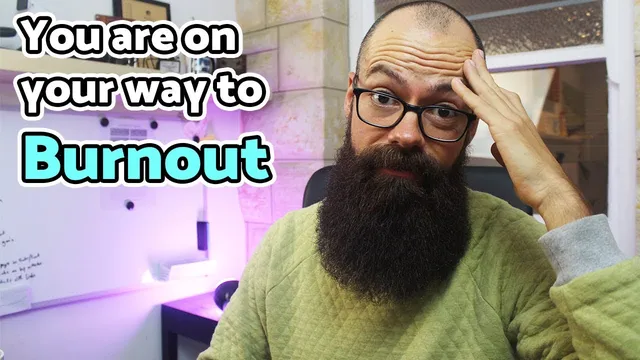
The secrets of dealing with burnout during your PhD | Free tools
Based on Andy Stapleton's video on YouTube. If you like this content, support the original creators by watching, liking and subscribing to their content.
Burnout is framed as a progression from unmanaged stress: honeymoon enthusiasm fades into anxiety, then chronic stress, and can end in mental exhaustion.
Briefing
Burnout during a PhD often doesn’t arrive as a sudden collapse—it creeps in through unmanaged stress, starting with how time is handled early on and escalating through predictable stages. The core warning is that the “honeymoon” intensity of a new project sets an unsustainable standard. When that energy can’t be maintained for years, enthusiasm fades into anxiety, anxiety hardens into chronic stress, and chronic stress can end in mental exhaustion and disengagement.
The transcript breaks burnout into four phases. First comes the honeymoon period: a new PhD project feels exciting and manageable, but the mistake is treating that early burst of effort as a workload model for the entire multi-year journey. The second phase is anxiety, when the initial momentum runs into reality—unexpected problems, reduced ease, and a growing sense that things aren’t going to go as smoothly as hoped. Over months, anxiety can build into stress, especially when PhD life adds pressure points like presentations, conferences, collaborations, and difficulty getting hold of a supervisor. That stress becomes chronic when tasks feel overwhelming, priorities blur, and the sense of “drowning” takes over. The final stage is giving up: a person may feel incapable of continuing, slip into self-pity, and lose even the motivation to act.
Three practical levers are offered to prevent or reduce the slide. The first is treating a PhD like a marathon, not a sprint—meaning time management should be designed to last. The advice is to avoid filling every early gap with extra work, and instead build routines that can be sustained for years. One suggested structure is working in six-month blocks: set a routine for half a year, then review what’s working and what isn’t, without locking into a rigid plan.
Second, communication is framed as the most important support tool. If a student feels overwhelmed—especially if supervisors assign more without guidance or support—reaching out to the supervisor or a co-supervisor is positioned as essential. When supervisor relationships are weak, uncertainty and stress can flip quickly into mental exhaustion because the student feels the entire burden sits on their shoulders.
Third, burnout relief comes from doing less—strategically. The transcript recommends sorting tasks by consequences: some can be delegated, some can be postponed, and some can be removed entirely. The prioritization rule is to focus on the core of a PhD—research and writing (lab time, literature work, and producing written outputs)—while treating peripheral duties as candidates for delegation or elimination.
To support the mental reset that comes from stepping back, the transcript also points to short, structured self-care habits. A book called 59 Seconds by Richard Wiseman is cited as a way to tackle mental hurdles with actions that take a minute or less, and a small pocket “pocketbook” is described as a daily/weekly gratitude and future-focused practice. Finally, attention to mind and body—meditation or exercises when the mind is busy, and eating well, exercising, and spending time in nature—helps make recovery part of daily routine rather than an afterthought. The overall message is to reassess and reprogram time continuously, budgeting for long-term sustainability so burnout is less likely to take hold.
Cornell Notes
Burnout in a PhD is portrayed as a gradual process driven by unmanaged stress, not a sudden mystery. It typically moves through four stages: a honeymoon period with unsustainable enthusiasm, then anxiety, then chronic stress where tasks feel overwhelming, and finally mental exhaustion and disengagement. Prevention centers on marathon-style planning (including six-month routines), early and ongoing communication with supervisors or co-supervisors, and reducing workload by prioritizing core research/writing while delegating, postponing, or dropping low-impact tasks. Short self-care practices—like minute-long mental resets and daily gratitude—plus attention to mind and body are presented as practical tools to interrupt the burnout cycle.
What four stages of burnout are described, and what triggers the shift from one stage to the next?
Why does early enthusiasm become a problem during a PhD?
How does “marathon” time management work in practice?
What role does communication play in preventing burnout?
How should tasks be handled to reduce burnout?
What self-care practices are suggested to interrupt stress and burnout?
Review Questions
- How do the described honeymoon and anxiety stages differ, and what specific behaviors during the honeymoon period make later burnout more likely?
- Which three interventions are presented as the main levers for managing PhD burnout, and how does each one reduce stress in a different way?
- Give an example of how you would triage PhD tasks using the “consequences of not doing it” method. What would you delegate, postpone, or drop?
Key Points
- 1
Burnout is framed as a progression from unmanaged stress: honeymoon enthusiasm fades into anxiety, then chronic stress, and can end in mental exhaustion.
- 2
Early time management mistakes—especially treating short-term energy as a long-term workload model—set up burnout later in the PhD.
- 3
Plan for sustainability by treating the PhD as a marathon; six-month blocks help create routines that can be reviewed and adjusted.
- 4
Communication with supervisors (or co-supervisors) is positioned as essential when overwhelm starts, because unclear support can quickly intensify into exhaustion.
- 5
Reduce workload by triaging tasks: delegate, postpone, or eliminate low-impact items while protecting core research and writing time.
- 6
Short, structured mental resets (minute-or-less actions) and daily gratitude/future-focused practices can help “zoom out” from immediate problems.
- 7
Mind-body check-ins—meditation/exercises when the mind is busy, and nutrition/exercise/nature when the body needs attention—should be built into daily habits.