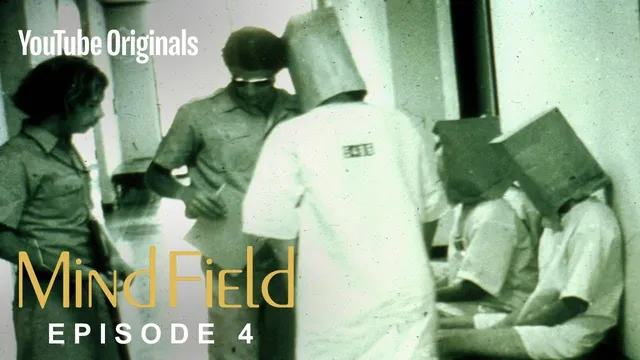
The Stanford Prison Experiment
Based on Vsauce's video on YouTube. If you like this content, support the original creators by watching, liking and subscribing to their content.
The Stanford Prison Experiment’s headline claim is that anonymity plus power over depersonalized others can rapidly produce cruelty, but later accounts dispute how much of that came from the environment alone.
Briefing
The Stanford Prison Experiment became a shorthand for how quickly ordinary people can turn cruel when given anonymity, power, and a dehumanized “other.” In 1971, 24 male volunteers at Stanford University—assigned as guards or prisoners—rapidly escalated abuse, and the study was shut down after only six days. The widely taught takeaway, associated with psychologist Philip Zimbardo, was that the environment and role dynamics—not inherent character—were enough to produce evil, especially when guards felt anonymous behind mirrored sunglasses and exercised control over depersonalized prisoners.
Decades later, renewed scrutiny challenged that conclusion on two fronts: whether the original setup encouraged cruelty through subtle cues, and whether participants’ personal histories and traits mattered more than the standard narrative suggests. Journalist Ben Blum’s reporting brought attention to accounts from some participants that reportedly conflicted with the official story that “good people” became evil purely because of the situation. Blum also tied the experiment’s social-environment argument to a real-world legal defense: Zimbardo helped advocate leniency for Blum’s cousin, an Army Ranger involved in a bank robbery, arguing that intense unit training and social context overrode free will. Over time, the cousin later admitted he knew it was wrong but lacked the moral courage to stop—an admission that, in Blum’s telling, undermined the idea that situational pressure alone erased personal responsibility.
The transcript then pivots from critique to firsthand testimony. Dave Eshelman, one of the most notorious “guards,” described how guards were told to produce results and were not led to believe they were merely participants in a study. Researchers behind a wall could be heard commenting and even requesting specific camera angles, which Eshelman said effectively encouraged him to be harsher. He framed his behavior as both role-playing and a personal drive to “deliver what he wanted,” raising the possibility that authority cues and expectations shaped actions as much as anonymity and power.
To test the competing explanations, psychologist Jared Bartels and the Mind Field team designed a new demonstration aimed at isolating the Stanford-like ingredients while stripping away demand characteristics. Participants were screened using personality measures (including the Big 5 Personality Scale and the Personality Assessment Inventory) and selected for high “moral” traits such as honesty and conscientiousness. In the first phase, subjects worked in pitch-black rooms, were identified only by number (not name), and could press a “distractor button” to blast noise into an unseen opposing team. Even after repeated noise blasts, the screened group rarely escalated: they pressed the button infrequently and never above a moderate level.
When the team introduced stronger role cues—making the button-pressing feel like the participants’ explicit task and removing the sense that the other side could retaliate—the behavior shifted. One participant escalated sharply, and later phases increased button use, including pushing toward higher intensity levels. Yet when the team returned to a debriefing framework that emphasized anonymity and the “opportunity to be cruel,” the participants still largely stayed below the unsafe threshold.
Philip Zimbardo responded by arguing that the new findings likely reflected personality selection: the original Stanford sample had a more typical distribution, whereas the demonstration recruited highly conscientious, mindful, and compassionate participants. The transcript ends with the central unresolved question that the Stanford Prison Experiment has always raised—how much evil comes from situational forces versus individual disposition—now reframed by evidence that authority cues and personality traits can both determine how far people go when power is on offer.
Cornell Notes
The Stanford Prison Experiment is famous for rapid cruelty in a simulated prison setting, leading to the claim that anonymity and power over a depersonalized “other” can produce evil. Renewed criticism argues that the original behavior may have been shaped by demand characteristics—explicit or implicit cues that guards should be tough—and by participants’ personal traits and motivations. To probe this, a later demonstration isolated three factors: anonymity, depersonalization, and power to harm via a noise button, while also screening participants for high “moral” traits. In that setup, participants largely refused to escalate to harmful levels. When demand characteristics were increased by making aggression feel like the assigned task, retaliation and escalation became more likely, suggesting both situation and personality matter.
What was the original Stanford Prison Experiment’s core mechanism for cruelty, and why did it matter beyond the lab?
How did Ben Blum’s reporting and the legal-defense story complicate the “pure situation” explanation?
What did Dave Eshelman add that suggested the experiment may have included strong authority cues?
How did the later demonstration try to isolate Stanford-like factors while reducing demand characteristics?
What happened when demand characteristics were increased, and what does that imply?
Review Questions
- Which specific elements of the Stanford setup (anonymity, depersonalization, power, role expectations) are most likely to function as demand characteristics, and why?
- How did personality screening (Big 5 and Personality Assessment Inventory) change the interpretation of situational explanations?
- In the demonstration, what design change most clearly increased escalation, and how would you test whether that effect came from role cues or from reduced accountability?
Key Points
- 1
The Stanford Prison Experiment’s headline claim is that anonymity plus power over depersonalized others can rapidly produce cruelty, but later accounts dispute how much of that came from the environment alone.
- 2
Renewed criticism highlighted demand characteristics—explicit or implicit cues that guards should be tough—potentially shaping behavior more than the standard narrative admits.
- 3
Dave Eshelman’s description of researchers behind a wall commenting and requesting coverage supports the idea that authority cues may have encouraged harsher conduct.
- 4
A later demonstration attempted to isolate anonymity, depersonalization, and power while reducing role-based expectations by removing “guard/prisoner” framing and using a puzzle-in-the-dark cover story.
- 5
When participants were screened for high moral traits, they largely avoided escalating harm even when given repeated opportunities to retaliate.
- 6
Escalation increased when demand characteristics were strengthened by making the noise-pressing feel like the participants’ assigned task, suggesting both situation and personality influence outcomes.
- 7
Philip Zimbardo’s response emphasized that personality selection in the later demonstration likely prevented the situational forces from producing cruelty as strongly as in the original study.