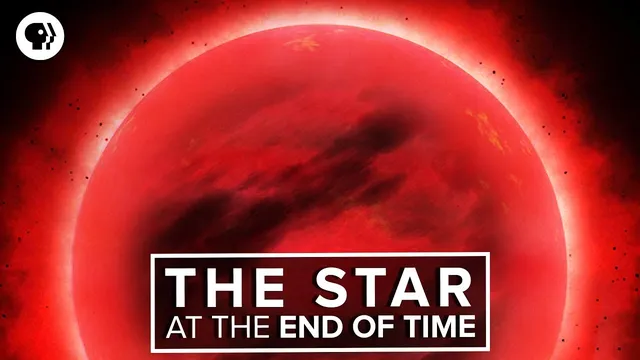
The Star at the End of Time
Based on PBS Space Time's video on YouTube. If you like this content, support the original creators by watching, liking and subscribing to their content.
Life requires a persistent energy gradient, and stars are the main long-term source of that gradient.
Briefing
Life can’t last without a steady energy gradient, and once the universe runs out of stars, that gradient collapses. The long-term fate of any civilization therefore hinges on the slowest-burning stars: red dwarfs (M dwarfs). These small, dim stars are expected to outlive every Sun-like star by orders of magnitude, making them the last widespread “warm places” where energy can keep flowing for trillions of years.
Red dwarfs generate energy by fusing hydrogen into helium in their cores, but their lifespans are controlled by how fuel is accessed and how quickly fusion proceeds. A Sun-like star burns only hydrogen in its core because a radiative zone prevents fresh material from reaching those depths; convection carries energy outward, not new fuel inward. By contrast, red dwarfs are fully convective, with plasma circulation mixing helium outward and bringing fresh hydrogen down to the fusion region. That means a red dwarf can use a much larger fraction of its mass for fusion. A star with about 10% of the Sun’s mass is roughly 1,000 times fainter, implying a fusion rate about 1,000 times slower—so it can last about 1,000 times longer. The baseline estimate lands near 10 trillion years, though the lifespan shortens as the core shrinks and heats up, boosting fusion rates by a factor of 10 or more near the end.
Unlike more massive stars, red dwarfs don’t expand as they brighten. Instead, increasing fusion power raises the surface temperature, and the star sheds extra energy through thermal (black-body) radiation. Early on, their spectra peak in infrared wavelengths, which is why they appear red. As they age, their emission shifts toward visible light: some may become white, and the most extreme cases could even develop a faint blue tinge. When hydrogen is finally exhausted, the star becomes mostly helium and contracts into a helium white dwarf, supported temporarily by electron degeneracy pressure. It then cools and fades over billions of years before turning black.
By the time the first red dwarfs approach the end of their lives, the galaxy’s other stars are expected to be gone. New Sun-like stars will still form during the Milky Way–Andromeda merger, but their white dwarfs will cool long before red dwarfs die. The sky would gradually darken until only faint red points remain—trillions of them—punctuated by individual white dwarfs that wink out over a few billion years.
That bleak timeline still leaves room for a “last renaissance” of life. Red dwarfs host planetary systems, including TRAPPIST-1 with seven terrestrial worlds and two in the liquid-water zone, though it remains uncertain whether life can evolve around such stars. Young red dwarfs are magnetically active and can be harsh, but older ones may offer long-term stability. Notably, red dwarfs near about 15% of the Sun’s mass are predicted to maintain relatively constant brightness near the end of their lives for up to five billion years, potentially thawing outer planets as their stars brighten. If life can start or restart under those conditions, the universe’s final long chapter may be written around the smallest stars—long after the rest of the night sky has gone dark.
Cornell Notes
Energy is the limiting resource for life on cosmic timescales: without a persistent energy gradient, entropy wins and living systems decay. Since stars are the deepest accessible wells of usable energy, the last era of habitability depends on the longest-lived stars—red dwarfs (M dwarfs). Red dwarfs can burn roughly 1,000 times more slowly than the Sun because they are fully convective (mixing fuel into the core), even though they are far less luminous. Their fusion rates rise as their cores shrink and heat up, shortening lifespans but still leaving them with trillions of years. As the galaxy’s Sun-like stars fade into white dwarfs, red dwarfs become the dominant remaining light sources, potentially enabling a late “renaissance” of life on planets that thaw as their stars brighten.
Why does the universe’s end of starlight matter for life, even if planets survive?
What makes red dwarfs last so much longer than Sun-like stars?
How does the “10% of the Sun’s mass” estimate translate into lifespan?
What happens to a red dwarf’s color and spectrum as it ages?
What does the endgame look like after hydrogen runs out?
Could life emerge or persist around red dwarfs during their late stable phases?
Review Questions
- How do convection and the radiative zone determine how much fuel a star can access for fusion?
- Why does a red dwarf’s brightness increase without significant expansion, and how does that connect to black-body radiation?
- What sequence of stellar deaths would darken a galaxy’s night sky before red dwarfs finally fade?
Key Points
- 1
Life requires a persistent energy gradient, and stars are the main long-term source of that gradient.
- 2
Red dwarfs can last trillions of years because they are fully convective, mixing helium outward and bringing fresh hydrogen into the fusion core.
- 3
A simple scaling suggests a ~10% solar-mass red dwarf can live about 1,000 times longer than the Sun, though late-life core heating increases fusion rates and shortens the total lifespan.
- 4
Red dwarfs brighten mainly by raising surface temperature, shifting their black-body spectrum from infrared toward visible (and sometimes faint blue) without large radius expansion.
- 5
When hydrogen runs out, red dwarfs contract into helium white dwarfs supported by electron degeneracy pressure, then cool over billions of years.
- 6
As Sun-like stars fade into white dwarfs, red dwarfs become the dominant remaining light sources, potentially enabling a late window for life on their planets.
- 7
Planetary habitability around red dwarfs remains uncertain, but extended late-life brightness phases could thaw outer worlds for billions of years.