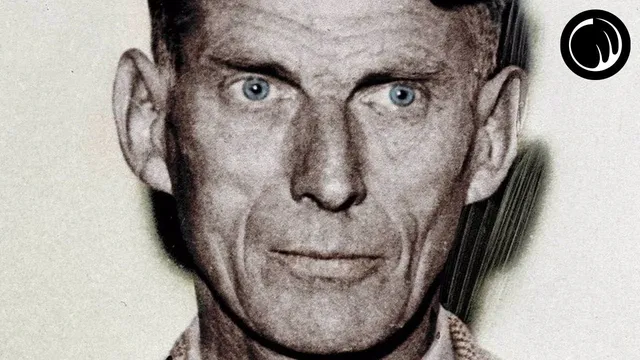
The Strangest Philosopher in History - Samuel Beckett
Based on Pursuit of Wonder's video on YouTube. If you like this content, support the original creators by watching, liking and subscribing to their content.
Waiting for Godot centers on Estragon and Vladimir’s endless waiting for Godot, with no real plot progression and a sense of circular time.
Briefing
Samuel Beckett’s work—especially Waiting for Godot—turns postwar despair into a stark, funny, and unsettling portrait of human life: people keep waiting for meaning that never arrives, and the only reliable response is to keep going and make art out of the emptiness. The play’s central engine is simple and maddening. Estragon and Vladimir meet on a desolate road, learn they were attacked the night before, and spend the rest of their time waiting for someone named Godot. They argue about when he will come, whether they’re in the right place, how long they’ve waited, and what their waiting even means—yet nothing progresses. Time feels circular, events repeat, and the “plot” resolves into a loop of boredom, confusion, and futility.
That structure matters because it mirrors the cultural and philosophical wreckage after World War II. With religious certainty and social order shaken, Western thinkers increasingly wrestled with existentialism and absurdism—most notably through Albert Camus’s framing of life as a struggle without guaranteed purpose. In that context, Waiting for Godot became a defining work of the Theater of the Absurd, presenting existence as fundamentally void of inherent meaning. The characters are not guided by a clear moral arc or a dependable revelation; they are trapped in a condition of longing. Even when messengers claim Godot will not come that night, the pair continues waiting anyway, as if hope itself is a habit they can’t stop.
Beckett’s personal path helps explain why the work feels both bleak and honest. Born in Ireland in 1906, he excelled academically and in cricket, graduated first at Trinity College Dublin in 1927, and later studied in Paris, where he encountered James Joyce. Beckett then devoted himself to writing, enduring repeated rejection—his early novels failed to land, and Murphy was rejected dozens of times before publication. By his thirties he remained largely unknown, while depression and anxiety led him to spend significant time in psychoanalysis. Those pressures fed a body of writing preoccupied with failure, futility, ignorance, pessimism, and psychological experience.
Beckett’s career is often split into two phases: earlier work before and during World War II, described as more scholarly and self-assured, and a later period after 1946 when his writing became more compact, disordered, and intense. Waiting for Godot (1952) marked the turning point, followed by other major works such as Endgame, Happy Days, and Not I—each returning to the same core predicament: humans trapped in confusion and torment, yet still capable of a kind of stubborn hope. In 1969, Beckett won the Nobel Prize in Literature for his writing “in new forms for the novel and drama in the destitution of modern man” and for the elevation it achieves.
The lasting takeaway is not a solution to the mystery of Godot, but a way of living inside the unanswered question. Beckett’s characters can’t force meaning to arrive; they can only transform the waiting—through laughter, connection, and art—into something that feels real, even when it’s bleak.
Cornell Notes
Samuel Beckett’s Waiting for Godot uses a deliberately stalled plot to portray human existence as repetitive, purposeless, and defined by longing. Estragon and Vladimir spend their time arguing about when Godot will arrive, only to keep waiting even after repeated indications that he won’t come. The play’s structure aligns with post–World War II existential and absurdist thinking, especially the idea that people search for meaning in a universe that offers none. Beckett’s own life—marked by rejection, depression, and psychoanalysis—shaped a body of work focused on failure, futility, and psychological experience. Later plays like Endgame, Happy Days, and Not I extend the same themes while still leaving room for a stubborn, human hope.
Why does Waiting for Godot feel “plotless,” and how does that connect to its themes?
What historical and philosophical context made Beckett’s approach resonate after World War II?
How do Estragon and Vladimir’s waiting function as a metaphor for human life?
What biographical details help explain Beckett’s recurring focus on failure and futility?
How did Beckett’s career shift before and after World War II?
What other Beckett works reinforce the same existential predicament?
Review Questions
- How does the play’s repeated, circular structure change what “waiting” means compared with everyday waiting?
- Which philosophical ideas (existentialism/absurdism) best match the play’s refusal to deliver a clear resolution, and why?
- What biographical experiences in Beckett’s life (rejection, depression, psychoanalysis) most plausibly shaped his recurring themes?
Key Points
- 1
Waiting for Godot centers on Estragon and Vladimir’s endless waiting for Godot, with no real plot progression and a sense of circular time.
- 2
The play’s unresolved structure aligns with post–World War II existential and absurdist thinking, where inherent meaning is questioned.
- 3
Godot can be read less as a literal person and more as an object of longing or salvation that never arrives.
- 4
Beckett’s early career included repeated rejection and limited success, including Murphy being rejected 40 times before publication.
- 5
Depression and anxiety, along with psychoanalysis, fed a body of work focused on failure, futility, and psychological experience.
- 6
Beckett’s major postwar breakthrough came with Waiting for Godot (1952), followed by Endgame, Happy Days, and Not I, each reinforcing the same existential predicament.
- 7
In 1969, Beckett won the Nobel Prize in Literature for his writing in new forms that elevates the destitution of modern man.