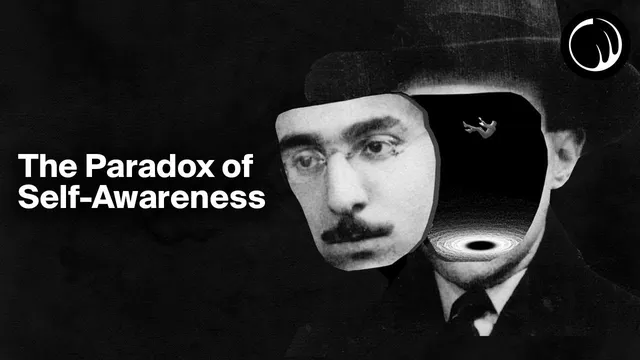
The Terrible Paradox of Self-Awareness | Fernando Pessoa
Based on Pursuit of Wonder's video on YouTube. If you like this content, support the original creators by watching, liking and subscribing to their content.
Pessoa’s father died of tuberculosis when he was five, and his younger brother died the next year—early losses that shaped a lifelong preoccupation with impermanence.
Briefing
Fernando Pessoa’s The Book of Disquiet became one of the 20th century’s most distinctive literary works through a story that reads like fiction: a lifetime of near-total obscurity, a manuscript locked away in a wooden trunk, and a discovery and publication in 1982—exactly 47 years after Pessoa died. Born in 1888 in Lisbon, Pessoa lost his father to tuberculosis at age five and then his younger brother the next year. After his family moved to South Africa, he became fluent in English and developed a deep engagement with English literature. At seventeen he returned alone to Lisbon, where he spent the rest of his life writing, yet died in 1935 with only a handful of unnoticed publications.
The manuscript for The Book of Disquiet, along with tens of thousands of other pages, stayed hidden until 1982, when it finally emerged and entered public life. That timing matters because it mirrors the book’s emotional and philosophical preoccupations: disorientation, delayed recognition, and the sense that meaning arrives only after the self is already gone. The work itself is built from fragmented vignettes—diary-like and poetic—without a strict linear order, so readers can experience it forward or backward. It also refuses easy classification. Rather than presenting itself as a straightforward autobiography, it is credited to Bernardo Soares, a fictional assistant bookkeeper from Lisbon, and possibly to Vicente Guedes—also fictional. Pessoa created these figures as heteronyms: not just pen names, but distinct author-characters with different styles, personalities, and backstories. Around eighty heteronyms appear across Pessoa’s writing life, making the book feel less like a single life rendered on paper and more like a life split into many incompatible inner voices.
That structural choice reinforces the book’s central theme: the self as fragmented, illusory, and lonely. Pessoa’s writing repeatedly returns to alienation and the inability to fully know or communicate inner experience. One passage depicts consciousness as a trapdoor fall into empty space, with the “soul” as a spinning void and the self existing only as a geometric necessity—an abyss-centered “nothing” around which images whirl. Self-understanding, in this view, is a free-fall that kills the seeker, leaving only disquiet.
Alongside that psychological portrait runs a philosophy of tedium and futility. Life is treated as a sequence of dreams—meaningless, dissolving at waking, and ultimately ungraspable. Even writing is framed as a way to reduce the “fever of feeling,” not to convey something important. The book’s contradictions deepen rather than resolve: it insists on the pointlessness of doing while also performing the act of writing. One proposed way to reconcile that paradox is preventative logic—like exposure to a disease can build immunity, art and literature might expose a person to the “virus of being” so they can endure it.
The manuscript’s unfinished state adds another layer of metaphor. Trapped in a trunk, known only after Pessoa’s death, interpreted through fragments, and completed by time rather than intention, the book becomes an almost perfect mirror of its own worldview. Even more unsettling, passages inside it appear to predict its fate: Pessoa imagines being read and admired only after death, understood “only in effigy,” and recognized as misunderstood in life. The result is a work that feels like a religious text for atheists or a manual for nihilists—devastating, but also oddly consoling, offering the comfort of not taking oneself or life too seriously.
Cornell Notes
Fernando Pessoa’s The Book of Disquiet gained lasting influence through both its content and its eerie afterlife. Pessoa wrote for decades in obscurity, leaving the manuscript locked away in a wooden trunk until 1982—47 years after his death—when it was finally published. The book is composed of fragmented, non-linear vignettes credited to heteronyms such as Bernardo Soares (and possibly Vicente Guedes), fictional author-figures with distinct voices, not a single stable “self.” That design supports the book’s recurring themes: the self as fragmented and alienated, life as dreamlike and futile, and meaning as contradictory or impossible to fully express. The work’s unfinished, posthumous emergence and its self-predicting passages make its philosophy feel lived rather than merely described.
Why does the manuscript’s delayed discovery matter to how the book is understood?
How do heteronyms change what “autobiography” means in The Book of Disquiet?
What does Pessoa’s writing suggest about self-knowledge?
How does the book treat action, achievement, and meaning?
How can the book’s insistence on pointlessness coexist with its own act of writing?
What makes the book’s fate feel “prophesied” rather than merely coincidental?
Review Questions
- How do heteronyms (especially Bernardo Soares and Vicente Guedes) support the book’s claim that the self is fragmented rather than unified?
- What philosophical role do dreams play in the book’s view of meaning, action, and reality?
- Why does the book’s posthumous, unfinished emergence strengthen its central themes instead of weakening them?
Key Points
- 1
Pessoa’s father died of tuberculosis when he was five, and his younger brother died the next year—early losses that shaped a lifelong preoccupation with impermanence.
- 2
The Book of Disquiet manuscript remained hidden in a wooden trunk until 1982, exactly 47 years after Pessoa’s death in 1935.
- 3
The book is structured as fragmented, non-linear vignettes that can be read forward or backward, mirroring its themes of disorientation and instability.
- 4
Pessoa credited the work to heteronyms such as Bernardo Soares (and possibly Vicente Guedes), fictional author-figures with distinct voices rather than a single autobiographical self.
- 5
Recurring passages portray selfhood as alienated and illusory, with introspection framed as a free-fall that cannot deliver stable understanding.
- 6
The book treats life as dreamlike and often futile, arguing that doing and achievement lack real point while writing functions mainly to reduce inner “fever.”
- 7
Paradox is central: the work insists on pointlessness while performing creation, with art likened to preventative exposure that builds immunity to “being.”