The Tiny Donut That Proved We Still Don't Understand Magnetism
Based on Veritasium's video on YouTube. If you like this content, support the original creators by watching, liking and subscribing to their content.
Quantum interference can shift because the wave function’s phase depends on electromagnetic potentials, not only on local electric and magnetic fields.
Briefing
Aharonov–Bohm physics turns a long-held assumption on its head: quantum particles can be affected by electromagnetic potentials even in regions where the corresponding electric and magnetic fields are exactly zero. The result matters because it forces a choice about what’s “real” in fundamental physics—fields, potentials, or something subtler tied to quantum phase—rather than treating potentials as mere mathematical bookkeeping.
The story begins with Lagrange’s reformulation of mechanics, which trades the hard work of vector forces for the easier geometry of scalar potentials. In gravity, the gravitational potential V is a scalar whose gradient gives the gravitational field. Because the potential landscape can be combined by adding contributions from multiple bodies, stable configurations emerge at special points where the gradient vanishes. Lagrange’s broader method—using kinetic minus potential energy to build the Lagrangian and then applying the Euler–Lagrange equation—made mechanics more systematic and helped replace forces with energy-based reasoning across many problems.
That success raised a provocative question: if potentials can shift the math so effectively, do they correspond to anything physical? For gravity and electricity, adding a constant to the potential leaves the field unchanged, which made many physicists conclude potentials were arbitrary. Magnetism complicates the picture. Magnetic field lines form loops rather than starting and ending on charges, and the magnetic field B is related to a vector potential A through a curl. That structural difference set the stage for a deeper quantum claim.
In the 1950s, David Bohm and Yakir Aharonov argued that quantum mechanics makes potentials unavoidable because the Schrödinger equation depends on them through the wave function’s phase. Their key challenge was experimental: show an effect when electrons travel through a region with no magnetic field (and no electric field), yet where a nonzero vector potential exists. Their thought experiment uses a beam split into two paths around a solenoid. In the idealized limit, the magnetic field outside the solenoid is zero, but the vector potential differs between the two routes. If phase depends on the potential rather than the field, the interference fringes should shift when the solenoid is turned on.
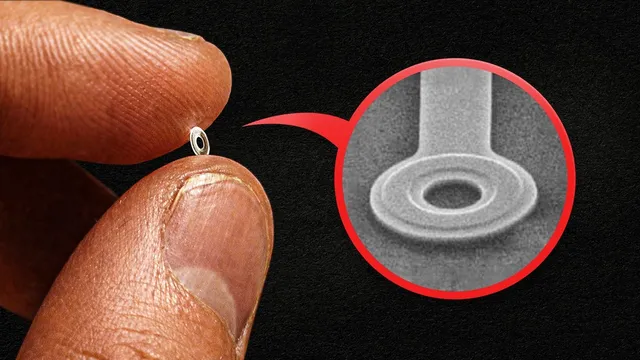
Early tests were plagued by practical imperfections—critics worried about stray fields. The debate sharpened until 1986, when Akira Tonomura’s team used a carefully shaped torus (“tiny donut”) magnet designed so the magnetic field outside was truly zero, with additional shielding using superconducting niobium to suppress leakage. The experiment kept the magnet on while comparing interference patterns for electron paths that pass outside versus through the region influenced by the vector potential. The observed fringe shift matched the Aharonov–Bohm prediction, strengthening the case that potentials have measurable consequences.
Interpretations split. One camp treats potentials as physically fundamental, since the phase shift depends on the line integral of A along the electron’s path and the arbitrary “height” ambiguity cancels out. Another camp tries to preserve field primacy by invoking nonlocal field effects, which many find conceptually uncomfortable. A third, more quantum-flavored idea suggests the electron’s wave function explores multiple paths at once, with the phase accumulating accordingly.
The question is no longer confined to electromagnetism. A 2022 Stanford experiment with ultra-cold rubidium atoms reported a gravitational analogue of the Aharonov–Bohm effect, where a phase shift appears even when the relevant gravitational field is effectively absent in the interferometer region. If confirmed, it would imply that both electromagnetic and gravitational potentials can influence quantum reality at the most basic level—without requiring local fields—while still leaving room for textbooks to be “beautiful but incomplete,” not discarded.
Cornell Notes
Aharonov–Bohm physics shows that quantum particles can acquire measurable phase shifts from electromagnetic potentials even when the electric and magnetic fields are zero along the particle’s path. The effect hinges on how the Schrödinger equation uses potentials to determine the wave function’s phase, so interference patterns change when the vector potential differs between two routes around a solenoid. Early experiments faced doubts about stray magnetic fields, but a 1986 torus-based setup by Akira Tonomura’s team produced results consistent with the predicted fringe shifts. The finding sparked a long-running debate: are potentials physically real, or must fields act non-locally to account for the phase? Recent work at Stanford reports a gravitational analogue using ultra-cold rubidium atoms, suggesting the idea may extend beyond electromagnetism.
Why did Lagrange’s potential-based mechanics matter for later debates about potentials being “real”?
What is the core Aharonov–Bohm claim, stated in terms of fields, potentials, and quantum phase?
How do experiments address the criticism that stray fields—not potentials—cause the interference shift?
Why doesn’t the arbitrariness of potential “zero level” undermine the physicality of the effect?
What does the gravitational analogue reported in 2022 suggest about the scope of the idea?
Review Questions
- In the Aharonov–Bohm experiment, what changes between the two electron paths when the solenoid (or torus magnet) is turned on, and why does that matter for interference?
- How does the relationship between magnetic field B and vector potential A (via curl) help explain how a region can have B = 0 while still having a nonzero A?
- What conceptual tension arises between the “potentials are physical” interpretation and the “fields act non-locally” interpretation, and what would each camp need to accept?
Key Points
- 1
Quantum interference can shift because the wave function’s phase depends on electromagnetic potentials, not only on local electric and magnetic fields.
- 2
Lagrange’s potential-based mechanics popularized scalar energy landscapes and made potentials feel like fundamental tools, even before quantum tests.
- 3
Magnetism differs from gravity and electricity because magnetic field lines form loops, motivating the vector potential A and the relation B = curl(A).
- 4
The Aharonov–Bohm effect is designed so electrons traverse regions with vanishing magnetic field yet nonzero vector potential, producing a measurable phase difference.
- 5
Stray-field criticisms drove increasingly careful experiments, culminating in Tonomura’s 1986 torus magnet with superconducting niobium shielding.
- 6
The phase shift depends on a line integral of A along the path, so arbitrary constant shifts in potential cancel out in the observable interference pattern.
- 7
A 2022 Stanford experiment reported a gravitational analogue using ultra-cold rubidium atoms, suggesting similar “potential without field” behavior may apply to gravity too.